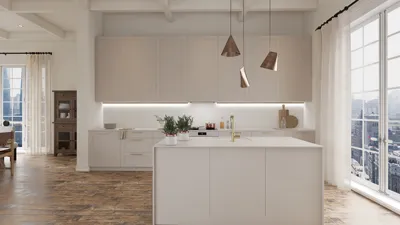


Once, a client insisted on painting their laundry room “sunset pink” to match their flamingo slippers. Although we found it amusing, the small room turned overly oppressive until we saved it with a gentler tone. This experience highlighted two key lessons: the importance of color selection in compact spaces and the potential for significant creativity in small areas. To quickly evaluate color schemes, I frequently utilize visual layout mockups which help in understanding how different hues interact with lighting and cabinetry, often employing tools like Homestyler for precise visualizations.
1. Bright White with Glossy Accents
Bright white is my preferred choice for laundry rooms that lack natural light. Applying a warm white on the walls combined with high-gloss white trim maximizes light reflection, enhancing the perception of space. However, this option tends to show dirt and lint more quickly, necessitating regular touch-ups. On the upside, it’s economical and harmonizes effortlessly with any appliance finish.
save pin
2. Deep Navy Feature Wall
For a small laundry room that requires personality, adding a navy accent wall behind shelves or hooks provides depth without making the space feel cramped. Navy is excellent at concealing marks and contrasts strikingly with white appliances; just keep other areas light to avoid a cave-like atmosphere. Incorporating brass hardware or woven baskets adds a stylish and functional touch, a strategy I've successfully implemented in various renovations.
save pin
3. Gentle Pastel Green for Tranquility
Pastel green introduces a calming, spa-like quality to laundry tasks, making it ideal if you create a folding space. This hue complements wood elements and matte white cabinets, and to experience the ambiance, I often rely on realistic 3D renders from Homestyler to examine undertones under various lighting conditions. It's worth noting that some greens may appear cooler or yellower depending on LED lighting, thus testing swatches at different times is advisable.
save pin
4. Subtle Two-Tone for Visual Interest
For a creative touch, painting the lower half in a durable mid-tone (such as greige or soft blue) while keeping the upper half light enhances the room's height and conceals wear at the floor level. This approach offers a tasteful compromise when you desire patterns without resorting to wallpaper, and it’s surprisingly accommodating regarding scuffs. Investing in a quality semi-gloss for the lower area will save future repainting troubles.
save pin
5. Striking Color Blocking with Upper/Lower Contrasts
For those who appreciate boldness, consider splitting the room horizontally: a vibrant color below (like teal or deep mustard) contrasted with fresh white above creates a modern and playful environment. This method can transform a functional area into a beloved spot. Since color blocking is more daring and could feel permanent, I recommend trying temporary peel-and-stick samples first or utilizing Homestyler for AI-generated interior suggestions if you are uncertain about the intensity of the colors.
save pin
Tips 1:
Budget Tip: Sample pots and peel-and-stick swatches serve as inexpensive insurance. Use eggshell finishes for walls (as they are easy to clean), semi-gloss for trims and areas around sinks, and contemplate mildew-resistant paints if humidity is an issue in the laundry space. Remember, lighting plays a crucial role— even the finest color might disappoint under inadequate lighting, so it's best to assess using the actual fixtures in the room.
save pin
FAQ
Q: Which color can make a laundry room appear larger?
A: Light, warm whites or very soft pastels reflect light effectively, making a compact laundry space feel more expansive. Keeping the trim and ceilings lighter than the walls elevates the sense of height in the room.
Q: Is semi-gloss the better finish for laundry rooms?
A: Indeed— semi-gloss or satin finishes withstand moisture and can be wiped down easily, which is essential in areas near sinks and appliances. Although matte finishes conceal imperfections better, they are harder to maintain.
Q: Are dark colors suitable for small laundry areas?
A: Yes, they can work wonderfully as accents or when paired with ample lighting. Dark hues provide dramatic depth, but it’s important to balance them with lighter cabinetry or reflective surfaces.
Q: How can I prevent mold growth in a painted laundry room?
A: Opt for mildew-resistant paint and ensure proper ventilation. For technical support, the U.S. EPA has helpful guidelines on moisture control and mold prevention (https://www.epa.gov).
Q: Should I match my paint to my appliances?
A: Exact matching isn’t necessary, but aligning undertones (cool vs. warm) enhances cohesion in the room. Stainless steel appliances favor cooler shades, whereas cream-colored appliances work better with warmer paint hues.
Q: How many paint sample swatches should I experiment with?
A: It's advisable to test at least three swatches: one light, one medium, and one bolder option. Evaluate them at various times of the day to observe any color shifts with both natural and artificial lighting.
Q: Are low-VOC paints beneficial?
A: Yes, they help to minimize odors and enhance indoor air quality, which is crucial in small, enclosed settings. Numerous reputable brands provide low-VOC lines featuring durable finishes.
Q: Can I refresh the look without repainting?
A: Absolutely! Minor modifications like updating hardware, adding decals, or installing a peel-and-stick backsplash can rejuvenate the space without the need for a complete paint job. For layout changes or visual trials, consider utilizing design previews via platforms like Homestyler before making final decisions.
save pin
Homestyler is the ultimate online home design platform for anyone looking to create stunning interiors. With its user-friendly design tool, impressive 3D renderings, inspiring design projects, and helpful video tutorials, you'll effortlessly transform your home into a masterpiece—no prior experience needed!
Design Now for FREE
































