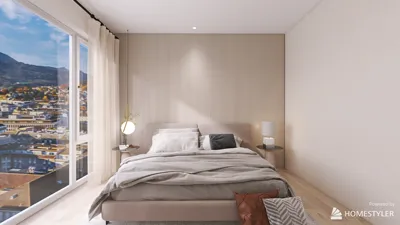


In my experience, I once crafted an enchanting two-bedroom bungalow for a delightful couple who insisted their beloved dog needed a designated ‘throne room’ — essentially transforming a corner of the living room into a royal area complete with a large pet bed. This unique request challenged my design instincts, yet it encouraged me to creatively explore circulation and multifunctional spaces. When working with small homes, innovative thinking is essential, which is precisely what draws me to them.
This article showcases five of my top two-bedroom, one-story house designs, inspired by real projects and budget-conscious renovations. Each design emphasizes optimizing light, enhancing flow, and maximizing every square foot—along with practical insights drawn from my experience.
1. Open-Plan Living with a Dedicated Bedroom Wing
I frequently advocate for an open-concept living, dining, and kitchen area that maintains a spacious feel even in smaller homes. By positioning the two bedrooms in a distinct wing, residents enjoy privacy while minimizing noise. The benefit lies in the spacious social environment alongside a clear divide between public and private areas. However, careful storage solutions are vital to prevent the open space from feeling cluttered. Previously, I've utilized a continuous low cabinetry design that discreetly conceals everyday items, anchoring the overall space effectively.
save pin
2. Linear Arrangement with Separated Bedrooms
For narrow lots, a linear arrangement—bedroom, living area, bedroom—ensures efficient use of space. By separating the bedrooms at opposite ends, this design is ideal for roommates or families, offering each occupant their own privacy. A significant challenge is ensuring the central living area receives adequate daylight; incorporating skylights or clerestory windows has been invaluable in my designs. Budget-conscious projects might consider mirrored furniture and light finishes to enhance brightness.
save pin
3. Courtyard-Centered Design
When site conditions permit, a centrally located small courtyard can channel light and greenery into a one-story home. I successfully applied this strategy in a renovation where both bedrooms and the main living space opened onto a sheltered courtyard, promoting views and cross-ventilation. This setting creates a tranquil vibe and makes the space feel larger, though it can impact costs and requires attention to waterproofing. An adequately planted compact courtyard can also be affordable and transformative.
save pin
4. Flexible Multi-Functional Room in Place of a Second Bedroom
In certain scenarios, a formal second bedroom may be unnecessary. I’ve often revamped small homes by incorporating a flexible space that can function as an additional guest bedroom, office, or hobby studio—using a Murphy bed or a sturdy sleeper sofa. This keeps the home looking open and modern, but if one requires a permanent two-bedroom status for resale purposes, it’s crucial to understand local regulations. In many instances, this adaptability significantly increased resale value by broadening the buyer pool.
save pin
5. Accessible Single-Level Living Utilizing Universal Design Principles
Designing a two-bedroom, one-story home with universal design features ensures it remains relevant and functional for the long haul. Features like wider doorways, zero-step entries, and accessible bathrooms enhance usability for all age groups. The trade-off involves a marginally higher initial investment and specific plumbing layout restrictions, but the long-term benefits are substantial—many of my clients have found these homes easier to sell and more accommodating for aging in place.
Throughout these layouts, themes such as efficient storage solutions, layered lighting, and thoughtfully planned window placements are constants I integrate into every project. If you wish to visualize a spatial concept, I often suggest using a web-based room planning tool, like Homestyler, to experiment with furniture arrangements and movement flow before embarking on construction.
save pin
Tips 1:
Budget advice: address waterproofing and insulation from the outset; these elements might be hidden but are essential investments. For smaller lots, always contemplate how outdoor areas can enhance indoor living spaces—a covered patio frequently serves as an additional living area at a low investment.
save pin
FAQ
Q: What is the average square footage for a comfortable two-bedroom, one-story home? A: Comfortably, many designers aim for between 800 and 1,200 sq ft, depending on the specific needs; spaces under 800 sq ft require more creative multi-functional areas.
Q: How can I create a more spacious feeling in a small two-bedroom house? A: Implement open-plan designs, maintain consistent flooring, utilize large windows, and integrate vertical storage solutions to visually expand the area.
Q: Are courtyard styles appropriate for all climates? A: Courtyards are most effective in temperate to warm climates; in colder regions, they necessitate careful thermal management and wind shielding.
Q: Should I opt for a designated second bedroom or a flexible room? A: If resale regulations or family requirements necessitate two permanent bedrooms, go for a fixed option. Conversely, for urban singles or couples, a flexible room frequently provides more practical utility.
Q: How much does incorporating universal design typically add to my budget? A: Generally, it results in a modest increase (about 3% to 7%) for wider doorways and step-free entries, offering significant rewards in durability and resale value.
Q: Can I draft a plan myself before hiring a professional? A: Absolutely—starting with a basic floor planner is an excellent way to validate your designs; professionals can then refine the plans and technical details. For trustworthy references on universal design standards, I recommend checking the CDC’s Home and Recreational Safety recommendations (https://www.cdc.gov/homeandrecreationalsafety/index.html).
Q: What common pitfalls do people face when planning a two-bedroom, one-story home? A: Typical mistakes include neglecting storage options, underestimating circulation space, and poor window placement that limits natural light.
Q: How do I select the most suitable layout for my property? A: Think about solar orientation, privacy concerns, and outdoor usage; sketch several layout options and test them at full scale with a planner.
save pin
Homestyler is an outstanding online home design platform that empowers you to create stunning interiors effortlessly. With its user-friendly design tool, impressive 3D rendering, and a wealth of DIY video tutorials, you can turn your vision into reality, whether you're a novice or a seasoned designer!
立即免费设计
































