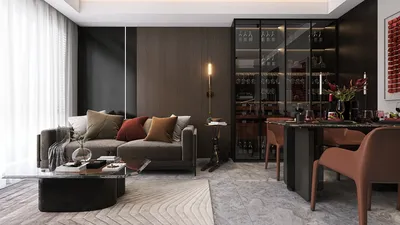


A client once requested a home office color that exuded "sunshine but not blinding" — ultimately, we settled on a soft butter hue paired with a subtle accent stripe that enhanced their Zoom calls. Even small choices like these illustrate how different paint can transform mood, concentration levels, and the perception of space. For a quick visual reference before diving in, take a look at this room planning case I mentioned for guidance on layout and sight lines, which can be simplified with tools like Homestyler.
Designing small offices often pushes professionals to take bold yet subtle approaches. Here, I’ll share five paint color suggestions I’ve implemented along with insights gained from moments that didn’t go as planned. Each recommendation includes reasoning behind its effectiveness, a budget tip, and potential downsides to consider.
Warm neutrals complemented by a focused accent wall
I enjoy using greige or warm beige as a primary color since it reflects light beautifully while maintaining a professional feel. Introducing an accent wall in a terracotta or rich camel behind the desk can ground the room, ideally supporting video calls.
Why I suggest this: it offers a gentle contrast that’s easy on the eyes and harmonizes well with wooden tones. Downsides include that lighter neutrals may reveal scuffs, so using a satin finish in busy areas is wise, along with anticipated touch-ups every few years.
save pin
Soft greens for tranquility and focus
Colors inspired by nature, such as sage, moss, or subtle olive, are excellent for promoting recovery from short attention spans and minimizing visual fatigue. I applied sage to the side walls in a compact office and kept the trim bright white; clients reported an immediate sense of calm.
Budget hint: test two shades on separate walls, as natural light can significantly alter the appearance of green throughout the day.
save pin
Blue tones for enhanced clarity and confidence
Utilizing a mid-blue for the primary wall alongside pale gray cabinetry conveys clarity and depth — ideal for accounting tasks or focused work. While cooler blues can default to a chilly atmosphere, introducing warm wood accents or rugs prevents a sterile ambiance.
This combination is perfect for achieving a professional and crisp aesthetic; it meshes particularly well with glass partitions and modern furnishings. For layout inspiration that coordinates with blue palettes, consult an effective office layout example I produced for a collaborative workspace.
save pin
Vibrant accent pairings for energetic teams
If your team thrives in a lively atmosphere, how about combining a deep navy with splashes of mustard or coral on furniture and a designated feature wall? It’s playful while remaining grounded, especially if larger surfaces sport neutral tones.
Caution: vibrant color schemes may prove distracting for some. I generally restrict the most vibrant colors to a couple of small walls or movable elements such as cabinets and screens, allowing control over the intensity.
save pin
Monochrome minimalism for compact spaces
In a small office, employing a soft monochrome palette—stone gray, textured white, and matte black accents—can create an illusion of spaciousness and intentionality. The key lies in contrast: darker trims paired with lighter walls yield a crisp and modern vibe.
Monochrome schemes are budget-friendly and timeless but may appear flat without the right textures. A quick solution is to integrate plants, various fabrics, or notable artwork. If you’re interested in AI-generated palettes and design mockups I've explored, check out this example driven by Homestyler.
save pin
FAQ
Q1: What paint finish is best suited for an office?
A: I typically recommend an eggshell finish for walls—it has a soft sheen that’s easy to clean and not overly reflective on camera. Use satin for trims and semi-gloss for doors or frequently touched surfaces.
Q2: Which colors are known to enhance productivity?
A: Blues and soft greens are frequently associated with improved focus and calmness, while warmer accents like muted orange or mustard can effectively stimulate creativity in moderation.
Q3: How should I select a paint color for a small office?
A: Apply large swatches on several walls and monitor them at various times of the day. Lighting plays a critical role—both natural and artificial light can dramatically shift perceived colors.
Q4: Can paint color influence mood and health?
A: Absolutely—studies in environmental psychology indicate that nature-inspired colors (greens, soft blues) can aid in attention recovery and alleviate stress (Journal of Environmental Psychology).
Q5: What’s a budget-friendly strategy to refresh an office?
A: A new coat of paint along with swapping textiles (curtains, cushions, rugs) can create a significant visual transformation at a relatively low cost. Focus paint application on a single accent wall to maximize savings.
Q6: Should lighting considerations be integrated when selecting paint?
A: Certainly. Warmer bulbs can soften cool colors, and vice versa. Always assess color samples in the actual lighting of your office to avoid unanticipated results.
Q7: How many different colors should I incorporate?
A: I advise following a 60-30-10 rule: use 60% for the dominant neutral, 30% for secondary colors, and 10% for accents. This creates a balanced and adaptable space.
Q8: Where can I find trustworthy color trend insights?
A: Pantone and leading paint brands release annual trend forecasts along with color palettes—ideal starting points for curating a palette that feels both current and cohesive.
Homestyler is an outstanding online home design platform perfect for anyone looking to create beautiful spaces. With its user-friendly design tool, stunning 3D renderings, diverse design projects, and helpful video tutorials, you can effortlessly turn your vision into reality. Get started today!
立即免费设计
































