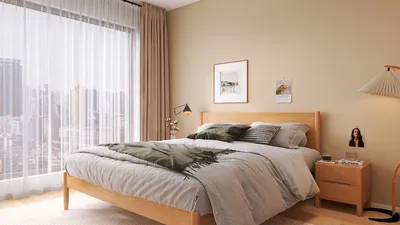


I once arrived at a client's site where they insisted on a neon lime accent wall simply because, as they put it, "it matches my yoga mat." I managed to convince them to settle for a more subdued green by utilizing a straightforward layout strategy that ultimately saved the room from resembling a disco capsule. Experiences like this quickly taught me that paint selections can significantly impact a space, particularly smaller ones.
1. Opt for light neutrals to create an illusion of space in small areas
Light hues reflect more light, helping to visually enlarge confined spaces. The benefits are clear: a serene and open atmosphere. However, a downside is that these shades can reveal dirt more easily and may appear uninviting if not complemented with texture or sheen.
save pin
2. Align sheen with functionality rather than solely aesthetics
Eggshell or satin finishes are typically ideal for living spaces, providing adequate durability without excessive glare. High-gloss finishes work well for trim and heavily used spots but may expose brush strokes; matte finishes obscure flaws but can be challenging to clean.
save pin
3. Experiment with paint swatches under varying lighting conditions
I always advocate for painting large sample swatches and examining them throughout the day. If you're planning out furniture arrangements and color coordination, sketching a quick layout first can help your swatches align with actual pieces and light exposures.
save pin
4. Accent walls offer inexpensive impact, but careful placement is crucial
An accent wall can inject character into a room without needing to paint the entire space. However, selecting the wrong wall can disrupt the balance of the room's feel. In the past, I placed an accent wall behind a TV, only to realize it made the seating area feel tacked on—it's often more effective to position it behind the sofa or within a defined nook.
save pin
5. Utilize low-VOC and washable paint options in important areas
For kitchens, bathrooms, and children's rooms, it's essential to choose paints that are durable and low in emissions. You might also assess kitchen-friendly colors by creating small mockups; I frequently layout kitchen designs with colored boards to observe how stains and light interact before making a final commitment. While eco-friendly paints may be slightly pricier, they prevent future issues and contribute to better air quality.
save pin
FAQ
For compact bedrooms, I generally suggest eggshell or low-sheen satin finishes; they reflect just the right amount of light to make the space seem open while masking minor wall imperfections. While matte finishes can create a cozy feel, they may show wear more noticeably.
Try out at least three samples: one light, one medium, and one darker tone from the same color family. Paint large sections to evaluate them across various lighting conditions over several days.
Absolutely—low-VOC paints help reduce indoor air pollutants, making them safer for use during and after application, especially in spaces with limited ventilation. The EPA offers detailed insights on indoor VOCs and their effects on air quality: https://www.epa.gov/indoor-air-quality-iaq/volatile-organic-compounds-impact-indoor-air-quality.
Typically, it's necessary to sand and prime a high-gloss surface before applying matte paint to guarantee proper adherence and avoid finish failure. Neglecting preparation can lead to peeling and uneven sheen.
Budget considerations vary; however, it’s wise to include mid-range paint along with primer and basic labor costs; a realistic estimate for many spaces tends to be just above bargain brand prices to ensure durability and consistent color. Opting for cheaper paint can result in higher costs due to needed touch-ups later.
Darker colors tend to absorb light, which can create a cozier vibe while making a room feel visually smaller. Use them judiciously on a single wall or as a ceiling color to introduce depth without making the entire area feel cramped.
Adhere to the manufacturer’s guidelines—usually drying times range from 2 to 4 hours for water-based paints and longer for oil-based varieties. Ensuring proper drying promotes even coverage and prevents tacky layers.
Keep a labeled small pot of leftover paint for future touch-ups, and be sure to note the batch number. Lightly sand the area you need to touch up, clean it, and feather the new paint into the old to seamlessly blend edges for a nearly invisible repair.
save pin
Homestyler is your go-to online platform for home design! With its user-friendly design tool, stunning 3D renderings, and a plethora of inspiring design projects and video tutorials, you can effortlessly create and visualize your dream space. Start your design journey today!
立即免费设计
































