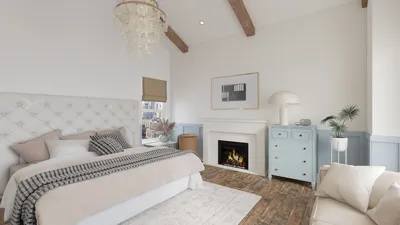


As a designer who has witnessed the shift from extravagant styles to refined simplicity, I have observed how the inspiration for large master bedrooms has transitioned towards a blend of layered comfort and intentional scale. Currently, the focus is on combining bold architectural features with inviting textures—imagine spacious seating areas, rich rugs, and thoughtfully arranged art collections. I believe that even large rooms can ignite significant creativity; I approach every corner as a small space, ensuring each section contributes to a cohesive feel. In my projects, I typically begin with comprehensive room planning within Homestyler to thoughtfully zone the area, transforming an expansive blank space into a welcoming sanctuary.
1. Define Spaces Using Grouped Furniture
My Perspective: I enjoy conceptualizing a large master bedroom as a collection of cozy micro-spaces. Early in my career, I tackled a project where the homeowner requested a reading nook, an exercise area, and a vanity; grouping furniture effectively allowed each function to feel intentional instead of lost in the vastness.
Benefits: Establishing defined zones enhances movement throughout the room while fostering intimacy. Strategically using furniture to differentiate relaxation areas or dressing spaces supports a versatile lifestyle—this is among the top design ideas for large master bedrooms that cater to those seeking multifunctional environments.
Drawbacks: Over-segmenting can make the space feel disjointed. I've encountered rooms that appeared as if multiple small rooms were awkwardly pieced together—therefore, it's essential to maintain a harmonious color scheme to unify the areas.
Advice: Utilize area rugs to anchor each grouping and choose a consistent accent hue for the zones. Low-profile sofas or canopy beds can divide spaces while preserving sightlines.
2. Incorporate a Bold Bed and Scaled Lighting
My Perspective: The bed should be the standout feature in any master bedroom; in spacious layouts, I recommend showcasing it rather than downsizing it to fit the walls' dimensions. I once designed an oversized upholstered bed paired with grand pendant lighting for a client—this duo provided the room with a dramatic yet grounded ambiance.
Benefits: A standout bed combined with well-sized lighting captures attention and balances the room's proportions. When decorating large master bedrooms with lofty ceilings, utilizing pendants or chandeliers can help integrate vertical space and establish a focal point.
Drawbacks: Oversized fixtures can dominate if not scaled appropriately. I learned this firsthand during a project where the chandelier appeared excessively heavy over the bed—hence, I suggest creating mock-ups or using tape outlines to avoid financial pitfalls and design blunders.
Budget Consideration: Be prepared for a higher investment in larger lighting elements and custom headboards; allocate about 10–15% of your room budget towards lighting and the bed as primary expenditures.
3. Layer Textures and Art to Mitigate Scale
My Perspective: Large spaces require visual depth to prevent feelings of emptiness. I frequently layer textiles—heavy drapes, linen throws, and textured wallpaper—alongside substantial artworks to give the area a curated touch. In one project, a gallery of over-sized canvases displayed above a low console instantly made the room feel more gathered and lived-in.
Benefits: Textural layering enhances acoustics and coziness; employing large-scale art or rugs is an excellent decorating strategy for extensive master bedrooms that aim to infuse warmth and character. According to design experts, including Architectural Digest, utilizing large-format artwork and textured fabrics are recommended methods to personalize expansive areas and ground furniture arrangements.
Drawbacks: Too many competing textures can appear chaotic. I typically advise selecting two primary textures, such as boucle and raw wood, then introducing one or two subtle secondary textures.
Advice: Start with a foundational textile (like a 9x12 rug) and build outward. Employ curtain panels that extend from ceiling to floor to accentuate height and lessen sound reverberation.
4. Add Functional Built-ins for Storage and Display
My Perspective: Built-ins are an essential resource in spacious bedrooms. In a recent renovation, I designed a wall of low cabinets featuring integrated lighting and open shelving, which kept the space sleek while offering room for displaying books and decorative items.
Benefits: Built-ins provide customized storage without compromising visual space, making them an ideal solution for large master bedrooms with walk-in closets. They allow for tailored shelf heights to accommodate artwork, electronics, or hidden storage solutions, ensuring the area remains tranquil and organized.
Drawbacks: Built-ins are a permanent solution and necessitate a greater initial investment. I always remind clients that if they enjoy flexibility, they should opt for modular alternatives or design built-ins with future adaptability in mind.
Example: For clients on a moderate budget, painted built-ins featuring a mix of open shelves and closed storage have proven to be a cost-effective, high-impact solution.
5. Marry Luxury with Cozy Spaces and Nature
My Perspective: Expansive bedrooms can sometimes resemble hotel lobbies if everything is designed to feel formal. To counter this, I introduce inviting nooks, comfortable seating, and indoor plants. For instance, in a coastal master I envisioned, I added a pair of leather armchairs near the window and a tall fiddle leaf fig to soften the room's more formal aspects.
Benefits: Crafting intimate nooks and integrating biophilic design components—such as plants, natural wood, and sunlight—aligns with modern wellness-oriented decorating trends for large master bedrooms. Such enhancements can improve sleep quality and ensure the space feels personalized rather than staged.
Drawbacks: Caring for plants requires attention, and an excess can clutter designs. I suggest starting with two statement plants and selecting low-maintenance options like the snake plant or ZZ plant for those who travel often.
Advice: Design a cozy nook with a reading lamp and a side table as a pragmatic complement to a grand bed; it enhances daily usability.
6. Use Color to Influence Spatial Perception
My Perspective: Color can be a strategic tool for altering the perception of size. I prefer deep, enveloping hues for accent walls while keeping other areas lighter; this approach adds depth without constraining the space. On one occasion, using a rich teal behind a bed resulted in a room that felt both intimate and luxurious.
Benefits: Thoughtful color application—like an accent wall behind the bed—helps to draw focus and unify expansive rooms. This is one of the most budget-friendly decorating strategies for spacious master bedrooms, offering mood enhancement without the need for major renovations.
Drawbacks: Bold colors can be divisive. My guideline is to test large paint samples in natural light over several days before making a final decision.
Advice: Combine vibrant walls with warm metallic elements and neutral tones to maintain a balanced color scheme.
7. Highlight Architectural Features and Ceiling Designs
My Perspective: Tall ceilings invite a sense of drama. I’ve incorporated beams, coffered ceilings, and textured ceilings to elevate spaces from ordinary to extraordinary. In one historical renovation, reintroducing a plaster cornice and painted beams added instant charm.
Benefits: Ceiling treatments draw the gaze upward and articulate the room's volume. For large master bedrooms with vaulted ceilings, these elements can help harmonize scale and rhythm throughout the space.
Drawbacks: Such enhancements can be expensive and may necessitate structural evaluations. I always collaborate with a structural engineer before adding heavy beams or suspended features.
Cost Consideration: Decorative beams or custom ceiling panels can vary widely in price; it's prudent to obtain multiple contractor estimates to gauge costs.
8. Integrate Multiple Lighting Options
My Perspective: I invest considerable time in lighting design. I approach bedrooms like theatrical stages—prioritizing ambient light followed by task and accent lighting. In a recent project, dimmable sconces, a low-hanging chandelier, and floor uplights provided the homeowners with versatile lighting options throughout the day.
Benefits: A layered lighting approach influences ambiance and function. An effective decorating tactic for spacious master bedrooms is to incorporate dimmable circuits, allowing the space to shift from cozy to bright for activities like dressing or reading.
Drawbacks: Extensive lighting leads to increased wiring and higher initial costs. Plan ahead to conceal wiring within framing or use smart lighting technologies to ease control.
Advice: Pair smart bulbs with programmed settings for morning, evening, and bedtime to assist in regulating circadian rhythms.
9. Position Windows and Treatments for Comfort and View
My Perspective: Windows are key in connecting the interior to the outside world. I always advise clients to consider sightlines and daylight availability—moving furniture a few feet can reveal gorgeous morning light. I frequently recommend blackout liners behind decorative window treatments to balance aesthetics with sleep requirements.
Benefits: Strategically placed windows and layered treatments enhance privacy, allow light regulation, and often serve as significant selling points. This is especially relevant in large master bedrooms with scenic vistas, where the view becomes part of the overall design.
Drawbacks: Large window treatments can be costly and complex to install. Measure carefully and order custom panels judiciously.
Advice: Motorized shades are a worthwhile luxury for tall windows, and pairing them with decorative drapes softens the overall appearance.
10. Develop a Cohesive Art and Accessory Concept
My Perspective: Accessories unify overall design. I spent a season assisting a collector in curating their collection for a spacious bedroom; decluttering and showcasing select items helped the space feel open and airy. Art, books, and carefully chosen decor create a thoughtful narrative.
Benefits: A well-planned accessory arrangement transforms a designed room into a personalized oasis. Incorporating oversized art or striking lamps are straightforward decorating concepts for large master bedrooms that convey a polished finish.
Drawbacks: It's easy to over-accessorize. I frequently conduct mock installations of artwork before finalizing arrangements and recommend alternating between large pieces and smaller collections for visual equilibrium.
Tools: For those planning layouts, tools for visualizing furniture placements and wall configurations can be handy; many designers rely on a reliable room planning tool like Homestyler to assess scale prior to purchase.
Summary
Large master bedrooms present exciting opportunities rather than challenges: with the right attention to scale, functional zoning, texture variations, and innovative lighting, one can transform a spacious area into a cozy, practical, and uniquely personal retreat. Decorating ideas for large master bedrooms frequently apply the same design principles I advocate for smaller spaces—clear zoning, layered textiles, and intentional focal points—because techniques successful in compact environments often yield similar results in larger areas. For additional resources, design authorities like Architectural Digest and wellness organizations offer valuable insights on scale and sleep-friendly lighting. Which of these strategies are you eager to implement in your master bedroom?
FAQ
Q1: What are the greatest decorating ideas for large master bedrooms to create a cozy atmosphere?
A1: Concentrate on zoning with furniture arrangements, layered rugs, and warm lighting; select a primary texture and consistently apply it throughout the room to foster unity. Grounding the bed with a significant headboard or artwork also aids in crafting intimacy.
Q2: How do I select the appropriate bed size for a spacious master bedroom?
A2: Opt for a bed that suits the wall size, allowing at least 30–36 inches of clearance on each side for movement; a king or California king often works well in large spaces, ensuring the headboard and bedding complement the room's proportions.
Q3: Are bold colors advisable for expansive master bedrooms?
A3: Absolutely—deep or vibrant colors can foster a cozy ambiance in a larger room. Experiment with paint in natural light and match striking walls with neutral furnishings to prevent overwhelming the space.
Q4: How can I enhance acoustics in a large bedroom?
A4: Integrate soft materials—area rugs, thick curtains, and cushioned furniture—and contemplate incorporating acoustic panels discreetly behind fabric. These design modifications reduce echo and increase overall comfort.
Q5: What lighting strategy is most effective in a large master bedroom?
A5: Implement layered lighting: ambient (ceiling fixtures), task (reading lamps), and accent (wall-mounted lights). Dimmable controls can adjust the mood; consider multiple circuits for adaptable use.
Q6: How do I blend storage solutions with stylish design?
A6: Choose custom or semi-custom built-ins that merge enclosed storage with open display; maintain lower proportions to encourage flow, and add integrated lighting for a refined appearance.
Q7: Can incorporating plants significantly enhance a spacious bedroom?
A7: Certainly. Plants contribute texture, purify air quality, and enhance spatial perception. For easy upkeep, select low-maintenance varieties such as snake plant or ZZ plant. They provide a simple way to introduce life without demanding constant attention.
Q8: Do design professionals suggest specific techniques for creating restful master bedrooms?
A8: Yes—professionals recommend regulating light and temperature, opting for calming hues, and utilizing blackout treatments; according to the National Sleep Foundation, a cool, dark, and tranquil environment promotes better sleep, hence design choices that minimize light and sound can facilitate rest (National Sleep Foundation).
Homestyler is your go-to online home design platform! With its intuitive design tool, stunning 3D renderings, and a wealth of DIY video tutorials, you can effortlessly create and visualize your dream spaces. Unleash your creativity and transform your home with ease!
Design Now for FREE
































