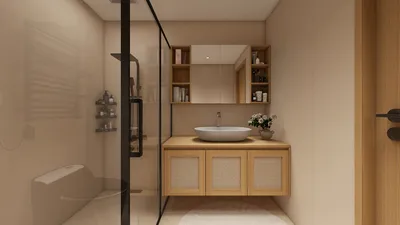


I once persuaded a client that a raw cement wall would provide a unique backdrop for her snug studio — until I coated the entire wall with matte black paint, and she humorously claimed it felt like living in a cave. We shared a laugh, gleaned lessons, and I now always test colors beforehand. If you're eager to visualize the space in 3D prior to making decisions, I often turn to rendering technology — it really helps prevent those cave-like surprises. While small surfaces can be intimidating, they also encourage smart design choices.
1. Limewash for a soft, breathable finish
I’m a big fan of using limewash on cement because it imparts a subtly weathered, Scandinavian aesthetic without completely sealing the wall. It allows the material to breathe, making it ideal for older masonry that needs to expel moisture, and it develops an appealing patina over time. However, one downside is its less forgiving nature if you're aiming for a perfectly even color.
save pin
2. Color blocking to define zones
In compact layouts, utilizing color blocking on a lower third or an angled section can visually rearrange furniture and carve out distinct nooks without the need for actual walls. This method is both budget-friendly and visually striking, but it requires precision taping and a steady hand — or a professional — to prevent jagged edges.
save pin
3. Polished concrete look with faux techniques
If you appreciate the industrial vibe but not the associated chilliness, employing faux-polished techniques using thin microcement or layered stains can introduce warmth and texture. It conveys a luxurious feel while remaining easy to maintain. The trade-off, however, is the increased labor involved, as layered finishes demand more time and skill to apply without creating unsightly blotches. To visualize scale before starting, I sometimes suggest my clients make a quick floor plan, allowing them to evaluate how textures may appear in the space: draw a quick floor plan.
save pin
4. Accent mural or geometric stencil
Creating a painted mural or a large geometric stencil can transform a plain cement wall into a striking focal point, particularly effective behind a bed or sofa. It serves as a highly impactful and cost-efficient solution; just be aware that correcting mistakes on raw cement is usually messier compared to drywall, so adequate preparation and a good base coat are crucial.
save pin
5. High-performance primer + washable paint for longevity
Sometimes, practicality outweighs decorative finishes. A premium masonry primer topped with washable acrylic paint offers lasting durability in spaces like kitchens, laundry areas, or entryways. It's straightforward and economical; if you're unsure about product selection, you can also explore AI suggestions for finishes to quickly narrow down your choices: try AI suggestions for finishes.
save pin
FAQ
1. Do I need a primer for cement walls?
Yes — using a masonry primer is essential as it seals the porous surface and enhances adhesion, which minimizes the number of finish coats needed. Skipping the primer may result in uneven color and quicker deterioration.
2. What types of paint work best on cement?
Opt for masonry or acrylic latex paints designed specifically for concrete, as they offer flexibility and better breathability compared to alkyds. For outdoor cement, choose products that are rated for UV and moisture resistance.
3. Can I paint over old efflorescence or salt stains?
No — efflorescence suggests moisture and salts that will cause paint to peel. It’s essential to remove the salts and address any moisture issues before applying paint.
4. How do I repair cracks prior to painting?
For minor hairline cracks, use a polymer-modified cement filler; deeper cracks might require epoxy injection or a patch mortar. Always prime the repaired areas before painting for optimal results.
5. Is limewash safe for older homes with lead paint?
If your home predates 1978, it’s crucial to Test for lead — sanding or scraping can release harmful lead dust. The EPA provides reliable guidelines on lead-safe work practices: https://www.epa.gov/lead.
6. How many coats of paint are standard on cement?
Typically, you should expect to apply at least two finish coats over the primer; porous surfaces might require additional coats for complete coverage. Conduct a small test area to determine the exact number of coats needed.
7. Can I use washable paint on interior cement walls?
Absolutely — washable acrylic paints are robust and easy to maintain, making them perfect for high-traffic areas and utility spaces. However, they are less breathable than limewash, so be mindful of potential moisture problems.
8. Any quick budget-friendly tips?
Preparation is key to saving money later: ensure you clean, repair cracks, and properly prime to prevent redoing work. Simple strategies like color blocking or using stencils can significantly enhance visual appeal at a low cost.
Discover your home’s potential with Homestyler! This user-friendly platform offers an intuitive online design tool, stunning 3D renderings, and a wealth of design projects and DIY video tutorials. Transform your ideas into reality effortlessly and inspire your creativity today!
Design Now for FREE
































