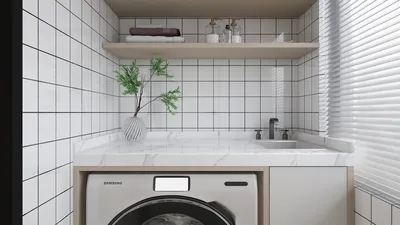


As we look towards the future, modern homes often struggle with inefficient layouts that can waste time and attention. According to AIA data, smaller lot sizes are becoming increasingly standard in urban areas, while buyers, as noted by Zillow, prioritize the flow of spaces over the sheer size of the home. In light of these trends, I consider a three-story house plan on 700 square feet of land as an early prototype of future living—compact, upgradeable, and precise. This is what I term a spatial reasoning toolkit. The limitations of such designs are not constraints; they are simply the syntax of modern architecture.
Ground Level: Service Core + Social Dock
Design Logic: On a limited plot, the ground floor transforms into a city-facing interface, incorporating features like an entryway, micro-garage or bike bay, laundry area, powder room, and a flexible living-kitchen space that serves as a communal hub. Stacking vertically minimizes the footprint while ensuring utility paths are future-proofed.
Flow: This design transitions smoothly from the threshold to a drop zone, followed by a pantry wall, galley kitchen, and a compact lounge; the staircase acts as the main route for movement throughout.
Sightlines: A front-to-back layout with a low credenza and glazed pocket door enhances depth perception, akin to a well-structured user interface.
Storage: Innovative solutions such as pull-out drawers under the stairs, ceiling-mounted rails, and a 14-inch-deep pantry wall contribute to effective organization.
Furniture Fit: The design accommodates a 72-78 inch sofa, 24-inch stools for a 30-inch-deep island, and easily stackable tables—maintaining compatibility with narrow layouts.
Verdict: The ground floor functions like a gateway protocol; it remains public, resilient, and equipped to handle daily high traffic.
save pin
Second Level: Private Suite + Work Ledge
Design Logic: The second level serves as a quiet retreat, featuring a master suite, compact bathroom, and a corridor desk ledge designed for asynchronous work. This aligns with trends towards hybrid schedules highlighted in Houzz studies.
Flow: This area includes an arrival via the staircase, a buffer landing, the bedroom, and bath; the desk ledge benefits from ample natural light while minimizing cross-traffic.
Sightlines: Diagonal windows frame both canopy and sky, maximizing external views while ensuring privacy.
Storage: The layout incorporates a 24-inch-deep full-height closet, bed risers for additional storage, and an organized linen niche—reminiscent of a meticulously indexed database.
Furniture Fit: A queen bed is centered along a 9-10 ft span, with 16-18 inch nightstands and wall-mounted lighting to optimize surface area.
Verdict: This level functions as a focused core, providing low-latency spaces for rest and productivity, ready to adapt over the next five years.
save pin
Third Level: Secondary Room + Roof Interface
Design Logic: The uppermost level acts as an adaptable extension, with the option for a second bedroom or studio, a pocket shower room, and a connection to a micro roof terrace, promoting outdoor access as an essential element of wellness, as noted by the NAHB.
Flow: The staircase leads to a studio or bedroom, followed by the wet core and terrace—a straightforward sequence that encourages light and airflow.
Sightlines: Low sills offer views to the horizon while higher mullions provide privacy from the street—levels designed with sky views as the primary focus.
Storage: Features include knee-wall cabinets, a terrace bench with a dry compartment, and overhead seasonal bins, creating a network of distributed storage solutions.
Furniture Fit: Space accommodates a full or fold-down queen bed, a 48-inch workbench, and a slim lounge chair that can pivot to face exterior views.
Verdict: The third level serves as a flexible canvas—modular and open to adaptations, allowing it to respond to evolving living patterns.
save pin
Final Takeaway
This three-story house plan on 700 square feet is not merely about fitting in additional rooms; it’s about designing an interface where circulation, storage, and light function in harmony, almost like software code. Within this compact space, a small lot house plan can support hybrid work, social interaction, and restorative sleep without excess. The homes of the future will not necessarily be larger; instead, they will be smarter amalgamations of edges, nodes, and buffers—an intentional stack operating efficiently. Based on my observations, vertical precision transforms constraints into a lifestyle enhancement, making tools like Homestyler invaluable for modern home design.
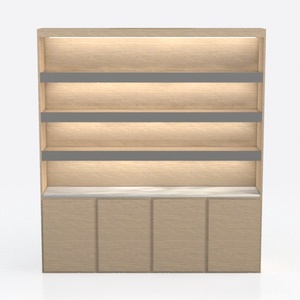
Minimalist Solid Wood Marble Top Display Cabinet with LED Lighting 3D Model

SAFAVIEH Couture Collection Gabrietta Natural/Blac

Modern Metal Solid Wood Freestanding Kitchen Storage Shelving Rack 3D Model
Discover your home’s potential with Homestyler, an outstanding online design platform. Featuring a user-friendly design tool, stunning 3D renderings, diverse design projects, and helpful video tutorials, it empowers you to create beautiful spaces effortlessly—perfect for both beginners and seasoned decorators!
Design jetzt kostenlos
































