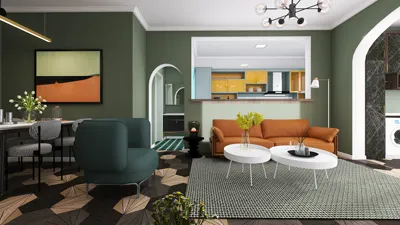


The landscape of midscale travel is witnessing tighter profit margins alongside increasing guest expectations. Nowadays, hotel operators face challenges with workforce efficiency and maintaining guest privacy. Tools for spatial reasoning play a crucial role in optimizing flow and room arrangement. Current AIA project insights highlight a sustained demand for versatile hotel spaces, prompting my clients to request feasible 3-star hotel floor plans that appear both streamlined and spacious—facilitating relaxation, work, and brief social interactions.
Courtyard Spine with Modular Wings
Design Concept: A central garden spine promotes tranquility upon arrival, while modular wings enhance occupancy without overwhelming operational needs—future trends indicate a preference for adaptable structures.
Flow: Entry → reception area → spine promenade → wing corridors → guest rooms; a staff access route from the service core parallels guest pathways to avoid overlap.
Sightlines: The lobby provides a direct view of the courtyard initially, followed by layered perspectives towards the elevator areas; the user interface structure ensures a clear check-in visibility while creating private retreat zones.
Storage: Back-of-house storage solutions are integrated along the spine, featuring linen pods every 12 rooms and collapsible housekeeping stations acting as distributed storage solutions.
Furniture Fit: Queen/king room configurations are designed at 12'×22', with headboard walls equipped with integrated lighting; a micro-work surface replaces traditional bulky desks for more efficient living.
Conclusion: Over five years, this spine functions as both a thermal and social moderator, providing predictable maintenance while enhancing guest comfort.
save pin
Stacked Efficient Core with Split Lobby
Design Concept: A compact mechanical core resembles a server stack, allowing perimeter rooms to benefit from natural light; the split lobby design differentiates transient from lingerer flows.
Flow: Porte-cochère → quick-check area → lift core → room sections; a parallel lounge pathway reduces noise, while the staff route runs discreetly behind a service wall.
Sightlines: Immediate visibility of the check-in area transitions to more relaxing seating zones; corridors emphasize window placements to enhance perceived space.
Storage: Vertical housekeeping shafts are situated intermittently, and a luggage storage area is conveniently located near the quick-check point to minimize front-of-house clutter.
Furniture Fit: 11'×20' compact rooms utilize wall-mounted wardrobes for streamlined storage; a foldable bench serves dual purposes—for seating or storing bags.
Conclusion: This efficient core reduces energy consumption and movement; guests navigate smoothly, with staff workflows operating seamlessly.
save pin
Mixed Room Typology with Micro Amenities Loop
Design Concept: A distribution of 60/30/10 for standard, family, and accessible rooms addresses diverse guest needs; a loop of micro amenities replaces traditional oversized facilities.
Flow: Arrival → amenity circle (coffee station, phone booths, compact fitness area) → elevators → rooms; the service area parallels for efficient restocking.
Sightlines: Amenity points are visually represented—espresso station, booths, wellness areas—while corridors remain quiet; wayfinding serves as minimalist interface cues.
Storage: The amenity circle accommodates consumables in evenly distributed storage, complemented by smart bins at key locations; underbed drawers in rooms serve as localized storage solutions.
Furniture Fit: The standard room design maintains a width of 10'6" with an integrated headboard shelf; family accommodations expand to 13', featuring a bunk niche for added functionality.
Conclusion: As travel habits diversify, this loop promotes high occupancy without causing fatigue, ensuring that the layout remains intuitive while being people-focused.
save pin
Final Insights
Today’s three-star hotel floor plans are evolving into efficient operating systems that radiate warmth and comfort. With thoughtful room designs, circulation spines, and diverse typologies, midscale hospitality resembles future-ready frameworks rather than mere square footage. My observations reveal that the most effective hotels are not necessarily large but rather more intentional, demonstrating that even minor spatial decisions can dramatically alter how guests rest and move, aligning seamlessly with tools like Homestyler for optimal design solutions.

Modern Oak Metal Round Dining Table 3D Model
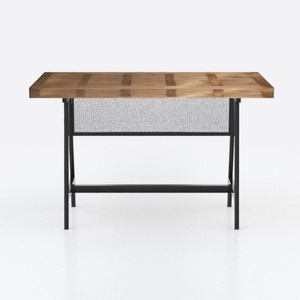
3-Piece Small Dining Table Set Kitchen Table and 2
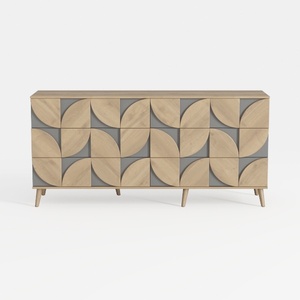
Modern Geometric Pattern Solid Wood Sideboard Cabinet 3D Model
Homestyler is your go-to online home design platform! With its user-friendly design tool, stunning 3D rendering features, and a wealth of inspiring design projects and video tutorials, transforming your space has never been easier. Create your dream home with Homestyler today!
立即免费设计
































