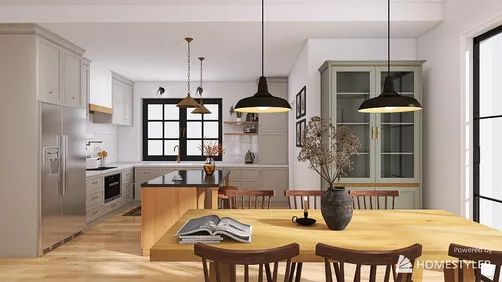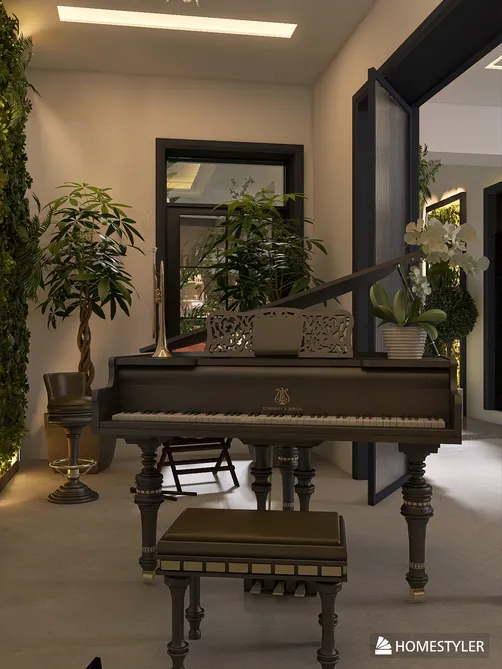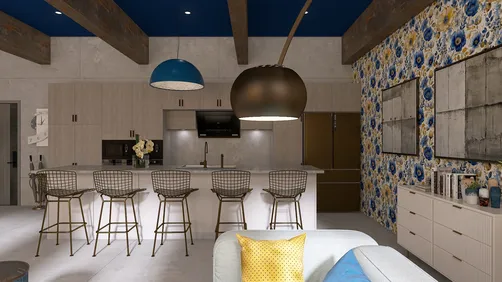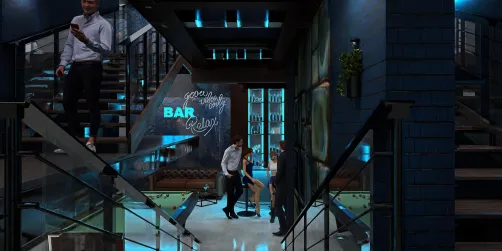



As the future looms ahead, my clients face the challenge of managing noise, disarray, and fluctuating schedules. I interpret three-bedroom 3D house floor plan images as early blueprints aimed at creating a more serene living environment. Recent data from NAHB indicates a notable rise in multigenerational features and versatile rooms after 2020—demonstrating that home layouts are adapting to allow for both privacy and communal activities. I envision a transformation in design where rooms function as programmable nodes, circulation dynamics serve as guided pathways, and storage resembles a cache that enhances daily living. Utilizing tools like Homestyler can support this spatial reasoning.
**Split-Core Axis**: A social backbone supported by dual private wings
**Design Logic**: An open central spine encompassing the kitchen, living, and dining areas maintains family routines while the two-bedroom wings accommodate various schedules; future residences will require this essential latency buffer.
**Flow**: The pathway is structured as follows: Entry → drop zone → kitchen hub → living view corridor → left wing (primary suite) → right wing (children/guest), a design that minimizes traffic overlap.
**Sightlines**: Extended axial views towards the yard are paired with angled perspectives towards the doors, facilitating passive monitoring, while glass corners act as user interface highlights devoid of screen distractions.
**Storage**: Deep wall pantries paired with hallway cabinetry function as mid-speed caches; concealed benches near the entry hold high-frequency items for convenience.
**Furniture Fit**: A living area of 10-12 feet accommodates modular sofas and low consoles, while the dining area is designed for a table ranging from 72 to 84 inches, ensuring smooth circulation.
**Verdict**: This layout withstands the test of time: a defined core and adaptable wings—five years later, it continues to facilitate seamless energy flow between solitude and social gatherings.
save pin
**Looped Enfilade**: A circular layout that reduces dead ends
**Design Logic**: A gentle looping design around the shared core allows children to move freely, elders to navigate safely, and chores to stack efficiently; upcoming living spaces will prioritize seamless cycles.
**Flow**: The path is defined as: Mudroom → kitchen → pocket study → cluster of bedrooms → bath node → gallery hall → returning to living; this loop minimizes errand times.
**Sightlines**: Layered thresholds gradually reveal depth, framed views to garden ‘status screens’ at each corner provide orientation.
**Storage**: Perimeter cabinetry serves as a buffer; linen nooks are positioned near bathrooms, and vertical lockers in the mudroom manage weekday traffic effectively.
**Furniture Fit**: Thoughtfully designed radii with rounded table edges and swivel lounge chairs honor turning space; bed placements benefit from 36-inch side aisles as a base API.
**Verdict**: The loop functions as a serene wellness mechanism—movement is intuitive, and the design maintains flexible routines while minimizing visual clutter.
save pin
**Hybrid Suite + Flex Node**: A single room that can be transformed as needed
**Design Logic**: A third bedroom offers versatility, transforming into a studio, guest space, or caretaking area; homes of the future will be rewarded for rooms that redefine purpose without requiring major renovations.
**Flow**: The sequence includes: Secondary entry → flex node → shared bathroom → kitchen storage → terrace; a short route for guests and tasks, separate from nighttime pathways.
**Sightlines**: Sliding partitions adjust visibility; from a desk, one can monitor both the garden and the core areas, akin to dual monitors for home management.
**Storage**: An adaptable wall system features pegboard grids, deep drawers, and fold-down surfaces—high-density storage for seasonal adjustments.
**Furniture Fit**: A Murphy bed clears out to create a 60-inch workspace; a modular desk takes up a 30-inch depth; an occasional chair with a 36-inch pivot radius honors the design’s API.
**Verdict**: Years down the line, this space continues to adapt: serving as a workspace, a sleepover venue, or a caregiving location—one address accommodating numerous futures.
save pin
## Final Takeaway
Three-bedroom layouts, particularly when visualized through 3D house plan imagery, have shifted focus from mere room allocation to the precise orchestration of human interactions. Variants such as split-core designs and looped enfilades convert three-bedroom 3D house floor plans into resilient frameworks accommodating fluctuating family dynamics and work patterns. My observations suggest that tomorrow's most sophisticated homes will focus less on size and more on intentionality, with small design choices subtly transforming everyday life, often facilitated by tools like Homestyler.
Homestyler's roots trace back to Autodesk, the global leader in design and engineering software. That heritage lives on in every feature we build. Today, with a community of more than 20+ million registered users (platform data, 2026) worldwide, Homestyler continues to make professional-quality interior design accessible to everyone — from first-time decorators to seasoned architects.

Minimalist Concrete Large Planter Pot with Greenery 3D Model

Modern Walnut Fabric Dining Table Chair Set 3D Model
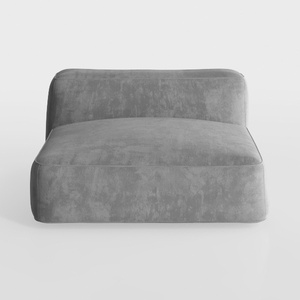
Minimalist Gray Fabric Armless Chair 3D Model
Looking to transform your space? Homestyler is your go-to online home design platform! With its user-friendly design tool, stunning 3D renderings, inspiring design projects, and helpful video tutorials, you can easily create and visualize your dream home. Get started today and unleash your creativity!
지금 무료로 디자인하세요