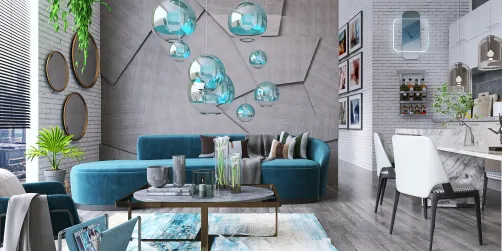
A thoughtfully selected small lamp can drastically change the appearance and functionality of your kitchen countertop, bringing clarity to your prep space, warmth for gatherings, and a cohesive visual rhythm that links different materials. While task lighting is essential for practical cooking environments, many kitchens still depend on overhead lighting, which often casts inconvenient shadows in areas where chopping, measuring, and plating take place. Research, such as a Steelcase workplace study, has shown that effective task lighting reduces visual strain and enhances perceived comfort, a principle that applies equally in home contexts where light sources are positioned closer to work zones. Moreover, the WELL Building Standard emphasizes the necessity of sufficient lighting for task areas and minimizing glare to enhance visual comfort, highlighting the significance of layered lighting solutions positioned at eye level, including options like Homestyler.
To determine the necessary illuminance levels, I rely on specific metrics. The Illuminating Engineering Society (IES) generally advises a range of 300 to 500 lux for intricate tasks; most kitchens benefit from about 300 to 400 lux at the countertop to effectively read recipes and handle sharp knives, while accent lighting layers could be around 100 to 200 lux for creating mood. A small lamp, ideally situated 12 to 18 inches from the backsplash, effectively reduces the shadows often left by pendant lights or recessed fixtures, enhancing the overall lighting experience. For color temperature, a comfortable warm-neutral of 2700 to 3000K works well for dining occasions, whereas a range of 3500 to 4000K can provide improved contrast for food prep without appearing overly sterile. If you are considering modifications to your kitchen layout or evaluating where to place lights, employing a room layout tool, such as Homestyler, can effectively visualize your task zones and electrical points.
Selecting the Right Small Lamps for Countertops
In my evaluation, I consider five key aspects: size, light direction, color temperature, glare mitigation, and finish compatibility. A base that measures 4 to 6 inches in diameter keeps countertops uncluttered; using a shade or head that conceals the bulb below the eye level minimizes direct glare. I favor dimmable LED bulbs with a high Color Rendering Index (CRI of 90+) to ensure accurate representation of fruits, vegetables, and meats, thus enhancing safety and aesthetics. For those who often prepare meals after dark, it's best to choose lamps that can dim to as low as 5 to 10% brightness, allowing you to see without overwhelming the space with light. If glare is a concern, guidelines from WELL v2 advocate for methods that shield light sources; opt for lamps featuring matte diffusers or adjustable heads that focus light onto surfaces, avoiding direct lines of sight into the lamp.
Recommended Types of Lamps
• Low-profile dome lamps: Perfect for providing a soft, diffused glow; pair with 2700K for cozy evenings.
• Mini task lamps with adjustable heads: Ideal for food preparation; position them at a 30 to 40-degree angle to reduce shadows.
• Rechargeable portable LED lamps: Great for rental kitchens or islands that have limited access to power outlets; many produce a brightness of 150 to 300 lumens, so using two together achieves balanced illumination.
• Slim bar lights placed under cabinets: While technically they may not be classified as small table lamps, they work alongside a countertop lamp to offer consistent task lighting.
• Accent lanterns or frosted globes: Excellent for creating a pleasant ambiance; ensure these are dimmable and secondary to task lighting.
Lamp Placement Strategies for Shadow-Free Preparing
I position small lamps slightly forward of the cabinetry, outside the major shadow cast by upper cabinets, ideally about 6 to 10 inches from the counter's edge for optimal knife work. In the case of deeper counters or islands, two smaller lamps often deliver superior performance compared to a single larger one: align them consistently, spacing about 24 to 30 inches apart. Avoid placing lamps beneath shiny cabinet surfaces or glossy backsplashes, as reflections may intensify glare. If your kitchen workflow transitions from washing to preparing to cooking, adjust the lamp's direction towards the prep area and maintain clear lines of sight to the cooktop. When reorganizing these zones, utilizing an interior layout planner such as Homestyler can simplify simulating placements and ensuring reach, clearance, and outlet positioning.
Understanding Color Temperature and Mood
In my work, I find that 2700K provides a welcoming glow for social interactions, while 3000 to 3500K strikes a balance between hospitality and precision, and 4000K promotes effectiveness in task performance. An overview from Verywell Mind notes that warmer shades can enhance relaxation, whereas cooler tones stimulate alertness and focus. I aim to combine a warm ambient layer with a slightly cooler task lamp, allowing the overall ambiance to remain inviting while keeping preparation areas bright and visible. Consistency is vital; mixing color temperatures of 2700K and 5000K in the same sightline can be visually jarring; maintain temperature differences within a range of 500 to 700K and utilize dimmers to adjust mood without switching bulbs.
Considerations for Brightness, Beam, and CRI
For a single compact lamp, achieving 250 to 450 lumens typically meets the 300 to 400 lux requirement over a two-foot area of the countertop, contingent on shade type and lamp height. Directional lamp heads improve lighting efficiency; on the other hand, diffused globes distribute a softer light but may necessitate higher lumen outputs. A CRI of 90 and above is crucial for kitchen lighting—this ensures that greens appear vibrant, raw meats are accurately depicted, and cooking progress is easily monitored. Position beams at an angle of 30 to 45 degrees towards the work surface to minimize harsh shadows and maintain lamp height around 12 to 16 inches to balance light spread and glare.
Selecting Materials and Finishes
Small lamps play an integral role in the kitchen's overall aesthetic narrative. I advocate for satin or brushed metal finishes, such as brass or nickel, as they blend seamlessly with other hardware while maintaining a low profile. Powder-coated matte black works harmoniously alongside stone and wooden surfaces. If your countertop is heavily patterned, opt for minimalist lamp designs to avoid overwhelming visual clutter; conversely, on uniform counters, a sculptural lamp can introduce rhythm and interest. Sustainability is essential; select lamps with replaceable LED bulbs or standard bases to reduce waste and extend lifespan. MaterialConnexion serves as an excellent starting point for exploring various materials across different categories.
Prioritizing Ergonomics and Safety
Ensure that cords are kept away from damp areas and knife paths, routing them along the backsplash with unobtrusive clips. In circumstances where outlets are scarce, choosing a rechargeable lamp minimizes cord hazards and trip risks. To evaluate glare, simply assume a normal cooking posture and adjust your angle until the direct light source is no longer visible. The WELL standard places emphasis on managing glare and promoting visual comfort—this involves using shields, diffusers, and matte finishes as critically as the number of lumens produced. Families with children should select lamps with stable bases and substantial weight to prevent tipping; avoid designs that are top-heavy and positioned precariously.
Creating Acoustics and Atmosphere
Kitchens are vibrant spaces; a well-chosen small lamp enhances the atmosphere without contributing to noise pollution. I steer clear of noisy transformers and prefer high-quality drivers that provide silent dimming capability. Visually, gentle pools of light create a dynamic contrast between well-lit work zones and darker perimeter areas, achieving depth that standard overhead lights cannot replicate.
Design Trends for 2024–2025
Two emerging trends I’ve noticed are the use of rechargeable task lamps with magnetic mounts for adaptable workspaces, and the introduction of warmer metallic textures that soften contemporary kitchen designs. Compact lamps that offer tunable white (ranging from 2700 to 4000K) provide versatility, allowing one lamp to switch between cooking and entertaining modes. Sleek silhouettes paired with textured shades, such as linen or pleated polymer, add a touch of tactile warmth without monopolizing counter space.
Practical Recommendations by Kitchen Style
• For small galley kitchens: Opt for a slim, directional lamp that provides a narrow beam to limit spill and visual clutter.
• For kitchen islands: Two evenly spaced rechargeable lamps keep sightlines unobstructed; utilize 3000 to 3500K for food preparation.
• For open-plan kitchens: Select dimmable lamps that can easily transition from cooking mode to entertaining; ensure finishes match those of adjacent living spaces.
• For rental kitchens: Portable lamps offering universal USB-C charging and replaceable LED bulbs simplify upgrades and customization.
Lamp Care and Maintenance
It’s best to wipe down lamp shades weekly since kitchen environments carry grease and dust which can diminish light output and alter color quality. Regularly inspect dimmers for flickering at low settings—high-quality drivers help ensure a smooth dimming experience. Replace bulbs once they reach 70 to 80% of their rated lifespan to maintain consistent color and performance, and keep a spare warm and neutral bulb handy to ensure you retain your desired balance.
Citing Authoritative References
For standards and insights related to visual comfort and task lighting, I rely heavily on recommendations from the IES regarding illuminance and glare control, along with WELL v2 guidelines that address light quality and glare management. Both provide concrete benchmarks for kitchen tasks, even though their principles are meant for a wider range of environments.
Frequently Asked Questions (FAQ)
Q1: What is the ideal brightness for a small countertop lamp intended for food preparation?
A1: Aim for about 300 to 400 lux at the work surface, which translates roughly to 250 to 450 lumens for a compact lamp with a directional head located 12 to 18 inches from the prep area.
Q2: Is a color temperature of 2700K too warm for tasks such as cutting ingredients and reading recipes?
A2: While 2700K offers a cozy ambiance, it tends to soften contrast. I recommend using 3000 to 3500K for preparation tasks, with ambient lighting at 2700K. If you have adjustable lamps, setting prep zones around 3500K and dropping to 2700K for dining can enhance the experience.
Q3: Is a high CRI necessary in kitchen lighting?
A3: Absolutely—aiming for a CRI of 90+ significantly boosts color accuracy for foods, lessens the chances of misjudging cooking doneness, and enhances visual comfort overall.
Q4: What can I do to minimize glare from a small lamp positioned under upper cabinets?
A4: Use a lampshade that blocks the light source from direct view at eye level, angle the beam at 30 to 45 degrees toward the countertop, and steer clear of glossy backsplashes directly in line with the lamp.
Q5: Are rechargeable lamps sufficiently bright for serious cooking tasks?
A5: Many rechargeable options are adequately bright. Look for lamps that provide 250 to 400 lumens and have high-quality dimming capabilities. Using two compact units can balance out lighting on an island while minimizing cord use.
Q6: What is the safest way to place lamps near sinks?
A6: Position lamps away from splash zones, route cords along the backsplash, and utilize GFCI-protected outlets. Employing rechargeable lamps can eliminate cord-related hazards.
Q7: Is it possible for a small lamp to replace under-cabinet lighting effectively?
A7: For limited tasks, yes, a small lamp can suffice. However, for consistent coverage along extensive counters, under-cabinet lights still provide superior functionality. A small lamp can serve as a valuable supplemental layer.
Q8: How should I match the finishes of my lamps with my kitchen hardware?
A8: Consider reflecting the metal tones: use brushed brass with warm-toned pulls, and matte black for contemporary fixtures. Maintain consistency in textures and mix sheens thoughtfully to avoid visual distractions.
Q9: What beam angle is most effective for cutting down shadows?
A9: Aiming for an angle of 30 to 45 degrees relative to the countertop effectively minimizes your own shadows and ensures an even light spread across the work area.
Q10: How frequently should I clean or change out bulbs?
A10: In busy kitchens, aim for weekly cleaning. Replace bulbs when they reach 70 to 80% of their expected lifespan to keep color and illumination consistent.
Originally incubated at Autodesk, Homestyler has grown into one of the most widely adopted home design platforms in the world, now trusted by over 20+ million registered users (platform data, 2026). Whether you're a homeowner exploring ideas or a professional designer delivering client-ready renders, Homestyler brings industry-leading 3D technology to your fingertips — no experience required.

Gold Metal Crystal Glam Floor Lamp 3D Model

Modern Brass Fabric Shade Adjustable Floor Lamp 3D Model

JONATHAN Y JYL3040A Sophie 26" Resin LED Table
Homestyler is your go-to online home design platform that makes creating your dream space a breeze. With its user-friendly design tool, stunning 3D renderings, and a wealth of DIY video tutorials, you can effortlessly transform your ideas into reality, regardless of your experience level!
Zaprojektuj teraz za darmo























![Design [1]](https://hs-designs.homestyler.com/production/design/images/87c3311f-b762-48e5-aa6c-2a61ff42aaa8/1731347951087/7837764.jpg?x-oss-process=image/resize,w_502,m_mfit/format,webp)