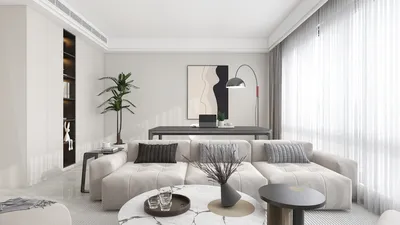


Modern chandeliers have undergone significant transformation, moving past the traditional crystal designs. Today's options offer a perfect blend of artistic appeal and functionality, providing ambient lighting while managing glare and creating the desired atmosphere in a living room. When selecting fixtures, I prioritize those that integrate seamlessly with the room's dimensions, flow, and seating layout, enhancing the lighting experience through adjustable dimming and varied light sources.
The quality of light should match its aesthetic value. According to the WELL Building Standard v2, maintaining cozy ambient light levels between 100 and 300 lux is recommended for living and lounge spaces, with the flexibility to increase brightness for specific tasks. The Illuminating Engineering Society (IES) highlights the importance of glare control and consistency in lighting to enhance visual comfort. Placing a chandelier within this ideal light range, complemented by dimmers and supplementary lamps, allows the space to adapt—whether for social gatherings, movie nights, or relaxation. For further details, refer to WELL v2 and IES online resources.
The impact of color, material, and brightness on perceptions is profound. An article by Verywell Mind explains that warm tones promote a welcoming ambiance, while cooler shades convey calm sophistication. For example, a matte brass chandelier paired with 2700–3000K warm-white LEDs creates an intimate feel, while a satin nickel or black fixture at 3000–3500K offers a crisp yet relaxed atmosphere. I tend to steer clear of overly blue light in living rooms since temperatures above 4000K can feel stark at night, disrupting the evening wind-down.
Choosing the Right Scale
Proportion is essential to prevent visual chaos. A good rule of thumb suggests that the diameter of the chandelier should be around 50–70% of the coffee table width when positioned above the main seating area. If there's no obvious focal table, I typically select diameters of 18–30 inches for smaller living rooms, 30–40 inches for medium spaces, and 40–54 inches for larger rooms, adjusting as needed based on ceiling height and sightlines. If the room's layout is still in development, using an interior layout planner can assist in visualizing the chandelier's size relative to human movement and seating arrangements, enhancing your design planning with tools like Homestyler.
Mounting Height and Visual Comfort
In living rooms, I usually install chandeliers so the lowest point is between 7 to 7.5 feet above the finished floor, or slightly higher in areas with heavy foot traffic. Suspended above a coffee table, it can be lowered—generally 30 to 36 inches above the surface—as long as safety clearances are maintained. Opting for diffusers, frosted lenses, or indirect uplighting helps reduce glare, especially when seating faces the chandelier. Consistent brightness (avoiding excessively bright single diodes) and dimming down to about 10% enhances comfort in the evenings.
Layered Lighting Strategy
The chandelier serves as the anchor for ambient lighting, but it shouldn't be the sole source. I like to combine it with wall washers for vertical light, floor lamps for reading, and smaller accent lights for artwork display. The goal is to achieve balanced brightness, with gently illuminated walls, evenly lit faces, and no harsh contrasts. This method aligns with IES recommendations for uniformity, facilitating relaxed conversations or movie watching.
Material and Finish Selection
Contemporary chandeliers are available in various materials including hand-blown glass, metal frames, wood finishes, and composite diffusers. Metal options like brushed brass, smoked bronze, and blackened steel are both classic and durable. Glass globes provide soft light diffusion; opal and sandblasted types minimize point-source glare. Environmentally friendly choices, such as FSC-certified wood veneers and LED modules with replaceable drivers, are also available. I ensure that the chosen finishes complement existing hardware and fabrics to avoid mismatched tones: brass has a warm feel; nickel gives a cooler tone; black remains neutral and graphic.
Color Temperature and Dimming
For living areas, a color temperature of 2700–3000K typically feels most appropriate. I aim for high-CRI (90+) LEDs to maintain natural skin tones and accurate colors in artwork. Coupling the chandelier with a dimmer that offers smooth low-end performance is crucial, as not all LED drivers provide clean dimming. Scene control options for movie nights, reading, or hosting can simplify transitions and keep the atmosphere cohesive.
Design Typologies to Consider
- Linear sculptural: Perfect for elongated spaces, offering clean lines and even light distribution across seating.
- Clustered globes: Provide soft light diffusion and playful design, ideal for placing over a coffee table.
- Ring chandeliers: Feature minimalistic design with strong uplight and downlight capabilities.
- Branching structures: Create an organic look, balancing projections to avoid disrupting sightlines.
- Minimal discs or panels: Achieve a low-profile appearance with broad light diffusion, suitable for lower ceilings.
Ceiling Heights and Architectural Integration
Rooms with tall ceilings can accommodate larger chandeliers and multi-tier designs. In spaces with 9 to 10-foot ceilings, I prefer modest vertical depths for fixtures and use indirect components to mitigate glare. For vaulted ceilings, a suspension canopy with multiple drop points can visually balance the space. In rooms with lower ceilings, semi-flush ring luminaires make a stylish statement without compromising head clearance.
Acoustic and Comfort Considerations
Living rooms with hard surfaces can amplify sound. While chandeliers generally don't absorb acoustics, choosing fabric shades or wooden finishes can offer slight sound diffusion. More effective is combining the fixture with soft furnishings like rugs, curtains, and upholstered chairs. Balanced lighting eases visual strain, supporting conversation flow and reducing fatigue during long gatherings.
Safety, Maintenance, and Longevity
It's vital to check the fixture weight against the junction box ratings; heavy chandeliers may require sturdier mounting solutions. Select fixtures with sealed diffusers to facilitate cleaning and choose LEDs rated for L70 at 50,000 hours or longer. When utilizing dimmers, ensure compatibility to avoid flickering at low levels. For layouts that change seasonally, consider adjustable suspension systems or modular clusters that can be reconfigured without extensive rewiring.
Styling the Chandelier Within the Room
I prefer to style modern chandeliers with a sense of restraint—opting for one impactful piece that harmonizes with grounded textures. If the chandelier features strong geometric lines, surrounding decor should be simpler to maintain visual serenity. Mirroring metal finishes in a few accent pieces (such as a frame or side table legs) fosters cohesion without creating an overly matched look. Warm bulbs, textured throws, and wall colors that align with the fixture's tones complete the aesthetic.
Planning Your Layout
Before making a purchase, I suggest marking out the footprint using painter’s tape and a scaled template. Assess seating arrangements and traffic patterns to ensure the chandelier is centered on the functional area rather than just the geometric midpoint of the room. If you need expedited visualization and clearance assessments, design simulation tools like Homestyler can be useful.
FAQ
Q1: What is the ideal chandelier size for a medium living room?
A: For most medium-sized living rooms, a diameter of 30–40 inches is suitable, adjusted according to ceiling height and coffee table dimensions. Target approximately 50–70% of the coffee table width if it’s the main focal point.
Q2: What color temperature is optimal?
A: A warm-white color temperature of 2700–3000K works best for living rooms—both inviting and clear. Pair with CRI 90+ LEDs for accurate color depiction.
Q3: How bright should the lighting be?
A: Aim for ambient lighting around 100–300 lux, in line with WELL v2 recommendations, and use dimmable fixtures for adaptability. Complement with floor and wall lights for a well-rounded lighting approach.
Q4: What mounting height is deemed comfortable?
A: Typically, chandeliers should hang 7–7.5 feet above the floor for general living areas. Position it 30–36 inches above a coffee table if it's centered above seating and safety clearances are observed.
Q5: How can I minimize glare?
A: Opt for fixtures that include diffusers, frosted glass, or indirect lighting components. Verify that the dimmer and driver are compatible to ensure smooth low-end dimming and reduce glare from exposed point sources.
Q6: Are ring chandeliers suitable for lower ceilings?
A: Absolutely—slim ring designs or semi-flush discs provide a contemporary look while ensuring ample headroom.
Q7: Which finishes have longevity?
A: Brushed brass, blackened steel, and satin nickel are all durable selections. Ensure finishes match existing hardware for cohesion across accents.
Q8: Can chandeliers enhance acoustics?
A: Their influence is limited. Opt for fabric shades or wooden elements for slight sound diffusion and pair the fixture with soft furnishings—like rugs and curtains—for more impactful acoustic comfort.
Q9: How do I effectively center the chandelier?
A: Aim to center the chandelier above the primary seating area rather than the room's geometric center. Utilize layout planners to align with traffic flow and design focal points.
Q10: What maintenance is essential?
A: Ensure that your junction box can support the weight of the chandelier, select sealed diffusers for easy maintenance, and specify LED modules with a long lifespan and flicker-free dimming ability.



Homestyler is your go-to online platform for transforming your home design dreams into reality. With its user-friendly design tool, stunning 3D renderings, and a wealth of DIY video tutorials, you can explore endless design possibilities with confidence and creativity.
Progetta ora GRATIS
































