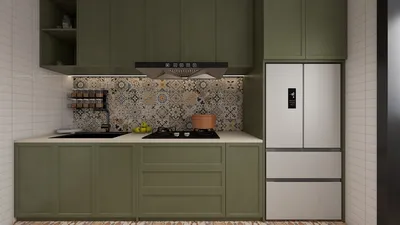


As we look towards the future of healthcare design, the inevitable challenges of space constraints, patient privacy, and maintaining a sterile environment loom large for today's clinics. I envision that the essence of care is where the temporal and spatial elements converge. Recent findings from the AIA and NAHB indicate a surge in demand for smaller, adaptable healthcare spaces as budgets tighten and patient traffic diversifies. My design for a small medical clinic, covering an area of 16 ft by 10 ft, represents an early blueprint for the outpatient care model of the future, which can be visualized effectively through tools like Homestyler.
Option A: Linear Care Spine
Design Concept: One side of the room functions as a service spine with essential features such as a sink, sharp disposal, and storage for supplies, while the opposite side is dedicated to seating and vital sign checks, establishing a clear division for clean and dirty areas that can seamlessly integrate with telehealth check-ins in the future.
Flow: Starting from the entry, patients move through check-in, then to the vitals bay, followed by the exam zone before exiting. This one-pass loop minimizes cross-contamination risks and eases cognitive burden, similar to a well-structured script.
Sightlines: From the entrance, the triage area is first, the exam space is next, with storage areas concealed. The sightlines function like user interface layers, prioritizing critical information while positioning procedures in a secondary role.
Storage: Upper cabinets act as quick-access storage while base drawers are designed for long-term archive. Clearly labeled modules ensure that PPE, diagnostics, and disposables are organized and easily accessible.
Furniture Fit: The furniture includes a 24–30" patient chair, a compact exam table measuring 24–26" by 70", a portable stool, and a wall-mounted foldable desk. Each piece is appropriately sized for the 16 ft by 10 ft space, allowing for unimpeded movement.
Conclusion: This design embodies a corridor mindset within the room, facilitating rapid patient visits. Looking five years ahead, we can anticipate the incorporation of plug-in sensors that integrate with the service spine, akin to peripherals connecting to a bus in technology.
save pinOpen in 3D Planner Processing...
Option B: Corner Exam Node + Triage Pocket
Design Concept: The exam table is strategically positioned in a rear corner, creating space in the front for a triage area. Corners effectively function as compute nodes, streamlining procedural concentration while the entryway manages intake processes.
Flow: Patients will enter and proceed to the triage pocket, making a left turn to the exam node, where supplies are within easy reach, followed by exit without backtracking—ensuring a clean sequence of actions.
Sightlines: Patients experience daylight and a view of staff rather than tools, while staff can monitor vital signs and accessible zones; sharp instruments are kept out of direct sight to reduce anxiety—an effective design principle.
Storage: Incorporating vertical pull-outs and slim shelves above sinks that are 12–15" deep allows for an organized approach to gloves, tips, and swabs, effectively minimizing wait times.
Furniture Fit: Featuring a wall-mounted folding consult table, a compact sink, an 18" depth supply tower, and a ceiling track for privacy curtains, this design maintains minimal footprints to allow for easy navigation.
Conclusion: This triage pocket provides an effective buffer for arrivals while ensuring privacy; future enhancements like a digital otoscope or a blood pressure dock can be incorporated into the design without major alterations.
save pinOpen in 3D Planner Processing...
Option C: Central Island Cart + Perimeter Calm
Design Concept: A mobile cart serves as the core processor for diagnostics on wheels, while surrounding walls maintain a calm visual presence that can adapt to various specialty days.
Flow: Patients will enter, be greeted, and seated while the cart rolls to them, with perimeter stations serving as adjunct support; the cart can be parked for sanitization, creating an adaptable loop similar to event-driven coding.
Sightlines: The low height of the cart allows for unobstructed horizontal views; key information is visible to the staff while patients enjoy soft surfaces and neutral colors—creating a hierarchy that eliminates glare.
Storage: The cart features drawers for active supplies and wall cabinets designated for less frequently used items; the replenishment schedule aligns with patient flow similar to scheduled tasks in an efficient program.
Furniture Fit: The cart measures 20–22" wide with 30" clearance pathways, complemented by a 26–28" exam bench and a fold-down documentation shelf, ensuring that ADA compliance for turning space in a 16 ft by 10 ft area is maintained.
Conclusion: The mobility aspect of this room design enhances its adaptability for future needs; in the next few years, smart carts may integrate patient vitals and inventory systems, transforming the clinic into a dynamic healthcare environment.
save pinOpen in 3D Planner Processing...
Final Thoughts
A small medical clinic designed with dimensions of 16 ft by 10 ft can thrive when it operates as an interface for healthcare rather than merely a physical space. Concepts like 'micro exam room design' and 'compact outpatient triage layout' illustrate how the elements of flow, sightlines, and storage function cohesively. Future clinics won't necessarily get larger; instead, they will focus on efficient flows and precisely designed furniture APIs that create a tranquil and responsive care experience. From my experience, the most effectively designed healthcare spaces operate much like well-written software—facilitating patient visits with an elegance that enhances overall care delivery, especially when utilizing innovative tools like Homestyler.
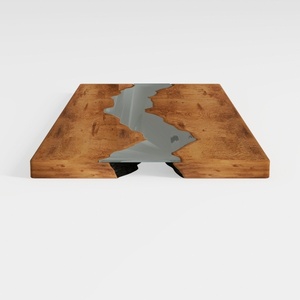
Large Luxury Office Desk, Live Edge Color River


Sideboard Buffet Cabinets with Storage, Modern

Modern Black Metal Glass Solid Wood Bookshelf with Storage Drawers 3D Model
Discover Homestyler, your go-to online home design platform! With its user-friendly design tool, stunning 3D rendering, diverse design projects, and helpful DIY video tutorials, you can effortlessly transform your home vision into reality. Start creating your dream space today!
تصميم الآن مجانا
































