


As our lifestyles evolve, the focus is shifting towards flexible mobility solutions, yet many of today's retail challenges—such as crowding, unclear circulation, and disorganized storage—persist. Ongoing analysis of AIA retail data indicates a growing demand for adaptable spaces that can alternately serve display and service purposes without losing coherence. In this context, the design of a two-wheeler showroom emerges as a pioneering model for future storefront operations. The horizon of change is drawing near, and its shape is becoming clearer.
spatial reasoning toolkit
Front Spine Gallery
Design Principle: A linear display that guides customers along a coherent story—from commuter scooters to high-end tourers—reflects the future of retail as a curated experience rather than mere volume.
Flow: Entry → welcoming area → spine lanes → feature podium → consultation points; this structured path has no dead ends, leading back to relevant accessories.
Visual Perspectives: Low bike bases and tall light dividers establish focal points, while service glass windows showcase activity, reinforcing trust as a user interface.
Storage Solutions: Drawers beneath the displays, a grid on the rear wall, and overhead racks for helmets allow for organized storage that varies from high to low-demand items.
Furniture Arrangement: Lane widths of 900–1200 mm, turning nodes spaced at 1800 mm, and modular plinths ensure safety and accessibility for two-wheel maneuvering.
Conclusion: This display spine transforms browsing into a scrolling experience—clean, anticipatory, and aligned with the next five years of micro-mobility retail trends, particularly using tools like Homestyler for enhanced visualization.
save pin
Service Lab Loop
Design Principle: The service area is strategically located in the middle—not concealed—since future consumers expect transparent service as part of their interaction with the brand.
Flow: Reception desk → diagnostic area → tool wall → service circuit → handover zone; this closed-loop design minimizes cross-traffic with customers.
Visual Perspectives: Partial-height glass framing the service area acts like a status window, with visual breaks at 1200 mm to manage noise and maintain order.
Storage Solutions: Vertical pegboards, labeled containers, and under-bench storage provide quick access to parts and keep bulk stock in a designated cold storage area.
Furniture Arrangement: A bay depth of 2400 mm per bike, 900 mm bench clearance, and anti-slip surfaces ensure comfort and efficiency for mechanics.
Conclusion: A transparent and organized service loop enhances credibility, establishing trust as a metric of continual uptime in future mobility retail.
save pin
Accessory Cloud & Lounge
Design Principle: The future of retail intersperses micro-rituals—such as charging, testing, and customization—with social interactions; this area serves as the human component of the retail experience.
Flow: Accessories wall → fitting area → charging station → lounge → checkout; this gently curved path transforms curiosity into ownership.
Visual Perspectives: Peripheral shelving operates like a HUD; the central island encourages movement while sightlines in the lounge direct to exits for convenience.
Storage Solutions: RFID-equipped drawers for helmets and gloves, mesh racks for pannier storage, overhead bins for easy access; organized storage that is readily available.
Furniture Arrangement: A 700 mm height for islands, a 1000 mm circulation path, and seating with power options are designed with quick decisions and comfort in mind.
Conclusion: This accessory area evolves into a dynamic pathway for upgrades—configurable today, adaptable for the future, smoothly integrating with rider preferences.
save pin
Final Insights
The layout of a two-wheeler showroom goes beyond simple display; it functions as a mobility interface that promotes transparency, coherence, and continual service. By utilizing modular display paths, an open service loop, and an accessory cloud, the showroom evolves into a living operating system for two-wheel culture. From my experience, the most intelligent mobility stores of the future won't necessarily be larger—they will be more purposeful, and I am continuously innovating designs that operate akin to software, leveraging tools like Homestyler.
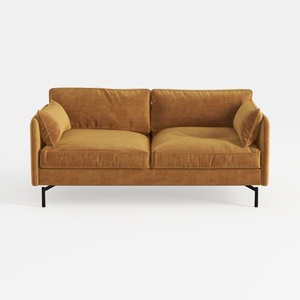
Modern Velvet Upholstered 2 Seater Sofa With Black Metal Legs 3D Model

Minimalist Solid Wood Bookshelf with Built in Display Storage 3D Model
Homestyler is your go-to online home design platform, perfect for turning creativity into reality. With an easy-to-use design tool, stunning 3D renderings, inspiring design projects, and helpful DIY video tutorials, you can effortlessly create and visualize your dream home—no experience needed!
立即免费设计
































