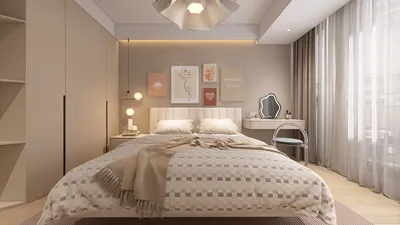


The future looms ahead, and one of the major challenges we face today is bandwidth—time management, clutter, and zoning converging within a space of under 1,000 square feet. Industry trends already reflect this pressure; the NAHB reports a growing preference for smaller, well-designed homes rather than just larger spaces. In this context, house floor plans under 1,000 square feet emerge as the early blueprint for our living patterns in the coming decade, turning limitations into opportunities. I have glimpsed the outlines of this future, and they seem deliberate and thoughtful.
spatial reasoning toolkit
Compact One-Bed Core + Flex Pocket
Design Logic: A compact one-bedroom unit integrates a flex pocket, acting like a firmware upgrade: sleeping areas remain private, while a sliding partition transforms the additional area from an office to a guest suite. Trends indicate a preference for modular privacy and multifunctional spaces.
Flow: Entry → storage spine → kitchen-galley → living node → flex pocket → bedroom → bath; this loop minimizes cross-traffic, similar to efficient thread scheduling.
Sightlines: A long axis stretches from the kitchen to the living area with windows; the angles of the flex pocket draw the eye, discreetly positioning the bedroom off the main interface to maintain a sense of tranquility.
Storage: Incorporating a spacious pantry from floor to ceiling, bed platform drawers, and a hallway cabinet 'cache' optimizes retrieval times for all gear.
Furniture Fit: A 72–78" sofa, a desk of 30" depth in the flex pocket, and a centrally placed queen-sized bed with 24" of clearance keep the space breathable according to API standards.
Verdict: This plan is designed with hybrid work and short-term hosting in mind, maintaining clarity and efficiency under evolving demands for the next five years.
save pin
Split Studio with Diagonal Processing Path
Design Logic: A studio divided by a diagonal storage wall creates two distinct zones: one for daytime activities and another for night-time functions, employing geometry to dictate use rather than conventional doors.
Flow: Entry → diagonal wall → kitchen node → living platform → sleep alcove → bath; the diagonal path reduces congestion, akin to a non-blocking queue.
Sightlines: The angled wall modifies the view, showcasing the pantry and concealing the bed until one approaches, prioritizing user experience with controlled visibility.
Storage: A 16" deep wall system with assorted bins and shelves, coupled with a sliding library ladder; labeled zones based on frequency of use enhance organization.
Furniture Fit: A 48" round table transforms between dining and task purposes, while a Murphy bed folds away to 14" when not in use, and a 9' rug anchors the living space.
Verdict: The geometric design leads to smarter studio functionality, adapting seamlessly as routines evolve annually.
save pin
Micro Two-Bed with Shared Linear Kernel
Design Logic: This layout features two compact bedrooms flanking a linear 'kernel' that includes the kitchen, living, and dining areas, catering to roommates or small families. Future-proofing is achieved through shared spaces and private endpoints.
Flow: Entry → kernel (galley + table) → living strip → bedrooms positioned at ends → bath adjacent to the kernel; this design promotes efficiency and simplifies maintenance.
Sightlines: The kernel sightline extends to the brightest window; bedrooms are designed to have angled views, softening exposure while ensuring awareness.
Storage: Bedrooms feature tall wardrobes, toe-kick drawers in the kitchen, and a compact hall closet used as a system cache for coats and seasonal items.
Furniture Fit: A 60" table that doubles as a maker bench, a low-profile media shelf at 12" depth, and twin-to-full beds with sliding door adjustments ensure optimum functionality.
Verdict: This design conceptualizes shared living as a network: private areas interlinked by shared resources, resilient under budgetary and scheduling demands for the upcoming cycle.
save pin
Final Takeaway
When it comes to house floor plans under 1,000 sq ft, they are no longer considered compromises—they become well-tuned interfaces for future bandwidth. Compact homes, micro two-bedroom layouts, and split studios function like well-compiled code: fewer lines and clearer execution yield more effective communication. In my experience, the smartest small homes do not simply increase in size; they become increasingly intentional, and my clients notice the impact on their everyday experiences with tools like Homestyler.
Minimalist Solid Walnut Wood Desk 3D Model

Modern Minimalist Solid Wood Metal Office Desk 3D Model

Minimalist Solid Oak Wood King Size Bed 3D Model
Looking to transform your space? Homestyler offers a user-friendly online design tool that lets you create stunning interiors with ease. Explore a vast selection of 3D renderings, access inspiring design projects, and learn through engaging video tutorials. Bring your vision to life today!
Design jetzt kostenlos
































