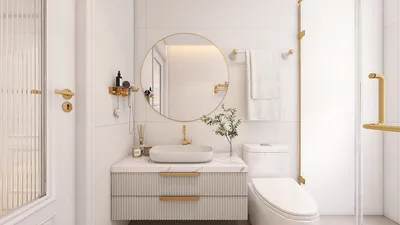


The concept of future living is evolving, focusing on simplifying complexity into more tranquil design interfaces. Even in today's apartments, issues such as inefficient layouts, excessive glare, and inadequate storage continue to diminish quality living time. Research from Zillow indicates that prospective buyers prioritize functional designs and ample natural light when considering mid-sized apartments, showcasing how elements of the future are gradually integrating into our present lives. I envision a basic 2-bedroom layout functioning as a daily operational system, optimized for bandwidth, latency, and human engagement, akin to a spatial reasoning toolkit.
Gallery Spine + Split Quiet
Design Framework: The main spine, comprising the entry, kitchen, and living area, serves as a central thread, while the bedrooms serve as diversions that offer protected environments. As hybrid work becomes commonplace, incorporating acoustic partitions and light-infused communal spaces becomes crucial. This split design fosters concentration without sacrificing social interaction.
Traffic Flow: The sequence from the door to the drop zone transitions into a gallery kitchen, followed by a dining area, living room, and balcony. Bedrooms are strategically branched off the spine at points that promote optimal latency, while bathrooms are conveniently located near utility risers to minimize transitions.
Visibility: The entryway welcomes daylight through the living room window. In the kitchen, sightlines connect seamlessly to both the dining table and sofa. Bedroom entrances are slightly offset to mitigate glare from screens and enhance privacy levels.
Storage Options: A deep pantry sits adjacent to the fridge, while linen towers are placed between bathrooms. Bed platforms include drawer units, and corridor niches can serve as seasonal storage solutions.
Furniture Arrangement: With a living area width of 9 to 10 feet, there's space for a sofa ranging from 82 to 88 inches plus adequate circulation. A dining table measuring 60x32 inches could double as a work area. Queen-sized beds provide 24 inches of clearance on either side, while wardrobes measure 24 inches deep, optimizing vertical storage.
Conclusion: This layout retains clarity amid increasing demands—more devices and virtual meetings—while ensuring social interactions remain smooth and well-lit.
save pin
Courtyard Corner + Diagonal View
Design Framework: Positioning the living and dining areas at a glazed corner, while bedrooms sit perpendicular to create a soothing atmosphere, captures calmness. The diagonal view lengthens perception, a technique that the future is bound to reward as unit functions expand even as their sizes remain stable.
Traffic Flow: From the entryway, moving through a coat cache frames the island hub, leading into the cozy corner lounge. The primary suite is discreetly tucked behind the kitchen wall, while a secondary room near the entry can flexibly serve as a guest room or office, accessible via pocket doors.
Visibility: The corner glazing acts as the UI for the home, integrating kitchen, dining table, and sofa into a seamless experience. Bedrooms running perpendicular help to lessen visual distraction.
Storage Options: The island features deep belly drawers, and a wall-to-wall headboard shelf serves as a reserve for essentials. An office closet with split rails offers organizational efficiency, and a balcony cabinet accommodates outdoor gear.
Furniture Arrangement: An L-shaped sofa measuring 96 inches with a 36-inch chaise provides comfort; the island dimension of 72x36 inches allows for 42 inches of clearance around it. Sliding doors facilitate smooth pathways, while 48-inch desks can neatly tuck into alcoves.
Conclusion: This design is ideal for individuals who crave natural light and wish to brainstorm ideas at the table; the diagonal scheme expands the feeling of space without necessitating additional square footage.
save pin
Central Core + Surrounding Rooms
Design Framework: By concentrating services and storage within a central core, the surrounding spaces are kept unobstructed, allowing for maximum daylight and versatility. Future adaptations become modular enhancements rather than extensive renovations.
Traffic Flow: Entry leads directly to the core housing laundry, bathrooms, and mechanicals; one can navigate easily to the living area on one side and bedrooms on the opposite side, ensuring that guests find their way intuitively as the core functions like a router.
Visibility: From the living area, a 180° view unfolds along the windows, with hall reveals strategically arranged to entice—the first sight being an art wall, followed by a dining area's warm glow, and framed city views. The entrances to bedrooms are offset to maintain a serene environment.
Storage Options: The core includes 360° closets that operate like a ring buffer, incorporating space for larger items like brooms, luggage, and an adjustable kitchen wall system designed for evolving appliance needs.
Furniture Arrangement: The surrounding area has the capacity for shallow shelving without impeding movement; a 48-inch round dining table avoids bottlenecks, while a convertible twin to queen setup in the guest room provides flexible configurations.
Conclusion: The ring-buffer core streamlines maintenance to an effortless background operation, allowing the perimeter spaces to continually adapt to life’s ongoing updates.
save pin
Final Insights
A 2-bedroom simple floor plan acts as a tranquil interface, integrating light, flow, and storage in a manner akin to code optimized for human interaction. Variations such as split-quiet spines, diagonal sightlines, and central cores offer two-bedroom apartments the flexibility to transition seamlessly between work, relaxation, and hosting, all without adding clutter. Key choices—such as the dimensions of acoustic thresholds, islands, and wardrobe systems—determine whether the future feels burdensome or light. From my viewpoint, the most innovative homes ahead won’t necessarily be larger but instead more thoughtfully designed, and I continue to create as though this future is already a reality, utilizing tools like Homestyler for enhanced visualization.
Looking to transform your space? Homestyler is your go-to online home design platform! With its user-friendly design tool, stunning 3D renderings, and an array of inspirational design projects and video tutorials, creating your dream home has never been easier. Dive in and start designing today!
지금 무료로 디자인하세요
































