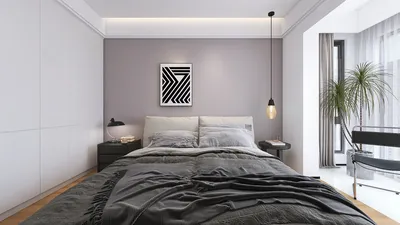


The future of living is characterized by blended routines such as sleeping, remote work, and moments of micro-recovery, with a current challenge being the tension between privacy and circulation. Reports from AIA and NAHB consistently showcase an increasing interest in adaptable secondary suites and compact designs on upper levels. My approach to two-bedroom plans on the second floor views the hallway as a data hub rather than just a corridor. The upcoming era isn’t about increased noise but improved buffers, where rooms manage attention similar to how bandwidth is allocated.
Split-Core Corridor with Pocket Suite
Design Principle: Two bedrooms are positioned alongside a short hallway, where one turns into a pocket suite with a sliding door, catering to multigenerational needs and focused work sessions.
Flow: The stairway leads to a compact landing; to the left is a shared bathroom, and to the right, a laundry closet; bedrooms are situated on opposite ends to reduce disturbances during sleep.
Sightlines: The landing reveals only a textured wall and a slot for daylight; doors are positioned offset to prevent direct line of sight between private areas, maintaining confidentiality like UI layers.
Storage: Hall linen serves as a communal storage area, while each bedroom includes reach-in closets and overhead shelves; the laundry area acts as a high-frequency buffer.
Furniture Arrangement: The queen bed is structured against a 10' wall with a 30" side clearance; a desk space measures 48" in depth, and a transformation zone from crib to desk is designed at 60" for lifecycle adaptability.
Conclusion: This design delivers a serene and predictable environment—ensuring that sleep maintains its bandwidth while work transitions smoothly to the pocket suite without interruptions.
save pin
L-Shaped Gallery with Corner Primary
Design Principle: An L-shaped hallway transforms into a gallery buffer; the primary bedroom occupies the corner for enhanced exposure and potential circadian rhythm adaptation.
Flow: The stairway connects to the short side of the L; turning into the lengthy side leads to the secondary bedroom and bath, ensuring minimal direct lines into the sleeping spaces—reducing latency.
Sightlines: The gallery showcases art alongside a clerestory that invites light; views unfold progressively—starting from a textured wall, then shifting to window illumination, and finally the garden—mirroring a stacked disclosure approach.
Storage: The primary bedroom is equipped with a walk-in closet measuring between 6' and 8' with adjustable shelves; the secondary room holds a 5' reach-in closet plus drawers beneath the window—dividing cold storage from frequently accessed items.
Furniture Arrangement: The corner primary can accommodate a king-size bed on a 12' wall with a 24" circulation loop; the secondary space can transition from twin to full beds while providing a 36" desk channel.
Conclusion: The L-shape naturally enhances privacy; as lifestyles evolve, the gallery can integrate art, books, and workspaces effortlessly.
save pin
Jack-and-Jill Flex with Micro-Loft Shelf
Design Principle: Two bedrooms share a Jack-and-Jill bathroom; one features a micro-loft shelf above the closet—ideal for future children’s retreats or a quiet workstation during virtual meetings.
Flow: Entry from the stairs opens into a 5' node; to the left and right are the bedrooms with a mid-door leading to the shared bath; pathways are designed to avoid crossing sleeping areas, ensuring predictable routing.
Sightlines: Low windows bring in horizon-level light; the loft rail allows views to be filtered like a semi-transparent overlay; privacy can be adjusted from the bathroom to each bedroom through pocket doors.
Storage: Closets serve as vertical storage units; the loft shelf (30" clearance) provides space for seasonal items; a vanity tower is dedicated to daily-use essentials.
Furniture Arrangement: The full bed configuration includes 24" side tables; there’s a 54" fold-down desk space; the bathroom is designed to accommodate a 60" tub-shower setup for the future.
Conclusion: The shared bathroom reduces infrastructure requirements while offering independence; the micro-loft evolves into an adaptable zone as home needs grow.
save pin
Final Thoughts
In an upper-level layout, two bedrooms focus less on the number of doors and more on managing attention, rest, and workflow as if orchestrating a well-crafted script. The most effective two-bedroom designs treat the hallway like a bandwidth manager, closets as a communal cache, and furniture as a dynamic API adapting to changing rituals. From my perspective, the most intelligent upper levels won’t necessarily be larger; they will simply be more purposeful, and I continue to design them to evolve alongside the user rather than against their needs—something that tools like Homestyler can greatly assist with.
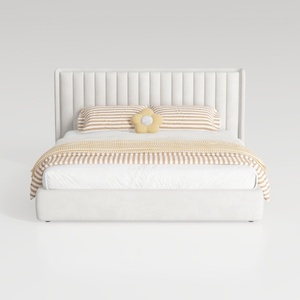
VELOCAVA King Size Lift-Up Storage Bed, Linen Ligh

Minimalist Solid Wood Platform Bed 3D Model
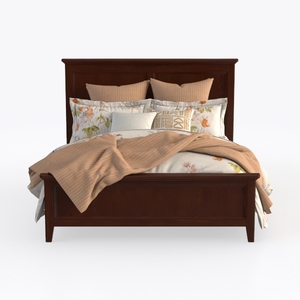

Traditional Walnut Solid Wood Bedroom Bed with Bedding 3D Model
Homestyler is your go-to online tool for stunning home design. With its user-friendly interface, impressive 3D rendering, and a wealth of design projects and DIY video tutorials, you can effortlessly create and visualize your dream spaces. Start designing today!
Design Now for FREE
































