


In today’s connected homes, the integration of a versatile TV app transforms how we interact with our living spaces. As streaming services become central to entertainment routines, designing a cozy media nook with ergonomic seating and adjustable lighting enhances both comfort and viewing experience. Thoughtful spatial planning ensures that technology blends seamlessly with home aesthetics, creating an inviting area tailored for relaxation and digital enjoyment.
Direct Answer
3D modeling is utilized across various sectors to visualize, prototype, simulate, and communicate complex concepts before actual production starts. From architecture and manufacturing to film, healthcare, and product development, it empowers teams to test ideas, minimize errors, and accelerate decision-making through precise digital models.
Practically speaking, 3D modeling shortens product development timelines, fosters better collaboration among stakeholders, and reduces the costs linked to design modifications.
Quick Takeaways
Introduction
When I began my career as an interior designer in Los Angeles, client presentations heavily depended on mood boards and basic 2D plans. The introduction of 3D modeling into our workflow revolutionized the design dialogue. Rather than imagining the space, clients could actually visualize it in detail.
After over ten years working with residential projects, manufacturers, and visualization teams, I've witnessed 3D modeling's reach expand far beyond interior design. Architects, for instance, use it to validate structures before construction, medical researchers simulate organs digitally, and film studios create entire worlds with it.
Interestingly, each industry applies 3D modeling uniquely, and many underestimate the role it now plays in modern production workflows. This guide explores the tangible benefits of 3D modeling, common misconceptions, and why it’s becoming a fundamental technology in multiple fields.
Why Is 3D Modeling Vital for Contemporary Design and Production?
Crucial Insight: 3D modeling significantly cuts down risk by enabling teams to evaluate concepts digitally prior to committing to physical production.
A major hidden expense in any project arises from revisions made after production has begun. Whether in architecture, manufacturing, or filmmaking, late-stage changes can be extremely costly.
3D modeling addresses this challenge by allowing teams to experiment safely in the virtual environment.
According to reports from Autodesk, digital modeling and simulation workflows greatly diminish design mistakes and rework in early development phases.
From my own experiences, the greatest advantage isn't solely visualization—it’s the speed of decision-making. When clients view realistic models of their future spaces, feedback is immediate and far more accurate.
3D Modeling in Architecture and Interior Design
Vital Insight: In architecture and interior design, 3D modeling transforms abstract floor plans into immersive spatial experiences.
For architects and interior designers, 3D modeling acts as the crucial link between conceptual ideas and physical construction.
Common uses include early detection of layout issues; in several residential projects I participated in, virtual walkthroughs uncovered circulation problems invisible on traditional 2D drawings.
Popular tools employed include Homestyler, which streamlines design visualization.
3D Modeling’s Role in Manufacturing and Product Development
Key Insight: Manufacturers depend on 3D modeling for product conception, functionality testing, and preparation for rapid prototyping.
In the product development pipeline, 3D modeling sits at the hub, enabling teams to refine designs digitally before physical prototypes are created.
This approach substantially accelerates iterations, reduces material waste, and improves communication between designers, engineers, and factories.
Industry leaders such as Tesla and major tech suppliers rely on CAD-based 3D modeling programs like SolidWorks and Fusion 360.
3D Modeling in Film, Animation, and Game Production
Essential Insight: For entertainment sectors, 3D modeling builds entire digital environments that are otherwise impossible or prohibitively costly to produce physically.
Film and game production studios use 3D modeling from character development to environmental design, pushing creative boundaries.
Companies like Pixar and Epic Games utilize advanced 3D engines, enabling real-time scene previews on set—a major shift from traditional, lengthy rendering cycles.
Healthcare and Medical Research Transformation through 3D Modeling
Important Insight: In medicine, 3D modeling assists practitioners in visualizing anatomy, surgical planning, and medical device development.
Hospitals and research centers convert CT and MRI data into precise 3D digital models of organs and bones, which facilitates practice and planning for complex surgeries.
Institutions such as the Mayo Clinic increasingly adopt 3D modeling to boost accuracy and reduce risks during surgical procedures.
Overlooked Challenges of 3D Modeling
Key Insight: Despite its advantages, 3D modeling introduces hidden challenges related to complex workflows, file management, and demands on rendering hardware.
High-quality renderings may require extended processing times, sometimes several hours depending on lighting and material complexity.
To manage these, teams employ solutions like cloud rendering and optimized asset libraries.
Understanding these trade-offs enables organizations to integrate 3D modeling effectively rather than viewing it as merely a visualization tool.
Answer Box
3D modeling is broadly used across industries to visualize, simulate, and refine designs ahead of production, minimizing risks and enhancing communication among teams.
Final Summary
FAQ
What is 3D modeling used for?
3D modeling creates digital representations employed in fields such as visualization, simulation, product design, animation, architecture, and medicine.
Which industries extensively use 3D modeling?
Architecture, manufacturing, gaming, film, product design, and healthcare are among industries heavily reliant on 3D modeling technologies.
Is 3D modeling critical for product design?
Absolutely. It enables digital prototyping, engineering testing, and preparation for 3D printing or manufacturing.
Can beginners easily learn 3D modeling?
User-friendly tools such as Blender, SketchUp, and Homestyler facilitate entry-level learning, although mastering advanced workflows requires time.
What are common 3D modeling software options?
Popular applications include Blender, Autodesk Maya, 3ds Max, SketchUp, Rhino, Fusion 360, SolidWorks, and Homestyler.
How does 3D modeling assist architects?
Architects employ 3D modeling to visualize structures, analyze natural lighting, present designs to clients, and detect potential conflicts before construction.
Is 3D modeling applied in medical fields?
Yes. Medical professionals build 3D models from imaging data to assist in surgical planning, implant design, and patient education.
Why has 3D modeling grown increasingly popular?
Advancements in computing, real-time rendering, and AI tools have rendered 3D modeling faster, more affordable, and more accessible across diverse industries.
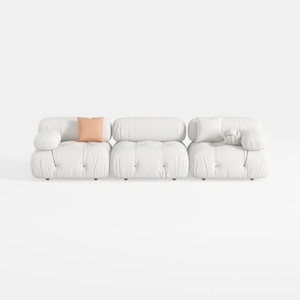
Minimalist White Fabric Modular Sofa 3 Seater 3D Model


Minimalist White Fabric Wood Base Tufted Armchair 3D Model

Modern Walnut Glass Top Triangle Coffee Table 3D Model
Homestyler offers an easy-to-use online design tool, stunning 3D renderings, and plenty of inspiring design projects. Plus, its helpful DIY video tutorials make creating your perfect home layout simple and enjoyable for everyone.
Desain sekarang Gratis
































