

Direct Answer
For a home office filled with books, the ideal desk style offers a perfect blend of ample storage, sturdy construction, and workflow efficiency. L-shaped desks featuring built-in shelves or library-style desks surrounded by shelving tend to excel because they keep books within reach without cluttering the main desk area.
On the other hand, minimalist desks paired with robust standalone bookcases can sometimes provide better functionality in smaller spaces or when the book collection expands over time.
Quick Takeaways
Introduction
Having designed multiple home offices for writers, researchers, and remote workers, a common theme emerges: many underestimate the heavy demand books place on furniture. A standard hardcover can weigh 2 to 3 pounds. Multiply that by hundreds of books, and your desk may need to support several hundred pounds.
Selecting the perfect desk for a book-centric home office is not just about aesthetics. It involves considering durability, ergonomic comfort, and how you interact with your workspace during long hours of work.
In many cases, I start by analyzing how the desk integrates with bookshelves and the overall flow within the room. Visualization tools such as 3D planners, like Homestyler, make this process much easier by revealing potential space conflicts before making a purchase.
Below, I highlight the desk configurations I find most suitable for those with extensive personal libraries, as well as common trade-offs that typical buying guides often overlook.
save pin
Key Factors When Choosing a Desk for Book Storage
Important Insight: When it comes to desks for heavy book collections, structural integrity and accessibility are more critical than the quantity of shelves included.
Many buyers mistakenly think the best option is simply “a desk with shelves.” In reality, four design elements determine whether a desk remains comfortable and stable over time.
In professional workspace design, 'reference books'—those used frequently—are kept close at hand on or near the desk, while 'archive books' are stored on wall-mounted shelving.
This small planning distinction often prevents the common pitfall of purchasing an oversized desk that overwhelms the room.
L-Shaped Desks With Adjacent Book Shelving
Key Insight: L-shaped desks combined with adjacent bookshelf extensions deliver the most practical solution for individuals with large book collections who also need generous desktop space.
This layout is especially beneficial for academics, writers, and analysts who frequently consult reference materials while working.
The L-shape design effectively creates two separate zones:
This arrangement keeps books easily accessible without encroaching on the main work surface.
When designing office layouts, I often utilize tools like Homestyler to simulate desk and shelving placement in 3D, which helps avoid issues like shelves blocking natural walking routes.
Typical advantages
Potential drawback
save pin
Library-Style Desks With Surround Shelves
Key Insight: Library-style desks offer an immersive environment ideal for research, but they are best suited for medium to large rooms.
Imagine this setup as your own compact library, with shelves wrapping around the desk in U-shaped or partial wall formations.
This configuration greatly minimizes time spent searching for books since everything remains within direct sight.
However, one often overlooked downside is visual density.
Filling every surrounding wall with books can sometimes make a room feel cramped or dimmer. For clients with hundreds of volumes, I often recommend combining:
This hybrid method maintains a comfortable workspace without compromising storage capacity.
save pin
Minimalist Desks With External Book Storage
Key Insight: Pairing a simple, sturdy desk with separate bookcases is frequently the most scalable approach for large and growing collections.
This method surprises many because the setup doesn’t immediately resemble a traditional library, but it addresses two common challenges.
Issue 1: Desk replacement cycles
Desks generally wear out faster than bookshelves. Integrating shelves into the desk means both must be replaced simultaneously.
Issue 2: Collection expansion
Books tend to accumulate over time. Separate shelving allows you to expand storage independently of the desk.
A popular setup consists of:
Using software like Homestyler to experiment with realistic furniture layouts reveals how much more open and flexible this configuration feels compared to bulky all-in-one desk units.
Weight Capacity and Structural Stability
Key Insight: When books are involved, the desk’s structural robustness is more important than its looks.
Books can be surprisingly heavy. A single 36-inch shelf packed with hardcover books may support 80 to 100 pounds or more.
When assessing desks, I always verify three key structural elements.
Professional office design standards often recommend shelving hold approximately 50 to 75 pounds per linear foot for books. A lack of clear manufacturer info on this is a red flag.
Matching Desk Style With Room Size and Workflow
Key Insight: The optimal desk for someone with many books is one that supports their daily workflow while fitting comfortably within the room’s dimensions.
When planning a home office, I usually relate desk style to room size by applying a straightforward rule of thumb.
But equally important is workflow. For example:
Answer Box
The ideal desk style for a book-heavy home office achieves a balance of stability, shelf accessibility, and spatial harmony. While L-shaped desks suit most users best, minimalist desks paired with separate bookcases give enhanced adaptability for expanding libraries.
Final Summary
FAQ
What is the best desk for book storage home offices?
L-shaped desks featuring either integrated shelving or adjacent bookcases typically provide the best fusion of workspace and storage reach.
Can a regular desk handle a large number of books?
Most standard desks lack the structural reinforcement needed to support heavy book loads. Unsuitable shelving may sag or warp over time.
Is investing in a library-style desk worthwhile?
Yes, especially if you have a sizable room and consult reference books daily. However, in smaller spaces, extensive surrounding shelves might cause a crowded feeling.
How much weight can desk shelves usually support?
High-quality shelves generally bear between 50 and 75 pounds per linear foot. Always confirm specifications from the manufacturer before loading books.
Should books be placed above or beside the desk?
Storing books beside the desk tends to be preferable. Overhead shelves can create visual clutter and may interfere with lighting conditions.
Which desk best suits people with large book collections?
A sturdy L-shaped desk with built-in book storage or a minimalist desk coupled with wall-mounted bookcases is typically ideal for extensive collections.
Do built-in desk shelves save space?
They can, but often at the cost of flexibility. Detached bookcases are generally easier to upgrade as your library grows.
Are wall shelves superior to desk shelves?
For holding heavy books, wall-mounted or floor-standing bookcases tend to be stronger and safer over time.
References
American Library Association workspace planning guidelines
Architectural Digest insights on home office design
What began as an Autodesk innovation has evolved into a design platform used by more than 18 million people around the globe. Homestyler combines powerful rendering, an intuitive editor, and a vast furniture library to help you turn inspiration into photorealistic designs — whether you're redesigning a single room or planning an entire home.

Minimalist Solid Oak Open Bookshelf Storage 3 Tier 3D Model
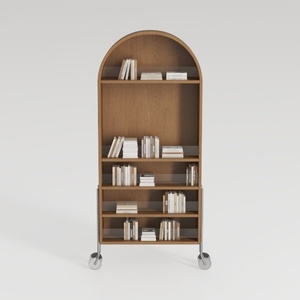

Modern Solid Wood Mobile Arched Bookshelf 3D Model
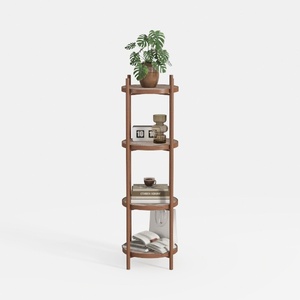
Minimalist Walnut Cane Round Tiered Display Shelf 3D Model
Homestyler is an easy-to-use online platform that lets you design your home with realistic 3D renderings. Explore diverse interior projects and follow helpful DIY video tutorials to create and visualize your dream space effortlessly. Perfect for all skill levels!
Design Now for FREE
































