


Red granite has consistently provided sacred spaces with a robust sense of permanence, warmth, and dignity. In pooja rooms, it transcends mere aesthetics, skillfully modulating light, framing rituals, and enduring daily exposures to oil, ash, and water. In my designs, I favor red granite when the objective is to create a grounded and auspicious environment that requires minimal maintenance, harmonizing beautifully with brass, sandalwood, and marigold tones. Research from Steelcase reveals that a coherent sensory experience coupled with low visual clutter enhances emotional comfort in areas designated for focus, an effect I harness by selecting a restrained stone and applying it throughout the plinth, threshold, and background. Likewise, studies by Gensler indicate that spaces designed with a specific intention contribute to increased user satisfaction; a pooja room gains from similar purposed clarity.
The balance between lighting and materials plays a crucial role in establishing the sacred ambiance of a room. The WELL Building Standard (WELL v2) emphasizes glare management and support for circadian lighting; thus, for pooja rooms featuring glossy stone, it is essential to harmonize warm-color lighting and refractive surfaces. I often aim for an ambient light level of approximately 150–300 lux with warmer shades for meditation, while ensuring task accents for diya placement hover around 300–500 lux, adhering to the best practices outlined by lighting organizations such as IES in similar low-task settings. Research into color psychology (Verywell Mind) links reds with energy and liveliness, whereas gold shades evoke a sense of celebration; together, they create a calming effect when moderated by matte textures and regulated brightness.
Exploring the Role of Red Granite in Sacred Spaces
Red granite ranges from deep burgundy to russet and brick shades. The grain and crystal granularity influence its perception in smaller areas: fine grains evoke a sense of calm, while coarse grains deliver a bolder impact. My preference leans towards honed or leathered finishes for the backdrop to prevent direct reflections from diyas, minimizing glare during morning pujas when natural light is at its peak. For lower plinths or thresholds, polished stone is ideal as it simplifies cleaning after oil or kumkum spills.
Design Intent: Serenity, Ritual Flow, and Long-lasting Performance
Prior to choosing a slab, I establish three primary outcomes: 1) a visual anchor for the deity niche, 2) a manageable working altar for daily offerings, and 3) an environment that promotes acoustic calm. Red granite addresses all these requirements seamlessly. Its mass minimizes sound transmission, while its hue provides a rich backdrop for brass thalis and pure white flowers. For families engaged in frequent aarti, I integrate a subtle, nearly invisible drip edge on altar slabs to contain oil and water. For seated rituals, I ensure a minimum of 900–1000 mm clear floor area in front of the altar to accommodate kneeling or cross-legged positions.
Illumination, Color Temperature, and Glare Management
Warmth is essential; however, not all warm light is the same. I maintain ambient light sources at 2700–3000K, ensuring a diffused distribution. Accent lighting for icons is also set between 2700–3000K with tight beam angles (15–25°) to prevent washout effects. On glossy red granite, I strategically offset fixtures and apply cross-lighting techniques to mitigate specular glare on the backdrop. In instances where a skylight is present, a light shelf or translucent diffuser can help temper midday brightness, ensuring visual comfort in line with WELL lighting principles.
Acoustic Comfort for Meditative Practices
Granite's reflective nature necessitates careful sound management; without it, chants may feel harsh. I incorporate soft absorbers—handwoven runners, modest acoustic panels wrapped in natural fabrics on the side walls, or timber batten ceilings to diminish flutter echoes. Findings from Steelcase's research on cognitive performance emphasize that controlled noise levels enhance focus; in a pooja room, this translates into clearer recitation and calmer breathing.
Ergonomics and Ritual Workflow Design
Ritual tasks tend to be repetitive and often conducted one-handed. I design altar heights ranging from 760–840 mm for standing aarti or 600–660 mm for seated worship, tailored to user height. Pull-out trays (300–350 mm deep) are implemented to hold diya plates during prayers and retract to maintain a tidy surface. Storage for agarbatti, matches, bells, and incense refills is conveniently placed below the altar. For safety, I ensure a 300 mm air gap on both sides of the open flame to keep textiles or paper at a safe distance.
Layout Strategies for Various Sizes of Pooja Rooms
In compact living spaces, a wall-mounted shrine featuring a red granite backsplash and a shallow base (300–350 mm) facilitates smooth circulation. For larger areas, a central plinth with a stepped red granite base creates a sense of hierarchy and processional flow. When clients are eager to test various configurations, I suggest employing a user-friendly interior layout planner, such as Homestyler, to visualize clearances, sightlines, and lighting angles.
Complementing Red Granite with Suitable Materials
Red stone pairs harmoniously with natural finishes such as oiled teak, brass, bronze, and off-white limewash. I steer clear of high-chroma paints that might overshadow the granite. If the stone exhibits a cooler tone (ruby-red with black speckles), I warm the color palette with brass and cream textiles. Conversely, if it has an earthy shade (rust-red with brown grain), I introduce brushed bronze and deep black accents for added depth. For flooring, a honed beige or grey stone provides a balanced counterpoint to the intense red granite backdrop.
Safety, Upkeep, and Long-lasting Durability for Ritual Use
Annual sealing is essential to protect against staining from oils, especially around diya plates. Following aarti, I recommend using a pH-neutral cleaner and a soft cloth—avoiding abrasive materials. For thresholds, a micro-chamfer can help minimize chipping. When it comes to materials near flames, it's best to avoid varnished woods and synthetic drapes; opting for wool or cotton materials that self-extinguish more readily is preferred. Effective ventilation should quietly dissipate smoke within minutes—an in-line fan or trickle vent functions well without disrupting incense flow during prayers.
Color Psychology: Softening the Vibrancy of Red
Red symbolizes vibrancy, yet in sacred environments, the objective is to evoke respectful warmth rather than agitation. By moderating red granite with matte neutrals, low-sheen metals, and a restricted palette of flowers—preferably white jasmine or lotus—I achieve this effect. Guidance from Verywell Mind regarding color associations supports intentional use of red for focus; the neutral framing helps avoid visual fatigue during everyday rituals.
Proportions, Rhythm, and Visual Equilibrium
An effective pooja room should be perceived as a unified composition. I typically frame the icon with a backdrop ratio of 1:1.6 (height to width) and set the altar depth at 1/6 of the room length to ensure comfortable movement. Repeating red granite at both the base and the backdrop—while keeping side walls simple—establishes rhythm without creating clutter. Brass inlay lines echo the altar's geometry, guiding visual attention much like wayfinding in larger sacred structures.
Sustainability and Ethical Sourcing Practices
Granite is an enduring material capable of lasting across generations. I prioritize sourcing from quarries with transparent labor practices and select slabs that minimize resin fill. A honed finish reduces the necessity for frequent polishing. This focus on material health and longevity aligns with WELL's commitment to occupant well-being: fewer chemical cleaners, stable surfaces, and low off-gassing from adjacent materials.
Detailed Specification Checklist for Selection
- Choose a tone: deep burgundy for formality, brick-red for warmth.
- Determine finish: honed/leathered for backdrops, polished for plinths.
- Confirm thickness of slabs: 18–20 mm for verticals; 20–30 mm for altar tops.
- Specify edges: 3–5 mm chamfer; discreet drip edges near flame areas.
- Plan lighting: 2700–3000K, 150–300 lux for ambient, 300–500 lux for accent lighting.
- Ensure layout clearances: 900–1000 mm kneeling area; 750–900 mm side circulation if feasible.
- Include storage solutions: concealed drawers for puja items; pull-out trays for diyas.
- Incorporate acoustic softening elements: rugs, fabric panels, or timber details.
- Establish maintenance protocols: annual sealing; pH-neutral cleaning regimen.
Common Design Blunders to Avoid
- Overly polished backdrops could result in glare during photos and aarti.
- A competing color palette around the altar that diminishes the sanctity of the red stone.
- Poor ventilation leading to soot accumulation on the stone and sacred icons.
- Excessively high altar surfaces causing strain during daily rituals.
- Overly bright LED strips with harsh color temperatures that diminish the iconography's prominence.
Case Study: Compact Urban Pooja Setup
In a narrow 1.2 m-wide niche, I employed honed red granite for the back, a 320 mm-deep altar slab complete with a concealed pull-out tray, and a soft downlight at 2700K fitted with a honeycomb louver to minimize glare. A beige limestone floor lent an anchoring effect, while a small cotton dhurrie enhanced acoustics. The family reported an easier upkeep routine and a more focused prayer experience within just a week.
Frequently Asked Questions
Honed or leathered surfaces significantly reduce reflections from diyas and guard against glare. These finishes also photograph more appealingly and accumulate less soot than high-polish options.
Stick to 2700–3000K for your lighting. Ambient settings should be around 150–300 lux, with accents at 300–500 lux to retain warmth and definition for icons and offering spaces.
Regularly seal the stone, incorporate a subtle drip edge on the altar, and always use a brass or stone tray beneath diyas. Clean with pH-neutral products.
Foster a balanced look with neutral walls, matte metals, and a limited array of accent shades. Incorporating soft textiles and warm, diffused light will help to calm the visual experience.
For standing aarti, traditional heights range from 760–840 mm, while 600–660 mm proves comfortable for seated rituals.
Implementing a small rug, fabric-wrapped panel, or timber batten ceiling assists in absorbing and diffusing sound without altering the sacred feel of the space.
Yes—particularly in areas like thresholds, steps, or lower plinths where regular cleaning is vital and direct glare can be minimized. High-polish surfaces should be avoided behind the icon.
Consider adding shallow drawers for storage of incense, matchboxes, bells, and wicks; a concealed pull-out tray for offerings; and a ventilated cubby for oil and ghee.
Maintain altar depth at 300–350 mm, ensure 900–1000 mm of unobstructed floor space, and use a layout planner such as Homestyler to simulate clearances and lighting before beginning construction.
Pair red granite with brass, bronze, oiled teak, off-white limewash, and beige or grey honed flooring to achieve a serene and enduring design.
Utilize a discreet in-line fan or trickle vent to efficiently clear smoke within minutes while maintaining a 300 mm clearance from flammable textiles and paper.
Keep the aesthetic minimal, restrict the use of red granite to anchor points like the backdrop and base, and avoid overwhelming the space with excessive elements that might detract from its purpose.


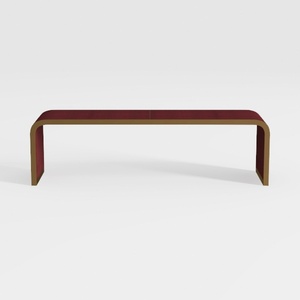
Minimalist Velvet Fabric Wood Upholstered Bench 3D Model

Vintage Red Painted Wood Round Side Table with Lion Knob 3D Model
Homestyler is the go-to online home design platform for anyone looking to transform their space effortlessly. Enjoy the ease of its user-friendly design tool, stunning 3D renderings, a wealth of inspiring design projects, and informative DIY video tutorials—perfect for creating your dream home!
Concevez maintenant gratuitement
































