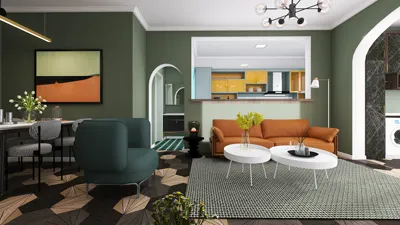


I view partitions as tools that enhance flow and serve specific purposes. The most effective ones manage sightlines, adjust sound, and shape behaviors without imposing rigid walls. Whether you're creating a home office in your living room or defining spaces in a studio, partitions do much more than simply divide — they blend light, color, and material to foster intention. Utilizing Homestyler can help in visualizing these designs.
Performance is equally important as aesthetics. The WELL v2 standard emphasizes that adequate acoustic privacy and control are essential for enhancing perceived comfort, while research from Steelcase indicates that 41% of employees face challenges with noise in open-plan environments. This serves as a reminder that partitions are crucial tools for managing acoustic elements. Regarding lighting, the Illuminating Engineering Society recommends that task illuminance should range from 300–500 lux for standard office activities; the materials and height of partitions significantly impact how uniformly light is dispersed within a space.
The psychology of color significantly influences how partitions affect mood. According to guidance from Verywell Mind, cool shades like soft blue can induce calmness, while warmer hues such as muted terracotta can invigorate energy. When applied to screens or slatted dividers, these colors can effectively designate focused zones versus more social spaces. In professional settings, research from Herman Miller links visual control and territorial definition to increased job satisfaction, which partitions can provide without resorting to full-height barriers.
Framed Openings: Divide Without Disconnecting
When I seek separation without losing natural light or conversational flow, I opt for framed openings or partial-height portals. A frame made of timber or steel outlines the passageway and organizes furniture while keeping sightlines intact. This design stabilizes traffic patterns and allows a steady flow of ambient light, particularly in areas where achieving a task illuminance of 300–500 lux depends on shared light sources. Introducing a lintel detail visually compresses the transition and signifies a shift in zone rather than a barrier, amplifying the use of tools like Homestyler to visualize the effects.
Glass Partitions with Smart Privacy
Glazed partitions ensure maximum daylight, maintain a sense of visual continuity, and enhance noise management through the use of laminated glass and acoustic gaskets. For bedrooms or meeting rooms, switchable privacy film enables you to adjust translucency as needed for confidentiality. It's important to balance light temperatures: pairing clear glass with 3500–4000K light sources prevents excessively cold tones, while textiles and wood nearby help mitigate glare. The outcome is a demand for privacy while maintaining a cohesive, radiant atmosphere.
Slatted Screens and Vertical Rhythm
Slatted partitions offer partial views and indicate acoustic diffusion rather than absorption. I typically space slats 30–60 mm apart with varying depths to avoid sound reflections and create engaging shadows. Using a slightly darker wood for the slats compared to adjacent walls enhances visual hierarchy. This rhythmic design hints at movement while still allowing daylight to diffuse — a strategy that helps smaller living spaces feel well-organized yet spacious.
Moveable Panels and Sliding Systems
Track-based panels or pocket doors enable a room to serve multiple purposes. In a studio, a sliding fabric panel could seamlessly convert living areas into sleeping quarters at night; in a home office, a solid-core slider enhances speech privacy. Selecting low-profile top tracks with soft-close mechanisms ensures quiet and dependable movement. When establishing clearances, it's wise to allow at least 900 mm on the pulling side; this consideration is crucial in avoiding pinch points during peak traffic times.
Freestanding Bookcase Partitions
Open shelving functions as both storage and division of space. I design the bottom shelves to be heavier and the top shelves lighter to create stability, securing them with concealed floor plates for safety. Books and various artifacts work as acoustic dampeners; incorporating items like paper, fabric containers, and textured ceramics can help lessen mid-frequency sound bounce. If sightlines and paths are in question, using an interior layout tool, such as Homestyler, can give insight into foot traffic and light dissemination.
Plant Walls and Biophilic Screens
Living partitions add a softness and enhance perceived wellness in a space. I layer plants with differing leaf densities; taller species like ficus or bamboo can create boundaries, while trailing plants help soften the edges. Consideration of irrigation and weight is essential — I prefer lightweight modular planters equipped with integrated watering systems positioned near natural light. Combining green walls with neutral finishes ensures a comfortable contrast; a soothing green backdrop facilitates focus without causing visual strain.
Acoustic Panels as Visual Statements
When noise is a primary concern, I implement acoustic partitions as sculptural details. Fabric-wrapped baffles, felt fins, or cork panels help decrease reverberation while introducing texture. Running panels to a height of 1.8–2.1 m in living spaces can intercept speech paths, maintaining openness above for air circulation and daylight. In shared workspaces, placing the most sound-absorptive surfaces next to noise sources and behind seating, rather than across from hard walls, maximizes the effectiveness of first reflections.
Half Walls and Ledges for Casual Zoning
Half-height walls equipped with a ledge offer subtle division while serving functional purposes. A ledge height of 900–1100 mm can double as a surface for décor or laptops without interrupting eye-level interactions. Frequently, I pair a half wall with a glass clerestory to sustain brightness and elevate the sense of space. Adding cable management and power integration transforms this into a convenient touchdown area in compact residences.
Textile Screens and Soft Layers
Curtains or fabric panels provide straightforward reconfiguration options. By employing double tracks — sheer for light modulation and opaque for privacy — acoustically rated materials with tight weaves and varied pile can enhance sound absorption. The color temperature of the light affects how the fabric appears; warmer tones of 3000–3500K work well in cozy nooks, while neutral 4000K is suitable for work environments. Weighted hems keep the lines crisp and stable when windows are open.
Color-Driven Partitions and Psychology
Color can delineate intention as effectively as physical form. I prefer desaturated blues or blue-greens for focus areas; for social settings, I choose muted corals or ochres. Verywell Mind emphasizes that blue enhances tranquility and concentration, which aligns with the atmosphere I aim to create in study spaces. Avoid using exceedingly saturated colors on large partitions; instead, target an LRV (light reflectance value) between 40–60 to balance brightness and minimize glare.
Material Mix: Wood, Metal, and Sustainable Choices
The choice of materials contributes significantly to both character and durability. Using FSC-certified wood infuses warmth and tactile quality that counteracts visual monotony. Powder-coated metal frames provide strength with a slim profile. Cork and recycled PET felt contribute eco-friendliness along with sound performance. It's advisable to keep a simple material palette — limit to two primary materials and one accent — to maintain clarity and readability in partition design.
Lighting the Partition
Appropriate lighting can turn partitions into focal points. I incorporate linear LEDs along vertical edges for a soft glow that directs movement. Uplighting on slatted screens emphasizes visual rhythm without glare. Following IES recommendations, ensure task lighting in work zones achieves 300–500 lux while ambient lighting facilitates circadian comfort. Dim-to-warm drivers (e.g., 3000K down to 2200K) create a soothing environment in living areas while keeping partitions visually present.
Ergonomics and Human Factors
Well-designed partitions consider human movement and comfort. Maintain a minimum circulation pathway of 800–900 mm around movable elements. The height of seat backs and screen top edges should avoid direct line-of-sight conflicts across dining or workspaces to diminish visual noise. Handles, pulls, and controls should be positioned between 900–1100 mm for easy reach. Consider the entirety of the hand’s path, not just the line of sight.
Planning Your Layout
Begin with a well-defined brief: determine which activities require privacy, which ones need closeness, and those that must share light sources. Identify acoustic sources, electrical outlets, and main pathways before selecting materials. Prototyping with an interior layout planner, like Homestyler, allows you to experiment with scenarios and avoid expensive errors: interior layout planner. Arrange furniture around partitions rather than the reverse — partitions should enhance behavior, not dictate it.
Striking a balance between daylight, sound, and comfort is most effective when supported by research. WELL v2 outlines means for achieving acoustic and visual comfort, while data from Steelcase and Herman Miller provides insights into noise, collaboration, and spatial territory, all of which facilitate pragmatic partition design. Utilize these resources to establish objectives for light quality, sound dampening, and adaptability, and then select materials accordingly.
FAQ
Q1: What type of partition is best for minimizing speech noise in a multifunctional space?
A: Fabric-wrapped acoustic panels or partitions constructed from recycled PET felt provide significant absorption in the speech frequency range. Combining these with rugs and bookshelves addresses multiple sound reflections near seating areas and desks.
Q2: What height should a partition be to ensure privacy without making a small room feel overcrowded?
A: Aim for heights of 1.8–2.1 m in living areas while keeping the top open or transparent. Pair with clerestory windows or slatted sections to maintain vertical openness while obstructing direct sight lines.
Q3: Can glass partitions make a room visually unwelcoming?
A: Counterbalance glass with warm surfaces and lighting in the range of 3000–3500K. Include textiles, wood, or textured paints on adjacent surfaces to soften the starkness and mitigate glare.
Q4: Are plant walls difficult to maintain?
A: Yes, they require consistent light and watering. Opt for modular planters with built-in irrigation systems and choose resilient plant species. Position them near windows and supplement with full-spectrum LED grow lights if natural light availability is low.
Q5: Do movable partitions tend to feel fragile?
A: The quality of hardware is fundamental. Always select soft-close tracks, solid-core panels, and secure floor guides or concealed plates. Ensure you test clearances and keep walkways spacious; stability is influenced by both layout and build quality.
Q6: How can I maintain sufficient daylight levels when adding partitions?
A: Implement translucent materials, framed openings, or higher clerestories to distribute natural light effectively. Target task zones with localized lighting solutions to meet the IES recommendation of 300–500 lux while maintaining overall ambient balance.
Q7: What color schemes are conducive to focus versus social engagement?
A: Desaturated blues and blue-greens enhance concentration in focus areas; warm neutrals like muted terracotta or ochre stimulate social interaction. Ensure the LRV stays within the range of 40–60 to minimize glare and visual strain.
Q8: How can partitions be beneficial in open-plan offices?
A: Utilize acoustic screens to manage noise, framed openings to guide traffic, and glass sections for preserving visual continuity. Research from Steelcase and Herman Miller connects visual control and territory delineation with increased job satisfaction.
Q9: What sustainable materials are effective for partitions?
A: Opt for FSC-certified wood, cork, recycled PET felt, and low-VOC finishes to ensure durability and functionality while minimizing environmental impact.
Q10: How can I organize a partition layout without complicating the space?
A: Focus on behaviors instead of walls. Map out pathways, light sources, and noise points, then test various configurations using a layout simulation tool to guarantee space efficiency, sight lines, and task satisfaction.
Looking to redesign your space? Homestyler is your go-to online home design platform. With an easy-to-use design tool, stunning 3D renderings, a wealth of design projects, and helpful DIY video tutorials, you can effortlessly bring your vision to life. Discover endless possibilities today!
지금 무료로 디자인하세요
































