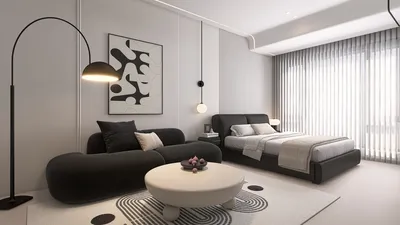


I once attempted to create a moody charcoal accent wall but mistakenly chose the wrong wall, ultimately highlighting the TV glare instead. This taught me an important lesson: wall placement is crucial. For those looking to visualize their layout before making any commitments, I always recommend sketching or rendering first, which can prevent that dreaded midnight repaint panic. By utilizing tools like Homestyler to visualize the layout in 3D, you'll be thankful later on.
1. Soft Gradient Grey Behind the Sofa
A soft ombré transition from light dove grey to mid-grey behind a sofa creates added depth while maintaining warmth alongside wooden floors and brass lamps. The beauty lies in its subtlety: guests are likely to appreciate the ambiance more than the paint itself, and it complements plants beautifully.
What challenges might arise? Gradients can reveal brush marks if you attempt DIY, so it's wise to either enlist a professional or invest in high-quality rollers and some practice. A budget-friendly tip: test the appearance with a faux finish glaze first.
save pin
2. Charcoal Paneling for Height
By installing vertical panels painted in a stylish charcoal grey, you not only create the impression of a higher ceiling but also provide a modern, textured background for artwork. I employed this technique in a narrow living room, instantly transforming the space to feel taller and more purposeful.
While this method requires more effort and expense compared to simple paint, panels can conceal imperfections and withstand wear — ideal for making a durable and dramatic statement.
save pin
3. Two-Tone Grey with a Slim Trim
Applying a darker grey to the lower third of a wall, separated by a slim white or natural wood trim, produces a sophisticated and grounded appeal that is also family-friendly. I executed this design for a client who appreciated the longevity and easy maintenance below the trim.
This flexible option pairs well with both bold textiles and neutral sofas. To see how a grey wall connects with kitchen sightlines and adjoining areas, I often create mock-ups using a program like Homestyler for layout flow.
save pin
4. Accent Nook: Grey Alcove for Shelves
Design a cozy reading nook by painting only the inside of a built-in shelf or alcove in a warm grey; this creates a focus for books and decorative ceramics, enhancing the decor's visibility. I transformed an underused corner into a central feature using this minimal paint strategy — yielding maximum charm.
It's a small investment with significant payoff, but be sure to test different shades of grey next to your lighting, as LEDs can alter tones at night.
save pin
5. Patterned Grey Wallpaper for Texture
If a plain grey feels uninspired, consider a subtly patterned wallpaper in various grey tones — textures like linen, soft geometric designs, or muted metallic prints can add depth without overwhelming the space. In a client's living room, I applied a grey grasscloth pattern that elevated the entire aesthetic.
Although wallpaper installation requires precision and may be pricier, peel-and-stick options are renter-friendly. To ensure the texture fits seamlessly into the overall room, I frequently use 3D renderings, similar to those in Homestyler, to preview how it will look in context.
save pin
FAQ
Q1: What shade of grey works best for a living room accent wall?
A1: The ideal shade varies based on light and furniture — warm greys harmonize with wooden tones, while cool greys complement chrome and glass. Always test large samples on your wall at different times of day.
Q2: Can a grey accent wall make my living room seem smaller?
A2: A dark grey wall can make a space feel cozier and more inviting when used thoughtfully; vertical panels or brighter ceilings help prevent a closed-in sensation.
Q3: How do I decide between painting and wallpaper for texture?
A3: Paint is budget-friendly and adaptable; meanwhile, wallpaper provides immediate design patterns and textures. Consider using wallpaper for focal points and paint over larger areas.
Q4: Is it possible to use grey in a small living room?
A4: Absolutely — opt for lighter greys, incorporate mirrors, and keep the ceiling light. Accent just one wall or an alcove to maintain an open feel.
Q5: What finishes are best suited for grey accent walls?
A5: Matte or eggshell finishes conceal imperfections and impart a soft look, while satin adds a slight sheen for durability. Eggshelled paint is ideal for living rooms with moderate foot traffic.
Q6: How do I pair grey with warm wood floors?
A6: Select warm grey tones that have brown or taupe undertones. Incorporating brass or leather accents will help create a harmonious bridge between the grey and wood elements.
Q7: Are there eco-friendly grey paint options available?
A7: Indeed — many brands offer low or zero-VOC grey paint; check labels for certifications such as GREENGUARD or Green Seal.
Q8: Where can I discover the latest grey color palettes?
A8: For current trends, consult Sherwin-Williams’ color reports and Pantone’s publications; use tools like Sherwin-Williams ColorSnap for the latest grey palettes.
save pin
Discover the ease of home design with Homestyler! This user-friendly platform offers a powerful online design tool, stunning 3D renderings, and a wealth of DIY video tutorials. Whether you're a beginner or a seasoned designer, Homestyler helps you turn your vision into reality effortlessly!
Progetta ora GRATIS
































