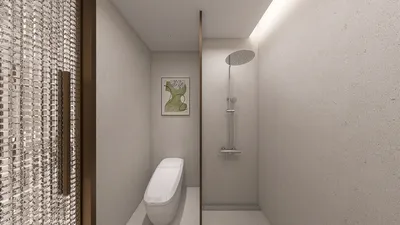


I'll always remember the client who wanted their powder room to evoke a feeling of "moodily gray but not sad." I sketched a compact layout on a napkin as we discussed the merits of brass versus matte black fixtures, and surprisingly, it turned out beautifully. This experience taught me that walls painted in gray can indeed serve as a canvas for creativity rather than a restriction.
Small spaces demand precision: every hue, texture, and accessory must justify its presence. In this article, I will present five pragmatic and stylish ideas for gray bathroom wall decor that I have successfully implemented in past projects, including budget-saving strategies and the minor hurdles you should anticipate.
1. Layered Shades of Gray with Warm Wood Touches
I enjoy combining a cool mid-gray paint with a warm wood vanity or a floating oak shelf; this contrast prevents the area from appearing too sterile. The benefit lies in achieving a timeless aesthetic; however, the slight challenge is ensuring the undertones harmonize so the wood complements the gray paint instead of clashing with it.
Budget Tip: Purchase unfinished wood and apply a straightforward oil finish yourself — it’s budget-friendly and allows you to adjust the warmth to match the gray.
save pin
2. Matte Gray Walls Coupled with Glossy Tile Niche
Using matte gray paint on the primary wall gives a modern and soft appearance, while a glossy tile shower niche or backsplash introduces reflective detail and is easy to clean. The glossy aspect brightens the area, although maintaining grout is a practical chore to consider.
Pro Tip: Opt for a slightly darker grout than the tile to conceal stains in high-traffic areas.
save pin
3. Monochromatic Art Gallery Wall
Gray allows you the liberty to curate a monochrome gallery — black-and-white photographs, charcoal drawings, and textured prints look unified against gray without clashing. This method instantly personalizes the bathroom, but remember to choose moisture-resistant frames or position the art away from direct dampness.
If you need layout ideas before making a commitment, take a look at some curated examples I've used for arranging art to maintain balanced sightlines with the help of Homestyler.
save pin
4. Textured Plaster or Venetian Finish
A subtle gray plaster finish adds depth and an artisan quality unmatched by wallpaper in a humid environment. It's excellent for concealing small flaws, but achieving a uniform finish may require either a skilled DIY enthusiast or a professional — expect slightly higher labor costs.
Keep your lighting gentle to highlight the texture; directional lighting can really make the finish shine.
save pin
5. Accent Stripe or Half-Wall Contrast
Applying a darker gray stripe or a half-wall generates an architectural effect without the expense of tiles and is a favorite way to make a bold, changeable statement. The downside can be the necessity for tape lines and meticulous measuring — stripes need accuracy.
To visualize proportions, I often create a quick mockup to scale or leverage realistic 3D rendering tools like Homestyler, which saves hours of uncertainty and repetitive painting later on.
save pin
FAQ
Q1: Is gray a suitable choice for small bathrooms?
I find gray to be incredibly versatile in small bathrooms — warmer shades can create an inviting atmosphere while cooler tones can visually expand the space. Pairing with reflective surfaces or warm accents can prevent a cave-like ambiance.
Q2: What is the best paint finish for bathroom walls?
Semi-gloss or satin finishes are typically most suitable for bathrooms as they handle moisture and cleaning more effectively than flat finishes. Save matte or chalky textures for areas less prone to splashes.
Q3: How can I prevent mold when using gray wall decor?
Ensure adequate ventilation (installing an appropriately sized exhaust fan for your bathroom) and use mold-resistant paints in high-humidity zones. Regularly cleaning grout and caulk is also beneficial.
Q4: Is it possible to hang art in bathrooms?
Absolutely — utilize moisture-resistant frames or acrylics instead of paper, and avoid placing art directly above wet areas such as the shower. For durability in smaller bathrooms, consider laminated prints.
Q5: Which gray undertone should I choose?
Test samples under varying lighting conditions: north-facing bathrooms generally reveal more blue tones, while south-facing spaces can warm up grays. I always apply large swatches directly on the wall and observe them during both day and night before making a final decision.
Q6: Are tiles superior to paint for bathroom walls?
Tiles provide greater durability for wet areas and are simpler to clean, but paint is often more cost-effective and quicker to apply. A hybrid approach — tiling where water splashes and painting elsewhere — typically offers the best of both worlds.
Q7: How can I make gray walls feel cozier?
Incorporate warm metals (like brass or bronze), natural wood accents, plush towels, and a mix of lighting. Soft textiles and plants can also help soften the starkness of gray and bring the space to life.
Q8: Where can I find more information on indoor air quality and ventilation standards?
Refer to the EPA's guidelines on indoor air and ventilation for specific recommendations. Proper ventilation reduces humidity issues and helps maintain all wall finishes effectively.
Discover Homestyler, the ultimate online home design platform! With an easy-to-use design tool, stunning 3D renderings, and a wealth of design projects and DIY video tutorials, transforming your space has never been more enjoyable or accessible. Dive into your creative journey today!
Design jetzt kostenlos
































