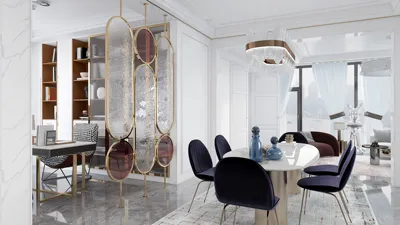


In my experience, I once installed a chandelier that ended up being too large, as the homeowner insisted on its dramatic effect. It certainly made a statement, but it consistently collided with the door whenever anyone entered. This amusing incident underscored the importance of scale in design and reinforced my belief that minor changes can yield significant visual impacts. Particularly in compact dining spaces, creativity can thrive, which is why I’m excited to share five effective lighting strategies that I commonly recommend to clients seeking stylish and practical dining room fixtures.
1. Layered lighting featuring a petite chandelier
A petite chandelier offers the allure of a standout fixture without overpowering a small dining table. I often suggest pairing it with recessed lighting to create a cohesive and inviting atmosphere. The benefit? An immediate elevation in style coupled with evenly distributed light. However, be mindful to verify the ceiling height and wiring; a straightforward solution is to opt for a low-profile canopy.
save pin
2. Eye-catching pendant grouping
Arranging three pendants over a rectangular table adds rhythm and gives a custom feel. I executed this design for a client who adored eclectic glass shades, resulting in a truly bespoke and budget-friendly look. The advantage lies in the versatile styling and the ease of adjusting the scale. The drawback? Ensuring correct alignment is crucial, so a quick mock-up with a string can prevent future inconveniences.
save pin
3. Linear suspension for elongated spaces
In narrow dining areas, a linear suspension fixture maintains a clear sightline while delivering light uniformly across the table. I often recommend this option when the table is aligned with a hallway, as it visually anchors the dining space. The benefits include a streamlined aesthetic and excellent task lighting. A minor consideration is that you may require a longer junction box or a simple extension kit.
save pin
4. Diverse mood lighting options
Combining a small central fixture with wall sconces or a floor lamp creates adaptable atmospheres. In one project, the homeowner desired both bright settings for family gatherings and soft lighting for date nights. The advantage is enhanced control over light levels and comfortable choices. The tradeoff? More switches are involved, but integrating a dimmer or smart bulbs can simplify the process.
save pin
5. Integrated LED fixtures for a minimalist touch
Using integrated LED panels or rings presents a sleek and modern aesthetic while being energy-efficient. I implemented an LED ring above a round table in a compact condo; it offered an airy, futuristic vibe without looking heavy. The advantages include low maintenance and consistent lighting. A potential downside is the higher initial cost of integrated fixtures, but the long-term savings on bulbs often make it worthwhile.
save pin
Budget Tip:
You don’t have to splurge on high-end fixtures to achieve an impressive effect. Often, a well-placed affordable fixture paired with a dimmer can do the job. If you're looking to visualize various layouts before making a decision, utilizing a 3D planning tool like Homestyler can be incredibly helpful.
save pin
FAQ
Q1: What is the appropriate size for a chandelier in my dining room?
A1: Measure both your table and ceiling height; a common guideline is that the chandelier's diameter should equal the table length in feet multiplied by 2.5 inches, but for smaller spaces, I recommend opting for a smaller size to avoid visual clutter.
Q2: What height should dining room lights hang at?
A2: Ideally, you want your lights to be 30 to 36 inches above the table; lower for intimate settings and higher if dealing with a taller ceiling. Ensure that sightlines remain unobstructed for seated guests.
Q3: Are pendant clusters suitable for compact areas?
A3: Definitely! Clusters can be sized down and spaced appropriately to maintain an open feel. I often suggest mock-ups using paper shades to test proportions before making any permanent installations.
Q4: Is it advisable to install dimmers in the dining room?
A4: Absolutely. Dimmers provide flexible atmosphere settings and can contribute to energy efficiency. Pair them with warm-colored bulbs for an inviting dining experience.
Q5: Can I mix different fixture designs within a single dining space?
A5: Mixing is indeed possible if you maintain a consistent finish or color scheme. For instance, I once blended a modern pendant with vintage sconces by using matching bronze finishes, creating a harmonious design.
Q6: What color temperature of bulbs is optimal?
A6: 2700K to 3000K (warm white) typically yields the most flattering light for dining spaces, generating a cozy and appetizing glow.
Q7: How can I ensure suitable lighting in a multifunctional dining area?
A7: Implementing layered lighting — consisting of a main fixture plus task and accent lights — allows for adaptability to various activities such as meals, work, or social events.
Q8: Where can I access planning resources to test fixture placement?
A8: For dependable planning tools, I often look toward industry-standard resources. For example, using Homestyler for planning aids can be very effective, as well as referring to professional guides from lighting experts that offer insights on spacing and mounting specifications.
save pin
Homestyler is your go-to online home design platform! With its user-friendly design tool, stunning 3D renderings, and a wealth of DIY video tutorials, you can effortlessly create and visualize your dream space. Start transforming your home today!
Progetta ora GRATIS
































