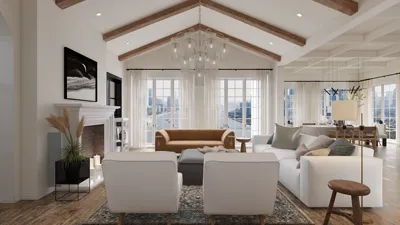


I once installed a sliding door upside down — a true story — and to my surprise, the client laughed about it during their housewarming. This mishap made me realize that doors are not just functional elements; in compact spaces, they can serve as striking design features. Small rooms encourage innovative thinking, and a stylish modern bedroom door can dramatically alter the ambiance of your space. In this article, I present five practical design inspirations I've utilized in actual projects, complete with advantages, drawbacks, and quick tips for your consideration, alongside a tool like Homestyler that can help visualize your ideas.
1. Flush minimalist swing door
I'm a huge fan of flush doors due to their clean and seamless appearance, which allows a bedroom wall to feel uninterrupted. They are perfect for achieving a serene, hotel-like vibe; the hardware is concealed in the jamb, blending seamlessly with the wall paint. The primary benefit lies in their visual simplicity, though precise installation is essential as any uneven gaps will be prominently visible. If you are in the midst of renovation, consider pairing these with concealed door hinges and a magnetic catch to ensure a quiet and streamlined operation, an approach I often explore using Homestyler.
save pin
2. Pocket door to save floor space
Pocket doors are my preferred choice when space is at a premium. They slide away into the wall, enhancing room circulation and furniture placement. Although they may be more pricey and require adjustments to the wall structure, the advantages for tight layouts are significant. For consistent performance, I recommend high-quality rollers and proper framing; otherwise, you might end up with annoying rattles. To visualize the changes that a pocket door brings to room dynamics, consider using a user-friendly 3D floor planner like Homestyler.
save pin
3. Barn door with modern finishes
Barn doors inject personality into spaces and excel in modern rustic or industrial-themed bedrooms. In a recent project, I selected a matte black track to contrast against light-colored walls, making it a focal point without compromising square footage. They are relatively easy to install, but be cautious about potential privacy gaps and sound transmission; a simple neoprene strip can minimize noise and enhance the seal. If you're interested in exploring various sliding options and tracks, resources like kitchen and home layout collections can guide you through selecting the proportions that work best in smaller areas.
save pin
4. Glass-paneled frosted door
Frosted glass doors allow light to permeate while maintaining privacy, making them ideal for tiny apartments that require a touch of brightness. I once used them between a bedroom and a cozy study, and this shared daylight made both areas seem larger. However, they do have drawbacks such as less acoustic insulation and the necessity for careful hardware selection to avoid a hollow sound. In moisture-prone environments, opting for tempered glass and ensuring proper seals are wise measures.
save pin
5. Bi-fold timber door with slim profiles
Bi-fold doors offer a neat folding mechanism and are lighter than traditional swinging doors, creating a soft, organic aesthetic when crafted from timber. I frequently specify slim stiles and soft-close systems, ensuring they maintain a tidy appearance. While they're not my first recommendation for robust privacy, they strike a good balance between function and design in master closets or secondary bedrooms. Cost-wise, they fall between standard swing doors and custom flush versions — making them a practical choice for many of my clients.
save pin
FAQ
Q: What is the most space-efficient bedroom door? A: Pocket doors typically provide the best space efficiency by eliminating the need for swing clearance; however, they do require wall depth to accommodate the pocket. Always consider structural limitations and costs before making your selection.
Q: Are barn doors private enough for bedrooms? A: While barn doors are aesthetically pleasing, they usually have slight gaps around the top, bottom, and sides, resulting in less sound insulation compared to sealed swing doors. Adding seals can help improve privacy.
Q: Do glass doors reduce heat or sound insulation? A: Frosted or laminated glass generally offers less acoustic insulation than solid wood doors and can permit heat transfer; for better efficiency, choose double-glazed or insulated options.
Q: How much does pocket door installation cost compared to a regular swing door? A: Pocket doors tend to be more expensive due to the required framing and track hardware; exact costs vary depending on the current state of the wall, the quality of the pocket kit, and your choice of finishes.
Q: Can I retrofit a flush door into an existing frame? A: Retrofitting a genuine flush door often demands re-hanging and trim work; while feasible, be prepared for skilled carpentry to achieve flawless results.
Q: What maintenance do modern sliding doors need? A: Regular cleaning and lubrication of rollers, along with checking fastenings and adjusting alignment annually, are necessary to prevent jamming and noise issues.
Q: Where can I preview door ideas in a room layout? A: I frequently utilize an online 3D floor planner like Homestyler to experiment with proportions and swinging paths before placing an order for doors.
Q: Are there authoritative guidelines on door acoustic performance? A: Yes — the performance of doors in terms of sound insulation is often measured using STC ratings. For specific details, you can refer to ASTM E90 standards related to airborne sound transmission measurement (ASTM International).
save pin
Homestyler is your go-to online home design platform! With its easy-to-use design tool, stunning 3D renderings, and a wealth of design projects and DIY video tutorials, you can effortlessly create and visualize your dream space, no matter your experience level. Get inspired today!
Concevez maintenant gratuitement
































