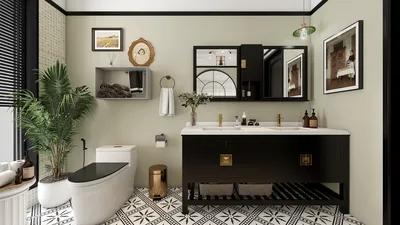


I once made the mistake of painting a bathroom border for a client too low, creating the unfortunate illusion of a sad moustache on the wall — a crucial reminder that placement is key. It’s fascinating how a simple strip of tile, paint, or molding can dramatically alter the ambiance, and typically, I use Homestyler to visualize 3D layouts before deciding on heights and materials.
Small spaces ignite immense creativity, and in this article, I’ll explore five bathroom wall border ideas that I implement in real projects to ensure compact baths feel well-designed and elegant.
1. Timeless Ceramic Tile Border
I often rely on ceramic tiles when my clients seek both durability and ease of upkeep. A horizontal tile band measuring 2–4 inches, whether in subway or mosaic style, protects the walls near sinks while providing a clean, graphic line. Although grout maintenance is needed, modern sealers make it quite manageable.
2. Striking Painted Contrast Stripe
Painting is the quickest way to uplift a mood and is my top recommendation for an affordable border solution. I typically tape a sharp contrast stripe at chair-rail height, allowing for endless color possibilities. The only drawback is the need for thorough preparation to avoid unsightly bleed-through.
save pin
3. Slim Beadboard or PVC Trim
When a client desires texture without significant renovations, beadboard or waterproof PVC panels are my preferred choice. They provide farmhouse charm while protecting lower walls, and installation is quite straightforward. If you use Homestyler for initial sketches, you can plan placements effectively, avoiding any awkward joints.
save pin
4. Elegant Metallic or Glass Mosaic Accent
For those seeking a touch of luxury, a delicate metallic or glass mosaic border can elevate the aesthetic above a tiled field. Although it’s on the pricier side, one client reported that her bathroom transformed into a high-end boutique hotel style once I added a 1-inch mosaic border — minimal upkeep for a significant impact.
save pin
5. Practical Ledge or Slim Shelf Border
Combine aesthetics and practicality by incorporating a slim ledge or shelf band at mid-wall height; it provides a trimming effect while creating space for decorative items like candles or soap. This solution is especially effective in small bathrooms, as long as the items placed are lightweight to prevent shelf sagging over time — this idea aligns well with my favorite kitchen trim principles that can be adapted for bathrooms.
save pin
FAQ
Q1: What is the ideal height for a bathroom border?
A: Common border heights range from 32 to 42 inches above the floor for mid-wall installations, though I customize this depending on ceiling height and fixtures. In spaces with very low ceilings, lowering the border helps maintain proportionality.
Q2: Which materials withstand humidity best in bathrooms?
A: Materials like porcelain and glazed ceramic tiles, PVC trims, and sealed natural stone perform well in humid environments. It’s best to avoid untreated wood unless it’s adequately sealed or positioned above splashing zones.
Q3: Is it possible to install a tile border on my own?
A: For those handy, installing a small band can be a DIY-friendly project with the right tools and patience for leveling; however, for intricate mosaic sheets or complex cuts, I would recommend hiring a professional to ensure proper waterproofing and clean grout lines.
Q4: What width is appropriate for borders in small bathrooms?
A: Typically, narrow bands of 1 to 4 inches work best in compact rooms — these thin lines create definition without overwhelming the space. Wider borders can be used, but they risk making the area feel cluttered.
Q5: Are there any guidelines for coordinating border colors?
A: I usually select a border color that harmonizes with the main tile or paint tones and adds a contrasting accent from towels or accessories. The aim is cohesion: the border should feel like a purposeful detail rather than an afterthought.
Q6: What are the best practices for maintaining grout and narrow borders?
A: Consistent gentle cleaning and annual grout sealing can keep borders looking fresh. For mosaics, opt for non-abrasive cleaners to preserve metallic or glass finishes.
Q7: Are there accessibility considerations when adding a border?
A: Avoid placing rigid shelf borders at heights where individuals might bump into them; choose rounded profiles and consider tactile contrasts for users with low vision. These small adjustments enhance safety and comfort.
Q8: Where can I find expert advice on bathroom trim standards?
A: The National Kitchen & Bath Association (NKBA) provides design guidelines and industry standards; visit https://nkba.org for reliable recommendations.
save pin
Homestyler is your go-to online home design platform! With its user-friendly design tool, stunning 3D renderings, and a wealth of DIY video tutorials, you can effortlessly create, visualize, and transform your home. Unleash your creativity and make your design dreams a reality!
Progetta ora GRATIS
































