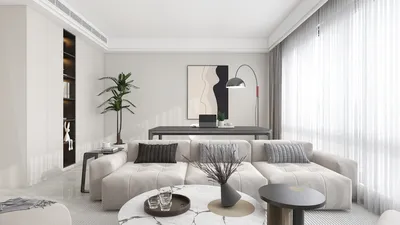


I once had a client who was determined to place a full-sized swing right in the heart of her living-dining room. Initially, I thought it was a joke—until she presented me with the actual hardware she had purchased. This experience taught me that small or multifunctional spaces often ignite incredible, sometimes chaotic creativity. Today, I am excited to share five design inspirations that have allowed me—and my clients—to transform coalesced living-dining areas into stylish and practical spaces using tools like Homestyler.
If you are designing your layout from the ground up, platforms like room planner are instrumental in visualizing your ideas before making any physical adjustments.
1. Zoning Through Rugs and Lighting
A favorite technique of mine is to employ differing rugs and lighting styles to create subtle divisions between living and dining areas. In my own home, a warm, patterned rug anchors the seating area, while a sleek pendant light hangs above the dining table, clearly defining the eating space. The challenge lies in selecting fabrics and fixtures that harmonize without appearing overly coordinated.
save pin
2. Multi-Functional Furniture
Consider items such as extendable dining tables, storage benches, or low cabinets that function as both room dividers and shelves. In a recent project, I designed a custom bookshelf that also served as banquette seating—much to the delight of my client, who appreciated the space-saving solution and added uniqueness. Utilizing a tool like a free floor plan creator, such as Homestyler, can simplify the planning of these elements to ensure proportions are well-balanced.
save pin
3. Cohesive Color Scheme
Blending the living and dining spaces can be visually stunning. By adhering to a palette of three to four primary colors seamlessly integrated throughout furniture and decor, one can achieve a sense of unity. For example, a soft grey wall paired with subtle oak tones and deep blue accents in both zones creates a cohesive look. The key? Avoid becoming overly monotonous; layering different textures is crucial.
save pin
4. Adaptable Seating Options
Incorporating portable stools, stackable chairs, or a cozy seat by the window can dramatically enhance your hosting capabilities. In one of my home renovations, we cleverly concealed two upholstered cubes under a console table, bringing them out only when guests arrived—it was a great success. I frequently simulate these arrangements using tools like kitchen layout planner to better visualize how adding extra seating changes the flow of the space.
save pin
5. A Bold Statement Piece
Whether it’s a large piece of artwork, an eye-catching chandelier, or a vibrant patterned curtain, having a focal point can tie the combined room together beautifully. In my personal living-dining area, a sizable abstract painting connects the casual vibe of lounging and the elegance needed for dining. It's a conversation starter and conveniently masks a wall smudge I've yet to repaint!
save pin
FAQ
1. How can I achieve a cohesive look in a living-dining area?
Utilize a consistent color scheme and repeat materials across both zones. Including a statement item that visually links the spaces is crucial.
2. What layout works best for a small living-dining area?
Focus on circulation and furniture that can serve multiple purposes. Creating a scaled plan ensures that the space doesn’t feel overcrowded.
3. Can lighting effectively define each area?
Definitely. Pendant lighting is excellent for dining spaces, while floor lamps can add warmth to the living area.
4. What type of flooring is ideal for a combined space?
Using continuous flooring like hardwood or large-format tiles contributes to an expansive feel, while rugs can delineate various functions.
5. How can I incorporate storage without creating clutter?
Consider built-in units, storage benches, or multifunctional furniture to keep belongings neatly out of view.
6. Is mixing styles acceptable?
Absolutely, but ensure balance by uniting elements through shared colors or textures.
7. Should I include partitions?
Lightweight screens or open shelving may work effectively, especially when you want visual separation without obstructing light.
8. Where can I create my layout online?
Digital platforms such as room planner facilitate the testing of layouts before any physical changes are made and are highly recommended by many design professionals.
Homestyler is your go-to online home design platform! With its user-friendly design tool, stunning 3D renderings, inspiring design projects, and helpful video tutorials, you can effortlessly create and visualize your dream spaces. Transform your home design journey today with Homestyler!
تصميم الآن مجانا
































