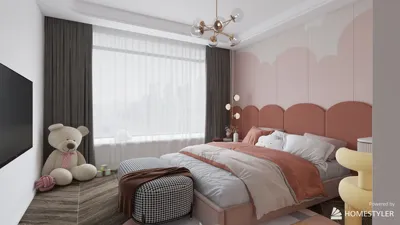


A client once requested that I create a stenciled jungle in her 9m² studio—complete with parrots and monstera leaves—and I almost made the mistake of painting a toucan in the hallway. This close call made me realize that while stencils can be enchanting, planning the layout is crucial. For those seeking instant inspiration, I've curated five impactful stencil ideas perfect for small spaces, revealing insights from my actual projects and reiterating my preferred stencil designs for compact areas, including how to use the Homestyler tool for visualization.
1. Half-Wall Repetition to Enhance Visual Height
Utilizing a repeating geometric stencil on the lower part of a wall is one of my favorite strategies for making ceilings appear higher; this fail-safe technique worked wonderfully in a narrow hallway. It’s budget-friendly—requiring just a small stencil and minimal paint—and forgiving if precision isn't your strong suit, although some time will need to be spent aligning the patterns.
save pin
2. Oversized Motif as a Centerpiece
Applying a large floral or abstract stencil on a feature wall instantly establishes it as the room's focal point. This method is striking and a more affordable alternative to expensive wallpaper, but it’s essential to ensure that both scale and color are appropriate for the space so that it harmonizes with the furniture rather than competing with it.
save pin
3. Delicate Border and Trim Stencils for Added Detail
Incorporating a narrow repeating stencil as a border around ceilings, doorframes, or behind shelves introduces a touch of elegance that seems costly. I applied this technique in a client’s rental apartment to inject personality without making permanent alterations; it’s economical and easily removable with a few touch-ups. To help clients visualize the potential outcomes before committing to paint, I often directed them to explore 3D render displays, like those found in Homestyler, for scale and color previews.
save pin
4. Mismatched Tile Stencils for an Illusory Backsplash
Tile stencils provide a way to achieve the sophisticated appearance of custom tiles without incurring labor costs—ideal for renters or budget-conscious renovations. The visual impact can be substantial for minimal expense, but achieving the grout-line detail can be intricate and requires a steady hand or a small roller.
save pin
5. Subtle Ombre Stencils for Added Texture
I occasionally prefer a textured stencil that incorporates two or three shades of the same color to produce a gentle ombre wall effect, giving the illusion of depth rather than a pattern. It’s calming and obscures imperfections, though it necessitates careful paint mixing and practice for a smooth blend—efforts that yield excellent results when done correctly. For those interested in how AI-driven suggestions can refine color schemes, I encourage checking out the diverse examples using Homestyler's capabilities.
save pin
FAQ
Q1: What types of paint are best suited for stencils when painting walls?
I suggest utilizing low-VOC acrylics or satin emulsions for easy cleanup and effective coverage. For textured stencils, thicker options like chalk or acrylic enamels maintain detail more effectively.
Q2: How can I avoid paint bleed while using stencils?
To minimize bleed, use a small dense roller or stencil brush, apply a thin layer of paint, and secure the stencil with low-tack tape. Testing on cardboard beforehand is invaluable—believe me, it prevents countless touch-ups.
Q3: Are stencils applicable on textured walls?
Yes, you can certainly use them, but the texture may blur sharp edges. While a softer, artistic approach can work, for more geometric accuracy, it's advisable to sand and prime first or opt for larger, bolder designs.
Q4: How much paint should I prepare for a stencil project?
surprisingly, most stenciling projects utilize relatively little paint—a single 100 to 250ml sample pot typically suffices for one accent wall. More intricate patterns or multiple colors will, of course, require more.
Q5: Can stencils work for renters?
Absolutely! Many stencils are removable with little touch-up needed and can be painted over upon moving. It's best to stick with neutral base colors and avoid heavy textures for easier restoration later on.
Q6: How long does a standard stencil project take to complete?
An accent wall can typically be completed within a few hours, while complex patterns or multi-color ombres could take a weekend’s time, including necessary drying intervals. Patience is essential in this craft.
Q7: Are stencils safe for maintaining indoor air quality?
Opt for low-VOC paints and ensure proper ventilation. I often refer to EPA guidelines regarding volatile organic compounds and indoor air when advising clients: https://www.epa.gov/indoor-air-quality-iaq/volatile-organic-compounds-indoor-air
Q8: Is it possible to combine stencils with other treatments like wallpaper?
Yes, integrating a stenciled border with wallpaper segments or a stenciled medallion atop wainscoting delivers unique designs. Just plan your layers and test samples to maintain scale harmony.
save pin
Discover your home's potential with Homestyler! This user-friendly online design platform offers a powerful design tool, stunning 3D renderings, and a wealth of design projects and DIY video tutorials. Bring your creative visions to life effortlessly and transform your space today!
立即免费设计
































