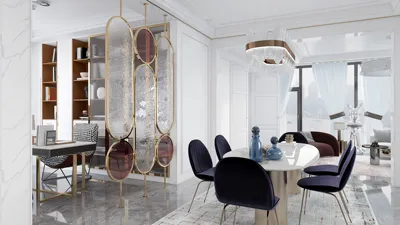


As an interior designer with over ten years of experience, I've observed a remarkable trend in contemporary homes: open living room and kitchen layouts. These interconnected spaces encourage creativity as they eliminate barriers, making every design decision crucial. Particularly in compact areas, innovative ideas often flourish. In this article, I am excited to present ten paint ideas for open living and kitchen areas, drawing from my personal projects, client insights, and reputable design sources, including the Homestyler platform.
1. Warm White for a Timeless Base
My Perspective: I frequently initiate projects with a warm white shade such as Benjamin Moore’s White Dove. This color serves as a cozy yet neutral foundation for both living and kitchen spaces.
Advantages: A warm white hue brightens the environment, reflects natural light, and creates the illusion of a more expansive open area. Architectural Digest also suggests that warm neutrals help to unify open-plan spaces effectively.
Disadvantages: Without the addition of accent colors, it can appear uninspired; some clients express concern that it may seem overly conventional.
Suggestion: Enhance the visual interest by layering with wooden finishes or textured rugs, akin to how warm-toned kitchen storage can beautifully complement white walls.
2. Sage Green for a Calming Flow
My Perspective: Sage green is a favorite of mine for clients seeking a tranquil environment. It creates a seamless connection between natural wood kitchen cabinets and soft living room textiles.
Advantages: This color establishes a peaceful ambiance that pairs exceptionally well with oak or walnut. It's also reported to lower stress levels, according to the Color Psychology Journal.
Disadvantages: In poorly lit apartments, sage may appear lackluster if lighting conditions are subpar.
3. Navy Blue Accent Wall
My Perspective: For those desiring a striking contrast, I often opt for painting a single shared wall in navy blue, achieving drama without overwhelming the space.
Advantages: A navy accent enhances furniture and decor visibility, adds depth, and complements metallic light fixtures well, while also concealing minor scuffs effectively.
Disadvantages: If overused, it can make a small room feel more confined.
4. Two-Tone Wall for Definition
My Perspective: I enjoy using two shades—one lighter above and a darker one below—especially behind kitchen counters or seating areas.
Advantages: This method visually differentiates zones in an open plan without the need for additional walls, and it's a cost-effective solution.
Disadvantages: Achieving clean lines requires precision; uneven edges can detract from the overall aesthetic.
5. Soft Gray with Bright Accents
My Perspective: A soft gray tone across both areas causes any accent color to pop dramatically. I once paired it with lemon yellow dining chairs, and it was truly eye-catching.
Advantages: This color is highly adaptable, making it easy to refresh with new decor, and it pairs nicely with stainless steel appliances.
Disadvantages: An overabundance of gray without textural variation can result in a cold atmosphere.
6. Warm Beige to Blend Materials
My Perspective: Beige paint helps harmonize wooden flooring with light-stone countertops effortlessly.
Advantages: It brings warmth, camouflages minor smudges, and is forgiving in busy households.
Disadvantages: If not paired with contemporary finishes, it can risk looking dated.
Suggestion: Introduce texture with patterned tile backsplashes or woven furniture pieces.
7. Charcoal Gray for Modern Drama
My Perspective: For clients seeking a sleek, modern edge, charcoal gray walls with a matte finish can be truly transformative.
Advantages: This shade conveys a sense of luxury, works exceptionally well with industrial and contemporary aesthetics, and provides a stunning contrast for vibrant artwork.
Disadvantages: Charcoal can absorb light, necessitating ample artificial lighting to prevent a gloomy feel.
8. Terracotta for Mediterranean Warmth
My Perspective: I adore using terracotta in open areas flooded with natural light—it creates an inviting atmosphere as soon as you enter.
Advantages: Its inviting tone is great at disguising everyday wear and pairs wonderfully with open shelving and greenery.
Disadvantages: Overusing terracotta may lead to an overpowering effect—it's best reserved for accent walls.
9. Soft Pastel Zoning
My Perspective: Soft pastels like dusty pink or sky blue can effectively denote the transition between kitchen and living spaces without adding visual clutter.
Advantages: Pastels inject personality, are easy to repaint, and work excellently in smaller open areas where visual breaks are beneficial.
Disadvantages: Some may perceive pastels as overly ‘cute’ for primary living areas.
10. Monochrome Black and White
My Perspective: For a modern, gallery-like ambiance, a black and white palette can be truly spectacular—especially when paired with bold art and high-contrast fixtures.
Advantages: This scheme is timeless, sharp, and can make a compact open area feel structured and stylish.
Disadvantages: It tends to show dust and fingerprints easily, requiring regular maintenance.
Suggestion: Opt for a well-planned layout with the Homestyler tool to maintain a clean and cohesive visual flow.
Conclusion
Ultimately, creating an open living room and kitchen isn't about constraints, but rather about making intelligent design choices. Color becomes an essential instrument for influencing the atmosphere and the flow within the space. As noted by Houzz, the strategic application of paint can even enhance the perception of space. Which paint idea resonates best with your vision for your home?
FAQ
1. What are the ideal colors for an open living room and kitchen?
Neutral shades like warm white, soft gray, and beige serve as excellent bases, complemented by accent colors for delineating different areas.
2. Should I maintain a single color throughout my open living area?
Definitely, for a cohesive appearance, but consider adding accent walls or two-tone designs for subtle differentiation.
3. What techniques can make a small open kitchen feel more spacious?
Utilize light-reflective colors and maintain minimal contrast between the living and kitchen walls to visually widen the area.
4. Are vibrant colors appropriate for open living plans?
Yes, when applied judiciously—feature walls or accents can introduce boldness without overwhelming the ambiance.
5. How can I harmonize paint colors with cabinetry?
Focus on matching undertones. If your cabinets have warm tones, select wall colors that complement those warm hues.
6. Is it alright to mix matte and glossy finishes in an open area?
Certainly—contrasting matte walls with glossy kitchen backsplashes can create depth and interest.
7. Do darker shades make my open space seem smaller?
They can if overused, but with adequate lighting, darker hues can enhance coziness and depth.
8. Is it acceptable to use different colors in the kitchen and living area?
Absolutely, just be sure to create a visual connection through shared undertones or repeating accent colors for consistency.
Homestyler's roots trace back to Autodesk, the global leader in design and engineering software. That heritage lives on in every feature we build. Today, with a community of more than 18 million users worldwide, Homestyler continues to make professional-quality interior design accessible to everyone — from first-time decorators to seasoned architects.
Looking to transform your living space? Homestyler is your go-to online home design platform! With an easy-to-use design tool, stunning 3D renderings, a wealth of inspiring design projects, and helpful DIY video tutorials, you can effortlessly create your dream home. Start designing today!
Design Now for FREE
































