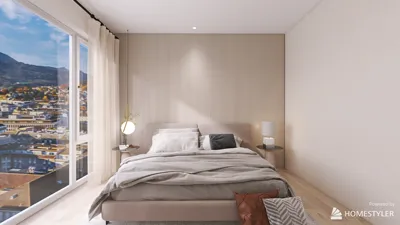


I often chuckle when I recall a client requesting a wall that emulated a stormy sky but was resistant to fingerprints — a small request that pushed me to explore beyond just color. While mapping out the room’s layout that day, it struck me that paint effects can act like furniture: they transform both perception and ambiance.
Compact spaces ignite immense creativity. Through a decade of renovations in kitchens and apartments, I've discovered which paint techniques yield maximum impact with minimal effort. Below, I share five paint effects that I frequently utilize, complete with candid advantages, minor pitfalls, and practical budget insights that you can actually apply.
1. Soft Ombre — add depth with elegance
Ombre transitions from one shade to another, giving low ceilings an elevated feel or extending the length of a narrow hallway. It’s quite forgiving: brush strokes are hidden beneath the gradient, allowing DIYers to achieve impressive results quickly.
The benefits include subtlety and control over mood; however, challenges can arise with color matching and additional paint for blending. A helpful tip is to select three similar shades and practice blending on cardboard first — you can keep costs down by opting for mid-range paints.
save pin
2. Venetian Plaster — luxurious texture akin to stone
Venetian plaster offers a gentle sheen and rich texture that enhances a feature wall. I once suggested this for a rental living room; the client adored the hotel-like finish, and we applied a sealed, low-VOC topcoat for resilience.
While it appears striking, it demands a skilled touch or professional tools, so allocate funds for labor. If you prefer a similar aesthetic without the hefty price, consider using a skim-coat faux finish in a compatible hue — you'll achieve depth with less sanding and fewer surprises.
save pin
3. Geometric Color Blocking — modern and graphic
Vivid color blocking alters sight-lines and can visually expand a cramped area. Typically, I outline shapes with low-tack tape and have a short-handled roller at hand to minimize drips.
Its main strength is adding instant character; however, precision can be a drawback — uneven edges can expose DIY flaws. For clients desiring swift visualizations, I employ AI-driven design mockups like Homestyler to experiment with color placements before the actual painting begins.
save pin
4. Metallic Wash — subtle shine without overload
A delicate metallic glaze layered over a matte base adds a soft reflective element that brightens dimly lit rooms. In a north-facing kitchen, I used a warm pewter glaze that reflected light like a gentle reflector.
Metallics can reveal application marks and may need sealing, so plan for touch-ups. They are best suited for small accents — think a feature wall or ceiling border — and while the material cost is moderate, the visual boost is invaluable.
save pin
5. Faux Concrete — modern industrial flair with minimal mess
Concrete finishes appear sturdy and contemporary; you achieve that loft style without demolishing walls. My strategy involves using a textured roller and thin washes of layered tones to mimic natural pores and veins.
This technique is forgiving and durable, but mastering the grain requires practice. To preview the finish in context, I frequently create 3D renderings using platforms like Homestyler, allowing clients to visualize scale and color prior to fully committing to a wall.
save pin
FAQ
Q1: What are the simplest paint effects for beginners?
Begin with ombre gradients or color blocking. They involve basic tools, masking tape, and practice surfaces rather than advanced skills with plaster.
Q2: How much additional paint do textured finishes require?
Textured or metallic finishes typically need an extra 10–25% of material for multiple layers. It's always wise to purchase a bit extra for touch-ups and unexpected repairs.
Q3: Do faux finishes necessitate special primers?
Absolutely — a quality primer mitigates porosity issues and enhances adhesion. Utilizing a bonding primer reduces soaking and maintains a uniform sheen.
Q4: How can I minimize VOCs and odors?
Opt for low- or zero-VOC paints and ensure good ventilation during and after the application. If you're sensitive, seek out water-based finishes labeled as low-VOC.
Q5: Is it feasible to achieve plaster or concrete appearances without professional help?
You can certainly attain impressive results with practice and the right tools, like skim coats and textured rollers. For large or very visible walls, a brief consultation with a professional could save considerable time and ensure quality.
Q6: What upkeep do specialty finishes require?
Finished surfaces such as Venetian plaster or metallic washes resist stains more effectively but may require re-sealing periodically in high-traffic areas. Regular dusting and gentle cleaners usually suffice.
Q7: Is it safe to paint older homes without testing?
Residences built prior to 1978 may contain lead-based paint. According to the U.S. EPA, it’s advisable to conduct testing or hire professionals for safe removal before disturbing existing paint layers (Visit the EPA Lead Information: https://www.epa.gov/lead).
Q8: How can I visualize a paint effect prior to application?
Utilize small sample panels and observe them at various times throughout the day, or create digital previews using platforms like Homestyler to assess scale and color under different lighting conditions.
Looking to transform your home? Homestyler is your go-to online design platform! With its user-friendly design tools, stunning 3D renderings, and a wealth of DIY video tutorials, you can easily create and visualize your dream space. Start designing today!
Progetta ora GRATIS
































