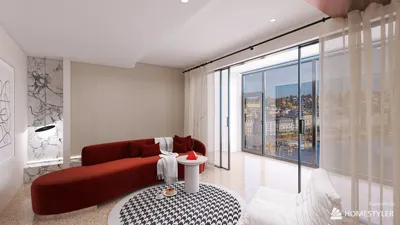


Throughout my ten years in the realm of interior design, I've witnessed numerous color trends rise and fall. However, it's clear that incorporating a burgundy sofa can dramatically enhance the aura of a living room. Currently, we're seeing a resurgence of richer tones that pair exquisitely with cozy, layered decor. Personally, I've found that smaller spaces often ignite the grandest ideas, and a striking sofa frequently serves as an ideal centerpiece. This article will present 10 innovative living room design concepts featuring burgundy sofas, drawing inspiration from my own projects and industry insights to provide both visual appeal and useful advice. If you have a penchant for rich hues and intelligent layouts, you'll appreciate the example from my project focused on minimalist kitchen storage, designed to pair seamlessly with jewel-toned seating in an open-concept home.
1. Modern Minimalism with a Burgundy Accent
My Perspective: In one of my designs for a 30㎡ apartment, the burgundy sofa emerged as the defining feature against an entirely neutral backdrop. The end result was both sleek and inviting.
Advantages: This approach works exceptionally well in compact living areas; the burgundy sofa transforms into the artwork. Minimalist surroundings allow the enduring color to shine without overwhelming the ambiance.
Disadvantages: An excessively minimal environment might appear stark unless softened by textures or greenery.
Suggestion: Incorporate a chunky knitted throw or textured cushions to prevent a stark appearance.
2. Burgundy and Brass Glam
My Perspective: In an Art Deco revival project for a client, the combination of a matte burgundy sectional and brushed brass lighting generated immediate sophistication.
Advantages: Brass elements enhance the richness of the burgundy hue; this pairing creates a harmonious warm-cool visual experience.
Disadvantages: Overuse of brass can dominate the aesthetics, so it's best to use it as an accent.
Suggestion: Limit brass accents to 2-3 key points in the room, like a floor lamp or the edges of a coffee table.
3. Earthy Boho Vibes
My Perspective: I enjoy combining a low-profile burgundy loveseat with rattan side chairs and Moroccan rugs for a grounded and warm look.
Advantages: Natural materials mellow the intensity of burgundy, making it perfect for relaxed reading nooks or casual gatherings.
Disadvantages: It can appear overly eclectic without a cohesive color scheme.
Suggestion: Use terracotta and muted greens to unify the elements.
4. Burgundy with Cool Grays
My Perspective: This color scheme salvaged a basement lounge—gray walls enhanced the airiness, while the burgundy leather sofa introduced warmth.
Advantages: Cool gray tones alleviate the intensity of red shades, particularly beneficial for small or dimly lit spaces; it fosters visual balance (according to the Houzz Color Report, 2023).
Disadvantages: Gray can feel chilly without adequate layered lighting.
Suggestion: Introduce dimmable lamps and soft fabrics to create a cozy environment.
5. Luxe Velvet Statement
My Perspective: A burgundy velvet sofa occupies my own living room—guests are drawn to its luxurious texture.
Advantages: Velvet enriches the depth and saturation of burgundy, making it ideal for sophisticated living areas.
Disadvantages: Velvet easily attracts dust and pet hair; it requires regular upkeep.
Suggestion: Opt for performance-level velvet if you have children or pets.
6. Layered Patterns with Burgundy Base
My Perspective: In a vibrant loft, I established the burgundy sofa as a foundation for an array of geometric and floral patterns, grounding the overall design.
Advantages: Patterns draw attention across the room; the solid burgundy foundation lends intentionality to the composition.
Disadvantages: There is a risk of visual chaos if the scale of the patterns is poorly executed.
Suggestion: Keep patterns within a 2–3 color family for cohesiveness.
7. Burgundy in Open-Plan Spaces
My Perspective: In a combined kitchen-living space, the burgundy sofa served as a psychological barrier between cooking and relaxation areas. A similar zoning strategy is reflected in my L-shaped layout project that optimizes counter space.
Advantages: This setup facilitates both visual zoning and color harmony; it effectively links the aesthetic of the kitchen with the lounge.
Disadvantages: Careful lighting is essential to prevent shadows on the sofa from kitchen fixtures.
Suggestion: Use overhead spotlights aimed at the sofa for balance.
8. Rustic Lodge Ambience
My Perspective: I outfitted a mountain cabin with a rustic burgundy leather sofa that harmonized well with exposed beams and stone features.
Advantages: Leather ages beautifully, and the warm hue adds to the rustic appeal.
Disadvantages: Distressed finishes may not appeal to everyone; they can wear out quicker in urban environments.
Suggestion: Pair with faux-fur throws to introduce additional texture.
9. Monochrome Red Family Scheme
My Perspective: I experimented with various tones—from delicate blush pink cushions to deep wine rugs—around a burgundy sofa for a rich, monochrome effect.
Advantages: This design creates layers of depth without introducing new colors; it offers a cohesive and artistic flair, perfect for gallery-style interiors.
Disadvantages: An overabundance of red may be overwhelming; it necessitates ample white or neutral accents to balance.
Suggestion: Break it up with off-white walls or light wood furnishings.
10. Burgundy with Metallic Accents
My Perspective: In a recent penthouse project, the sleek burgundy sofa was paired with chrome-framed coffee tables, creating a striking contrast. This inspired my showcase of wood accents to add warmth to metallic-rich environments.
Advantages: Bright metal accents enhance the richness of burgundy; reflective surfaces can make smaller spaces appear more expansive.
Disadvantages: Metals may feel cold without sufficient textile balance.
Suggestion: Incorporate a plush area rug to soften the overall ambiance.
Conclusion
In conclusion, a burgundy sofa opens up a world of possibilities—it encourages creativity regarding textures, color combinations, and layouts. As highlighted by the American Society of Interior Designers, bold focal points can enhance perceived spatial efficiency when utilized thoughtfully. Which of these concepts resonates with you the most for your living room?
FAQ
1. What hues pair well with a burgundy sofa?
Neutral tones like beige and gray, or complementary shades like forest green and mustard, beautifully accompany burgundy.
2. Is a burgundy sofa a good choice for small living spaces?
Certainly—when placed thoughtfully, it acts as a focal point without overwhelming the area. Choose slim legs to maintain an airy feel.
3. Can I incorporate a burgundy sofa into modern designs?
Absolutely. It blends seamlessly with minimalist decor, metallic touches, and contemporary layouts.
4. What fabric is most suitable for a burgundy sofa?
Opt for velvet for a luxurious feel and depth; choose leather for durability and a rugged aesthetic.
5. How can I style a burgundy sofa according to the seasons?
Change out cushions and throws based on the season—light linen for summer, chunky knits for winter.
6. Will a burgundy sofa remain stylish?
Burgundy is a timeless color; while trends may evolve, it easily adapts to changing palettes (Apartment Therapy Color Guide, 2023).
7. Which rugs complement a burgundy sofa?
Patterned rugs that incorporate hints of burgundy tie the design together, while neutrals create a calmer environment.
8. How can I showcase a burgundy sofa in an open-plan layout?
Utilize it to define a zone, as demonstrated in my open-layout zoning example, and coordinate adjacent accents for visual flow.
Looking to transform your space? Homestyler is your go-to online design platform! With its user-friendly design tool, stunning 3D renderings, inspiring design projects, and helpful DIY video tutorials, you can easily create and visualize your dream home. Start designing today!
Projete agora para LIVRE
































