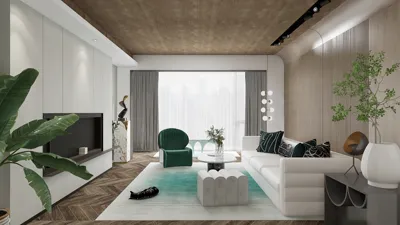


Throughout my decade-long journey in interior design, I've witnessed the constant rise and fall of various styles, yet the Art Deco aesthetic remains a striking presence in contemporary homes. Characterized by its geometric motifs, luxurious materials, and sophisticated charm, this style is captivating homeowners once more. I firmly believe that constrained environments ignite immense creativity; indeed, many of my preferred Art Deco projects have emerged from small living rooms. In this article, I’m excited to share ten Art Deco living room design inspirations drawn from my experiences and reliable industry insights, emphasizing the brilliance of using Homestyler for visual planning.
1. Striking Geometric Motifs
In my experience: I transformed a compact 12m² living room by applying wallpaper adorned with gold and black zigzag designs, instantly infusing the space with vigor and elegance.
Benefits: Geometric patterns serve as foundational aspects of Art Deco living room designs, providing visual excitement and creating an illusion of height in rooms. According to the National Trust for Historic Preservation, distinct geometric lines represent the essence of authentic Art Deco interiors.
Drawbacks: Utilizing overly complex patterns may clutter a small space, disrupting the balance and harmony.
Recommendation: If you're uncertain, place bold geometric patterns on a feature wall — this approach pairs beautifully with furniture arranged in an Art Deco-inspired manner.
2. Opulent Metallic Touches
Personal insight: A client’s love for brass led to its incorporation in lamp stands, coffee tables, and picture frames, resulting in a warm golden atmosphere throughout the room.
Advantages: Elements like brass, chrome, and gold enrich the elegance of a space. They enhance brightness in small rooms while echoing the classic Art Deco aesthetic.
Disadvantages: Inexpensive metallic finishes can tarnish or peel, diminishing the overall appeal.
Tip: Subtle mixing of metals is preferable to achieve a balanced effect without overdoing it.
3. Iconic Lighting Fixtures
Personal insight: I once installed a stunning chandelier with layers of glass rods that transformed an ordinary ceiling into a captivating centerpiece in an apartment I revamped.
Pros: Striking lighting not only acts as a focal point but also evenly distributes ambient illumination. In Art Deco living room design, tiered and fan-shaped fixtures are particularly noteworthy.
Cons: Oversized lighting can clash with lower ceilings, leading to a misplaced aesthetic.
Suggestion: Look for fixtures that blend metals and glass to achieve authenticity.
4. Sumptuous Velvet Coverings
Personal reflection: Velvet is my top choice for infusing tactile luxury; I revitalized a dated sofa with deep emerald velvet upholstery, delivering a rich touch.
Benefits: Velvet captures and diffuses light, enhancing the depth of furniture pieces while aligning perfectly with Art Deco’s affinity for opulent textures.
Drawbacks: It requires more upkeep, as pet hair and dust can be rather persistent.
Tip: Opt for dark jewel tones for a striking visual impact.
5. Mirrored Surfaces for Added Dimension
Personal anecdote: When I added a mirrored wall behind a sofa, it doubled the perceived size of a narrow living room I worked on.
Advantages: Mirrors significantly enhance light and space, crucial for small living areas. Art Deco often features beveled or geometrically cut mirrors to accentuate this effect.
Cons: Fingerprints and smudges are more apparent, necessitating regular cleaning.
Tip: Position mirrors strategically to reflect artwork or chandeliers for enhanced visual interest.
6. Monochrome Divisions
Personal insight: One of my standout projects utilized a bold black and white palette complemented by gold framing, creating striking contrast.
Benefits: This classic scheme offers timeless appeal and structured visuals, perfectly suiting Art Deco layouts. As per the Cooper Hewitt Museum, black and white themes were central to many interiors from the 1930s.
Drawbacks: Without adequate texture, the arrangement might feel overly stark.
Recommendation: Layer in various textures with rugs, cushions, or throws to counteract the contrast, especially in open-plan spaces.
7. Rugs Inspired by Art Deco
Personal experience: I employed a vibrant sunburst pattern rug to unify the seating in a small project I completed, enhancing the area’s cohesiveness.
Advantages: Rugs define areas within open or compact spaces and provide warmth, effortlessly reinforcing your design theme.
Cons: Bold patterns must be paired thoughtfully with other textiles to prevent visual clutter.
Tip: Select a color from your rug to echo in cushions or artistic elements.
8. Balanced Furniture Layouts
My observation: Positioning matching armchairs opposite a sofa fostered a sense of equilibrium in a uniquely shaped living room I designed last year.
Pros: Symmetrical arrangements convey order and luxury, both pivotal to Art Deco design principles.
Cons: Excessive rigidity in symmetry can yield a staged feel, detracting from warmth.
Recommendation: Introduce a quirky accent table or unique wall art arrangement to alleviate formality.
9. Striking Wall Art
A memorable takeaway: Large-format prints in gold frames elevated the ambiance of a modest rental unit, creating an upscale feel.
Pros: Oversized art pieces anchor the space while establishing its sentiment. Art Deco often features stylized human forms, nature motifs, or abstract geometries.
Cons: Scale is crucial — overly large pieces can overwhelm the area instead of enhancing it.
Tip: For renters, utilizing removable hooks can offer flexibility in showcasing art.
10. Streamlined Built-In Storage Solutions
My realization: A custom media unit featuring glossy lacquer doors maintained a tidy appearance while embodying an Art Deco aesthetic in my recent design.
Benefits: Built-ins optimize every inch in small rooms, with finishes like lacquer or high-gloss wood perfectly in tune with Art Deco sophistication.
Cons: Custom solutions often come with a greater upfront cost.
Suggestion: Explore modular options for a budget-conscious alternative that still retains style.
Final Thoughts
Small living rooms provide a unique opportunity rather than a constraint — they challenge us to design innovatively. Art Deco style flourishes in these environments, where each decision, from geometry to glamour, is deliberate. As highlighted by the American Institute of Architects, the most exceptional interiors reflect personal taste through functional beauty. Which of these Art Deco-inspired ideas with the aid of Homestyler are you most eager to implement?
Frequently Asked Questions
1. What characterizes an Art Deco living room design?
It’s recognized by its bold geometric designs, luxurious materials, and symmetrical layouts that emanate elegance and precision.
2. Can Art Deco be successfully applied in a compact living room?
Absolutely. By selecting appropriately sized furnishings and emphasizing reflective surfaces, even smaller spaces can feel more expansive.
3. What colors are best suited for Art Deco interiors?
Typical color palettes include rich jewel tones, monochromatic black and white, and metallics, offering a blend of richness and contrast.
4. Are materials associated with Art Deco expensive?
Not necessarily. There are budget-friendly alternatives that emulate the appearance of marble, brass, and lacquer effectively.
5. How can one source authentic Art Deco furnishings?
Visit antique shows, estate sales, or specialized reproduction stores, as advised by the Art Deco Society of America.
6. Is Art Deco excessively formal for relaxed lifestyles?
This style can be adapted — feel free to integrate cozy fabrics and informal seating to soften its aesthetic.
7. Can Art Deco be combined with other design styles?
Yes, merging Art Deco with mid-century modern or contemporary elements can foster a distinctive, individualized space. Cohesive color themes across different rooms can harmonize varied styles.
8. What is the key mistake to avoid when designing Art Deco living rooms?
Avoid overcrowding the room with an excess of focal pieces; balance is crucial for aesthetic harmony.
Homestyler is your go-to online home design platform! With its user-friendly design tool, stunning 3D renderings, and a wealth of DIY video tutorials, you can effortlessly create and visualize your dream spaces. Transform your home with ease and inspiration today!
Design Now for FREE
































