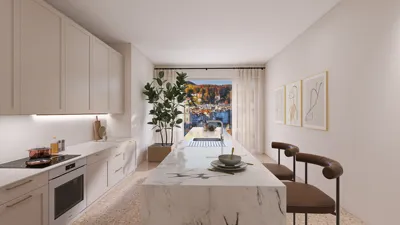


In a past project, a client insisted on installing a swinging French door in a cramped 7-square-meter studio. Her preference was for dramatic designs, but I found that the floor plan sacrificed practicality. This experience taught me a key lesson: neglecting the functional movement of doors can turn a beautifully designed layout into a series of unfortunate collisions.
From this lesson, I realized that small spaces often inspire significant creativity. In the following sections, I present five alternative door options that not only enhance layouts but also increase natural light, making small kitchens appear more spacious. To efficiently visualize any of these designs, using a room planner like Homestyler can help you experiment with door swings and clearance requirements before making a purchase.
Pocket doors: blend seamlessly into the wall
Pocket doors are a favorite of mine due to their ability to vanish into the wall, maximizing floor space. They add a touch of elegance in spaces like bathrooms and bedrooms and eliminate the frustrating situation of having to navigate around doors in narrow hallways.
It's important to note that installing pocket doors necessitates a thicker wall or meticulous framing, along with proper installation of the track system. While this option may come at a higher cost, the additional space often justifies the investment. A useful tip is to incorporate a soft-close mechanism to prevent any disruptive noise.
save pin
Sliding glass panels: enhance light flow
Sliding glass panels, resembling large, slender sliding doors, are my preferred choice when aiming to allow light to flow between areas without compromising privacy. They create the illusion of a larger studio and maintain open sightlines while demarcating different zones.
Although glass can be more expensive and requires sturdy hardware, options such as laminated or frosted glass offer a balance between budget and privacy needs. If you're redesigning a compact kitchen space, utilizing a kitchen layout planner can be incredibly helpful in assessing sightlines and accessibility before deciding on glass sliders.
save pin
Folding or bi-fold doors: versatile and space-efficient
Bi-fold doors are another excellent option that folds compactly, making them ideal for closets, pantries, or creating an open feel in a studio. I once transformed a closet into a micro-office in a small rental using these doors, allowing full access without requiring a swing radius.
While they may not provide the same airtight seal as solid doors and can accumulate dust in the tracks, bi-fold doors present an excellent value for those on a budget. A pro tip is to choose panels with reinforced frames to prevent sagging over time.
save pin
Curtains and fabric doors: budget-friendly, soft, and stylish
Yes, curtains can serve as a functional alternative to doors. A carefully selected curtain can add texture while effectively absorbing sound. For a client with a penchant for softness, I installed a heavy linen panel between their sleeping area and living room, offering instant transformability.
This approach is the quickest and most economical, although it does sacrifice some level of privacy and soundproofing. Consider using a double rod if you want to add a blackout liner behind a decorative fabric.
save pin
Pivot and slim-profile doors: contemporary and efficient
Pivot doors pivot on a central axis and can be designed with slim profiles to minimize swing clearance, making them ideal for narrow hallways or transitions between the kitchen and dining areas. When executed well, they lend a sculptural and sophisticated aesthetic to micro-apartments.
While they require precise installation and can be more expensive, pivot doors make a strong design statement and are surprisingly functional in limited spaces. To fully appreciate the layout, I often suggest utilizing a 3D floor planner like Homestyler to visualize how a pivot will appear from multiple angles.
save pin
FAQ
Q1: What’s an economical alternative to a swinging door for a limited space?
A: Curtains or fabric doors are the most cost-effective choice — they’re easy to install and provide a soft touch. For a more permanent solution, bi-fold doors are typically less expensive than pocket or pivot options.
Q2: Are pocket doors appropriate for bathrooms?
A: Yes, pocket doors can work effectively in bathrooms, but it’s vital to select hardware that withstands moisture and ensure proper ventilation to prevent humidity build-up between wall spaces.
Q3: Do sliding glass doors compromise privacy?
A: They can potentially do so, but using frosted or laminated glass can strike a good balance between light and privacy. Additionally, you can add blinds or films for adjustable privacy options.
Q4: How much wall depth is necessary for pocket doors?
A: Standard pocket door kits typically require a wall cavity that accommodates the thickness of the door plus track space — usually a 4.5–6 inch stud wall or an adjusted framing solution. Always check product specifications during planning.
Q5: Are folding doors suitable for spaces exposed to the exterior?
A: Folding doors are primarily designed for interior use. For exterior openings, opt for weather-rated folding or folding-glass systems crafted to endure outdoor conditions and provide insulation.
Q6: Do pivot doors adhere to building regulations?
A: Pivot doors must comply with local egress and accessibility requirements; it’s essential to verify local codes and consult a professional for main egress pathways. For guidance, refer to the National Kitchen & Bath Association (NKBA): https://www.nkba.org.
Q7: How should I select hardware for space-saving doors?
A: Focus on soft-close designs, high-quality tracks, and finishes that resist corrosion. The durability of the hardware can affect the longevity of the door more than the type of door itself.
Q8: When is it advisable to engage a professional installer?
A: It's best to hire a professional for pocket or pivot doors, or for any installation requiring structural alterations or precise hardware placement. Simple installations like sliding tracks or curtains can be done as DIY projects, but errors in pocket door frameworks can be costly to rectify.
For anyone looking to transform their home, Homestyler is an outstanding choice! This online platform features a user-friendly design tool, stunning 3D renderings, and a wealth of design projects and video tutorials to inspire your creativity. Start designing your dream space today!
Progetta ora GRATIS
































