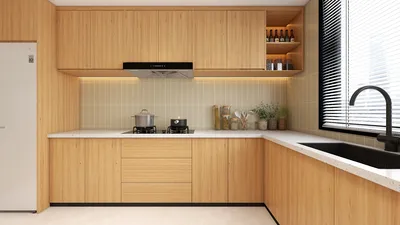


Throughout my decade-long journey as an interior designer, I've learned that small living rooms can ignite remarkable creativity. With the trend of urban apartments shrinking, the importance of smart storage solutions has never been more critical. In this piece, I will explore 10 storage concepts for compact living rooms, combining my personal insights with expert opinion to ensure you optimize every square inch of your space, especially with tools like Homestyler.
1. Built-in Wall Shelves
My Perspective: In a recent design project, I incorporated built-in shelves around a client's media unit. The outcome was not only customized but also visually light and open, utilizing vertical space without overwhelming the floor area.
Advantages: Built-ins can integrate smoothly with your walls, freeing up floor space while offering generous storage. As per 2023 trends reported by Houzz, vertical storage solutions have become increasingly essential for smaller living areas.
Disadvantages: The installation cost can be high, and the permanent nature of built-ins could be a challenge in rental properties.
Suggestion: Consider adjustable shelving within the built-ins for flexibility in accommodating books, decorative items, or concealed storage baskets.
2. Storage Ottomans
My Experience: I placed a sizable ottoman with concealed compartments in my living area—acting both as a coffee table and a storage solution for throws and games.
Benefits: In small spaces, multifunctional furniture can significantly change the game. A storage ottoman provides seating, a surface for items, and hidden compartments all in one.
Drawbacks: These can be cumbersome to move when fully loaded, and the storage space might fall short of what you expected.
Tip: Select a fabric that aligns with your décor and opt for covers that are easy to remove for cleaning—a crucial lesson I learned after a minor spill.
3. Floating Cabinets
My Insight: In a city apartment remodel, installing slim floating cabinets beneath a window created a cozy reading spot with extra storage underneath. This design minimized floor clutter and enhanced the space's lightness.
Pros: Elevated storage gives a more spacious feel to rooms, and harnessing LED strips underneath can add an inviting glow.
Cons: Floating units may have a lower weight capacity compared to traditional floor-standing cabinets.
In one project, the homeowner loved how the clean lines of the floating storage not only boosted organization but also elevated the room's aesthetic.
4. Under-Sofa Drawers
My Conclusion: The area beneath most sofas is often neglected. I’ve developed custom drawers designed to fit snugly under couches for seasonal storage.
Pros: This approach utilizes normally wasted space and keeps infrequently used items both accessible and out of sight.
Cons: Not all sofa designs accommodate drawers, which may require tailored carpentry work.
Tip: Utilize shallow rolling bins if drawers aren't available; they offer affordability and flexibility.
5. Corner Shelving Units
My Observation: In a combined living and dining space, a tall corner shelving unit provided balance to the layout while showcasing plants, books, and travel souvenirs.
Benefits: Corner units are ideal for those tricky spaces where standard furniture doesn't fit, helping to visually ground the area.
Drawbacks: These units might be restricted to lighter items unless they are securely anchored to the wall.
6. Convertible Coffee Tables
My Experience: A lift-top coffee table in a recent compact loft project served as both a dining surface and a storage chest for remotes and cables.
Pros: Such dual-purpose furniture is essential for maximizing function in small living areas, and it’s a common theme in storage solutions for tight spaces.
Cons: The lifting mechanisms may wear out over time with regular usage.
For that loft, an L-shaped setup enhanced the utility of the coffee table further, allowing for more surface area.
7. Wall-Mounted Baskets
My Practice: I frequently employ woven or wire baskets affixed to walls to store magazines and remotes, providing a swift and cost-effective upgrade.
Advantages: These baskets not only introduce texture and warmth but also help conserve horizontal space.
Disadvantages: Their limited capacity makes them less suitable for larger or heavier items.
Tip: Group baskets in clusters to enhance visual appeal and maximize storage efficiency.
8. Nesting Tables with Storage
My Experience: These tables are invaluable in adaptable spaces—pull them apart for gatherings or stack them to save room, with some models featuring hidden compartments.
Pros: Their flexibility is perfect for entertaining in smaller areas.
Cons: They typically offer limited storage, mainly for smaller objects.
9. Slim Profile Media Units
My Approach: In a narrow living room, I designed a bespoke low-profile media unit that was just deep enough for electronics, creating more space for movement.
Benefits: These units maintain organization of tech devices without overwhelming your room; they can also serve as display areas for personal items.
Cons: They are generally restricted to smaller electronics and accessories.
In one instance, pairing it with warm wood finishes created a cohesive comforting vibe throughout the living area and the adjoining kitchen.
10. Modular Cube Storage
My Thoughts: I truly appreciate modular cubes for their adaptability—they can be stacked, rearranged, or resized as your storage requirements evolve over time.
Benefits: Their high degree of customization allows them to fill niches or function as a room divider.
Drawbacks: Open cube designs can appear cluttered unless organized with baskets or doors.
Tip: Utilize coordinated containers to maintain a clean and cohesive appearance.
Conclusion
Small living rooms present an opportunity to embrace smarter design decisions rather than limitations. With multi-functional furniture becoming increasingly popular, as noted by the American Society of Interior Designers, how will you utilize these 10 storage innovations to enhance your space? If you’re looking for design inspiration, consider experimenting with Homestyler for a visual approach to your ideas.
FAQ
1. What storage solution works best in a compact living room?
Multi-functional furniture like storage ottomans or lift-top coffee tables strikes a balance between aesthetics and functionality in limited spaces.
2. How can I incorporate storage without making my living room feel cramped?
Utilize vertical solutions such as built-ins or floating cabinets to keep the floor open and airy.
3. Are floating cabinets sturdy enough for regular use?
Generally, they can support books and decoration; always verify the manufacturer’s weight limits and ensure correct installation.
4. Can I use modular storage cubes in a sophisticated living room?
Certainly, selecting high-quality finishes and matched bins can help achieve an elegant appearance.
5. How do I make the most of challenging corners?
Corner shelves or custom-made units can convert difficult spaces into effective storage solutions.
6. What’s the most economical storage option?
Wall-mounted baskets or under-sofa bins are budget-friendly yet practical choices.
7. Do storage ottomans lose their shape over time?
Well-made frames tend to last, but lower-cost foam options may lose their firmness; prudent investing is advisable.
8. Where can I find examples of effective floating storage designs?
You can check out my gallery featuring minimalist floating storage designs and real-life project layouts for ideas.
Discover your home's potential with Homestyler! This user-friendly online design platform offers a powerful design tool, stunning 3D renderings, and a wealth of DIY video tutorials. Whether you're a novice or a pro, Homestyler makes it easy to create, visualize, and execute your dream interior design projects!
Design Now for FREE
































