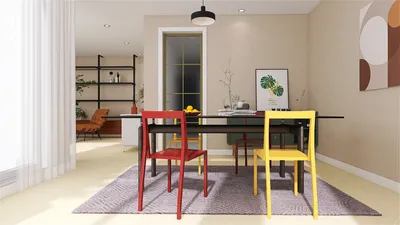


In my experience, a client once demanded zebra wallpaper and a breakfast bar for six people in a modest 250 sq ft flat’s living room and kitchen area. I agreed, but reimagined the plan to include zebra print on just one cushion and designed a foldable breakfast bar. The fun challenge of working in small spaces is making smart, innovative choices.
For those exploring compact design solutions and visual inspirations, consider looking at some open-plan room concepts that have allowed my clients to enjoy their limited spaces more comfortably: open-plan room ideas.
1. Unified flooring and a limited color scheme
I prefer to have the same flooring material carry through both kitchen and living areas, while limiting the color palette to two or three shades. This technique visually enlarges the space and minimizes the chopped-up appearance that often accompanies smaller combinations.
Using vinyl or engineered wood for this approach is budget-friendly, and it complements bold textures well—just make sure to avoid excessive contrasting finishes to maintain the room's charm.
save pin
2. A slender island that serves as both storage and dining area
Consider installing a narrow island or console at bar height that has drawers accessible from the living room side. This multifunctional piece can act as an appliance prep area, additional pantry space, and dining surface all in one.
Benefits include great hosting capabilities and a neat way to conceal clutter. However, it's important to plan for movement to prevent obstruction—ideally, allow for at least 90 cm (35 in) of space whenever possible.
save pin
3. L-shaped kitchen with a collapsible table
An L-shaped kitchen layout fits snugly into a corner, freeing up the center of the room for comfortable seating. To allow for flexible dining options, integrate a fold-down table that remains flush with the wall when not in use.
I often create various sketches to test spacing; if you're looking for layout ideas, these kitchen layout examples demonstrate how effective corner designs can be: kitchen layout examples.
save pin
4. Tall storage solutions and concealed appliances
Utilize high cabinetry, appliance garages, and open shelving placed above eye level. Vertical storage solutions help in preserving floor space and ensure surfaces remain clutter-free—essential in a combination space where every square foot is valuable.
Be cautious that excessively tall, dark cabinets might create a heavy feel. I typically incorporate reflective surfaces or glass-front doors to lighten the ambience and maintain an airy appearance.
save pin
5. Defining spaces with lighting, rugs, and slim partitions
Implement layered lighting, a low-backed sofa or slender bookshelf, and varied rugs to create distinct areas without overly restricting the space. This setup conveys a sense of a single area while functioning like two separate rooms.
For clients desiring a preview of their redesigned space, I often generate quick 3D visuals, enabling them to 'walk through' the plans before finalizing—consider using a 3D floor plan showcase to visualize the layout. Challenges include dealing with crumbs on rugs and wiring for lighting, but these can be addressed with proper planning.
save pin
FAQ
Q1: What layout is ideal for a small combined living room-kitchen?
For most small combinations, an L-shaped kitchen adjacent to a slim island or a galley kitchen against one wall tends to be the most efficient. It allows for a practical work triangle while maintaining space for seating and movement.
Q2: How can I select colors to make the area feel larger?
Adhere to a limited palette of no more than three colors, featuring a dominant neutral and two accent shades. Lightening the walls and large furniture while incorporating texture and darker accessories creates depth.
Q3: Is a full-size dining table feasible?
You can include one, but it often disrupts the flow. A drop-leaf or extendable table is advisable, as it allows for compact daily use while providing extra space for guests when needed.
Q4: What clearance should I maintain around an island?
A clearance of at least 90 cm (approximately 35 in) between the island and any opposing fixtures is ideal for comfortable movement; between 100–120 cm is preferred when accommodating two cooks. These measurements are standard best practices I apply in my projects.
Q5: Are open shelves a suitable option for a combined space?
Absolutely, open shelving reduces visual weight and enhances an airy feel, but they require careful organization. Use them for frequently accessed items while adding closed storage below for bulkier objects.
Q6: How should I manage ventilation in a shared kitchen space?
Effective ventilation is crucial: install an extractor fan with proper CFM ratings for your cooktop, and only consider recirculating units if ducting isn't a viable option. For technical specifics, check industry resources (e.g., ASID guidelines at https://www.asid.org) for recommendations on ventilation and appliances.
Q7: What’s a cost-effective first change?
Upgrading lighting and ensuring a consistent flooring finish are two modifications that create significant visual impact at a relatively low cost. Updating cabinet hardware and painting can also yield high benefits without the need for extensive renovations.
Q8: How can I test a layout before starting renovations?
I typically create a 3D mock-up or use a scaled floor plan to evaluate circulation and visual lines. Walking through a model can help avoid unforeseen issues and refine storage and furniture arrangements prior to the actual work commencing.
save pin
Homestyler is your go-to online platform for home design! With an easy-to-use design tool, stunning 3D renderings, and a wealth of DIY video tutorials, you can transform your space effortlessly. Whether you're a beginner or a pro, let your creativity shine with Homestyler!
Progetta ora GRATIS
































