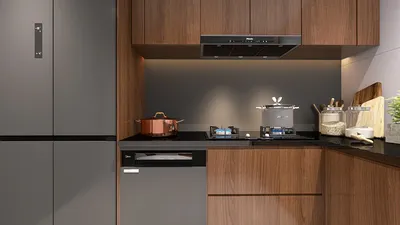


As we regard the future, today's residences face challenges regarding storage, privacy, and maintaining a healthy work-life balance. My design approach envisions a world where the next five years have already taken shape. Recent statistics from NAHB indicate a decline in average new home sizes, driven by affordability and efficiency—illustrating that a compact 450 sq ft single-story house can function effectively, rather than being a compromise. A clever spatial reasoning toolkit emerges as the foundation: the way we structure spaces informs how we behave within them.
Front Core + Rear Retreat
Design Logic: The layout places public areas at the front and private zones at the back, creating a distinct separation between social interactions and spaces for rest. This design strategy favors fewer doors and clearer flow for contemporary routines.
Flow: The journey starts with an entryway leading to a micro-mudroom, then to a galley kitchen, and into a living area. Just off this path is the bathroom, culminating in a bedroom that features a sliding partition for flexibility.
Sightlines: A diagonal line from the entry to the rear window creates a serene visual experience, while partial-height storage elements define different zones without obstructing sightlines.
Storage: Innovations include toe-kick drawers, 12" deep wall-mounted rails, and elevated bed storage, with seasonal bins positioned above the corridor acting as long-term memory solutions.
Furniture Fit: The design accommodates a 72" sofa, a 24" café table, and a queen-size platform bed, allowing for 20" of clear space on either side—this ensures smooth movement throughout the living area, akin to an optimized API.
Verdict: This plan presents a well-balanced design: social spaces at the front facilitate interaction, while privacy and restfulness are prioritized at the back, making it future-ready for the evolving landscape of remote work.
save pin
Center Spine + Dual Light Wells
Design Logic: A central utility area integrates water, storage, and power, with rooms branching out like limbs, minimizing friction and simplifying future maintenance requirements.
Flow: The flow moves from a threshold to a cozy living nook, along a corridor lined with the utility spine, leading to the bath core, kitchen node, and finally to a sleeping alcove; the layout is designed to avoid backtracking.
Sightlines: Opposing windows create a tranquil atmosphere, while a clerestory in the bathroom offers privacy without sacrificing brightness throughout the interior.
Storage: The spine accommodates 18" deep closets, stacked laundry options, and pull-out pantry systems, ensuring quick access to essentials near the main activity areas.
Furniture Fit: A versatile 48" media bench, a foldable wall desk, and a 30" induction cooktop provide functionality, with a niche for a 60" wide bed ensuring comfort without congestion in movement.
Verdict: By centering on infrastructure, this design anticipates technological advancements and aging-in-place needs, demonstrating resilience for future evolution.
save pin
Corner Studio with Sliding Grid
Design Logic: This space converts one room into four distinct modes: cooking, lounging, sleeping, and working. Sliding panels function like toggles, allowing for function reassignment without the need for extensive renovations.
Flow: The journey includes an entryway leading to a storage wall, progressing to a kitchen pod, a versatile lounge and work area, and finally transitioning to night mode with a quick panel adjustment; the bathroom is cleverly positioned at an angle to maintain privacy.
Sightlines: The L-shaped windows create a tiered visual experience: areas for immediate tasks, relaxing mid-range spots, and distant landscapes; the panels control visual distractions effectively.
Storage: A full-height grid wall with labeled modules, under-sofa drawer rails, and an overhead rack for bikes provide organized storage solutions tailored for urban living.
Furniture Fit: A wall bed measuring 60" x 80", small nesting tables at 18" in diameter, and a two-arm light with a 36" reach ensure that the space remains collision-free while accommodating a diverse lifestyle.
Verdict: The adaptable layout transforms 450 sq ft into a versatile studio capable of adjusting to varying schedules and the demands of multi-device living.
save pin
Final Takeaway
In designing a 450 sq ft single-story layout, every square foot is utilized efficiently, guiding the flow to enhance livability. Variations such as micro-home designs and compact cottage plans highlight the potential of smaller spaces to support richer routines. Thoughtfully scaled furniture combined with strategic storage serves to ensure smooth navigation within the home environment. My belief is that the most intelligent homes in the future won't necessarily be larger, but rather more intentional—this is where tools like Homestyler come in handy, simplifying the design process and helping to bring such visions to life.
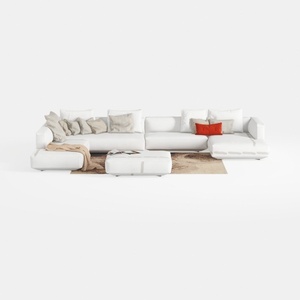
Minimalist White Fabric L Shaped Sectional Sofa with Ottoman 3D Model
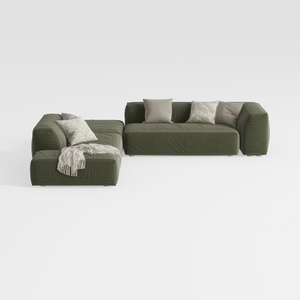
Minimalist Modern Fabric L Shaped Sectional Sofa with Throw Pillows 3D Model

Boneless Cloud Modular Sectional Couch, 120" Wide
Homestyler is your go-to online home design platform, perfect for both beginners and seasoned DIYers. With its user-friendly design tool, impressive 3D rendering options, and an abundance of inspiring design projects and video tutorials, transforming your space has never been easier!
立即免费设计
































