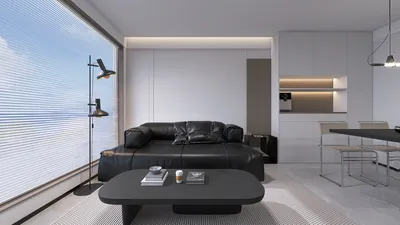


In my experience, I once installed a pendant light too low over an island at a client's request for a "cozy" vibe—resulting in a hilariously disastrous week of heads banging before we resolved it. This incident taught me a crucial lesson: the impact that lighting and placement can have in a small kitchen is significant, often leading to the most innovative design concepts. In this article, I will share five effective lighting and design tips that I've utilized in compact spaces, drawn from real projects where smart lighting made all the difference.
1. Layered lighting complemented by sleek under-cabinet LEDs
Under-cabinet LED strips are a favorite of mine, as they provide essential task lighting without taking up valuable space. They enhance functionality while creating an illusion of a floating-cabinet aesthetic, thereby visually expanding the kitchen. One aspect to consider is dimming; opt for tunable LEDs along with a subtle dimmer to achieve the desired ambiance without causing a harsh glare.
save pin
2. Strategically placed recessed lighting for uniform brightness
When headroom is limited, using small recessed downlights delivers a clean, tidy appearance while evenly distributing light. I typically arrange them in a straightforward grid pattern to eliminate shadows in work areas, though care must be taken not to overdo it—as too many can create a sterile feel. Mixing in warmer lighting accents can help to counterbalance this effect.
save pin
3. Long, slim pendants for narrow islands
Using a slender linear pendant is a perfect solution for lighting above islands, as it provides directed illumination without overwhelming a low ceiling. During one galley kitchen project, I implemented this approach, improving prep lighting while maintaining clear sightlines. However, precise placement is crucial, so be sure to measure thoroughly before making a purchase.
save pin
4. Integrated toe-kick and shelving lighting to enhance depth
Incorporating LED lights into toe-kicks and open shelves generates a layered glow that makes cabinets seem to float, thereby adding an impression of depth. It's an economical trick I employed during a rental renovation, giving the space a custom feel. A key point to consider is planning for electrical access early to avoid any unwanted drilling later on.
save pin
5. Smart controls and scene settings for adaptable spaces
Given that small kitchens often serve as both dining and workspace, I highly recommend installing smart switches that facilitate preset scenes—bright for cooking, warm during meals, and lower lighting for late-night snacking. While the initial investment may be somewhat higher, the convenience and control over mood lighting make it well worth it. Just ensure that the system is intuitive for guests and family members to use.
If you're looking to sketch these plans efficiently, I have relied on 3D floor planning tools like Homestyler, which allow for quick testing of fixture placements and visually assess their effects in real-time.
save pin
Tips 1:
Note on budgeting: While LEDs and smart dimmers can be a bit costly, they offer energy savings over the long run. Simple additions like under-cabinet strips or toe-kick lighting can be affordable yet impactful. For complex rewiring, it's advisable to hire an electrician while keeping fixture accessibility in mind.
Here's a quick real-life case: in a compact 6x8 ft galley kitchen, I combined recessed lights, a linear pendant, and under-cabinet strips; the outcome was a kitchen that felt twice the size and functioned beautifully during dinner prep.
save pin
FAQ
Q1: What color temperature is ideal for small kitchens?
A1: For a warm, inviting atmosphere, aim for color temperatures between 2700K and 3000K; if clarity for tasks is needed, consider 3000K to 3500K. Warmer hues can disguise imperfections, making compact areas feel more comfortable.
Q2: How many recessed lights are necessary for a small kitchen?
A2: A common guideline is to space recessed lights equal to the ceiling height; for an 8 to 9-foot ceiling, 4 to 6 recessed lights arranged in a balanced grid usually suffice, with adjustments for specific task zones.
Q3: Are LED strips bright enough for kitchen prep work?
A3: Certainly—high-output under-cabinet LED strips provide excellent illumination for tasks. Select options with a CRI greater than 90 for accurate color rendering while cooking.
Q4: Will smart lighting systems complicate my setup?
A4: Most modern smart systems are quite user-friendly, yet it's important to verify that the app or wall panel is simple enough for all family members; professional installation can help streamline the process.
Q5: Can lighting strategies make a small kitchen appear larger?
A5: Absolutely! Implementing layered lighting, under-cabinet strips, and toe-kick lights can create depth and minimize shadows, which visually expands the room.
Q6: How can I plan my fixture placement carefully?
A6: To avoid mistakes with fixture placement, try mock-ups at eye level using temporary lamps or tape outlines. Additionally, using a room planning app can allow virtual testing of layouts; this process has saved me hours on-site and prevented errors in hanging pendants.
Q7: What are common mistakes in small-kitchen lighting design?
A7: Typical pitfalls include low-hanging pendants, insufficient task lighting, and mismatched color temperatures. It's crucial to plan lighting layers ahead of time and coordinate fixture styles to prevent an incoherent design.
Q8: Where can I find design examples and useful planning tools?
A8: Reliable sources, such as the American Lighting Association, provide valuable guidelines on lighting design and fixtures. For quick concept testing, utilizing platforms like Homestyler for room planning and kitchen layout previews can help visualize ideas before making purchases.
welcome to Coohom
save pin
Discover your home's potential with Homestyler! This user-friendly online design platform offers an intuitive design tool, stunning 3D renderings, inspiring design projects, and helpful DIY video tutorials. Whether you're a beginner or a seasoned designer, Homestyler makes transforming your space easy and enjoyable!
Desain sekarang Gratis
































