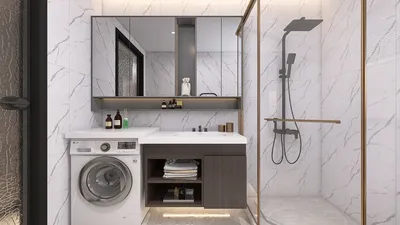


I once posed a question to a client about whether they truly desired a farmhouse sink in their small laundry room. They enthusiastically agreed, which led us to nearly flood the area on the very first day! This close call illustrated that a sink can either be a design highlight or a potential hassle in a compact laundry space, largely based on its size and placement. Typically, I initiate every project with a preliminary 3D rendering using Homestyler to assess sightlines and plumbing layouts before any physical work begins.
1. Slim Utility Sink with Overhead Shelves
In slender galley-style laundry rooms, I recommend utilizing a slim, deep utility sink accompanied by open shelves overhead. This combination keeps the ambiance light while providing an accessible spot for detergents and stain removers, eliminating the need for bulky cabinets.
Benefits include being cost-effective, offering easy access, and being perfect for washing delicate items by hand. However, one challenge is that open shelves can quickly become cluttered; I suggest using baskets and labeled jars to maintain a tidy appearance.
2. Integrated Sink within the Countertop Accompanied by Pull-out Hampers
When countertop space is limited, integrating a shallow sink within a seamless countertop can be transformative. Incorporating pull-out hampers underneath allows you to conceal laundry, keeping the surface clear for folding tasks.
This setup presents a sleek, modern look and reduces the need for bending. The compromise is a slightly smaller sink capacity, which suffices for rinsing and spot cleaning but may not accommodate soaking large items.
save pin
3. Corner Sink to Optimize Workflow
One of my preferred solutions for challenging layouts is a corner sink that maximizes usable space for both the washer and dryer. This design creates a natural workflow triad: washer, sink, and folding station.
It's an intelligent choice for tight configurations, and you can pair it with compact cabinets. Although rerouting plumbing might add to costs, the efficiency gains it offers make it worthwhile.
I also play around with tech-driven layouts using Homestyler to visualize different arrangements; sometimes suggestions generated by AI can unearth unexpected configurations that optimize space and budgets effectively.
save pin
4. Laundry Sink with a Fold-down Folding Area Above
Install a shallow sink beneath a fold-up shelf that serves as a folding table — lower it for laundry loads and tuck it away when the sink is in use. This clever solution is ideal for multifunctional rooms where laundry also serves as a mudroom space.
The advantage lies in maximizing space and flexibility. However, ensure hardware quality is prioritized, budgeting for sturdy hinges and brackets to prevent sagging over time.
save pin
5. Concealed Sink Behind Cabinet Doors
If your aim is for the laundry area to appear as a sleek utility closet, consider placing a compact sink behind bi-fold or full cabinet doors. This keeps the space visually tranquil while still being fully operational.
This approach is particularly beneficial in open-plan homes where the laundry nook is visible from living areas. You will forgo immediate accessibility for aesthetics, but if setting up occasionally isn't a hassle, this could work perfectly. For layout ideas, I often review real-life room planning instances to ensure proportions and clearances are spot on.
save pin
FAQ
Q1: What is the optimal sink size for a small laundry room?
A1: In compact spaces, I usually recommend a sink that is 15–20 inches wide and at least 9 inches deep. This size is sufficiently spacious for hand washing and tackling stains without overpowering the counters.
Q2: Should I opt for a stainless steel or composite sink?
A2: Stainless steel is durable and cost-effective, while composite materials offer stain resistance and a warmer look. Choose based on your budget and desired aesthetic — both types perform well for laundering tasks.
Q3: At what height should the sink be installed for comfortable use?
A3: Typically, standard counter heights (34–36 inches) are suitable for most individuals, but feel free to adjust by 2–4 inches if you are taller or shorter. If you frequently wash items by hand, consider an ergonomically friendly height.
Q4: Is it possible to add a sink with minimal plumbing changes?
A4: Often, you can place a new sink close to existing drain and water lines; extensive rerouting can escalate costs. A plumber can evaluate if a minor adjustment or short pipe extension is feasible.
Q5: What reasonably-priced materials can still provide a high-end appearance?
A5: Options like laminate countertops with integrated sinks or painted MDF cabinets featuring quality hardware can achieve a luxurious feel without breaking the bank. Quality paint and hardware significantly elevate the appearance.
Q6: How can I keep the sink area neat and minimize detergent and stain clutter?
A6: Implementing labeled containers and baskets, installing a small backsplash, and housing a scrubbing kit within a dedicated container helps. Adopting a nightly wipe-down routine keeps surfaces looking fresh.
Q7: Are there established design standards for laundry sinks?
A7: Yes — industry guidelines outline plumbing and workspace clearances. For details regarding appliance spaces and recommended working heights, refer to the National Kitchen & Bath Association standards.
Q8: How do I decide between open shelving and closed cabinets above a sink?
A8: Open shelves create a more airy feel and are typically less expensive, but they also expose clutter; cabinets conceal mess and shield supplies from moisture. I generally prefer a combination: closed storage for chemicals and open shelving for decorative items and baskets.
save pin
Homestyler is your go-to online home design platform. With its user-friendly design tool, stunning 3D renderings, and a wealth of design projects and DIY video tutorials, you can effortlessly transform your space into a masterpiece. Start your design journey with Homestyler today!
今すぐ无料でデザイン
































