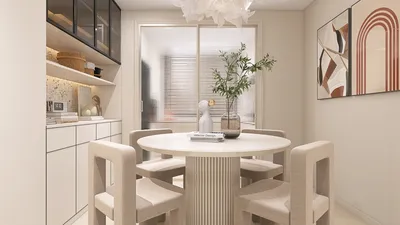


As we look toward the future, our homes are increasingly expected to operate as responsive interfaces. However, the current challenges we face—such as time constraints, clutter accumulation, and the needs of hybrid work—are continually straining our living spaces. Recent observations by Zillow highlight a growing trend of multi-generational living across urban areas in the U.S., prompting a shift towards adaptable layouts that maintain privacy. I encountered a 3 bedroom, hall-kitchen layout measured in meters that serves as an early blueprint designed for families seeking both bandwidth and tranquility in the coming decade, utilizing a robust spatial reasoning toolkit. Incorporating insights from Homestyler can aid in visualizing these designs.
Scenario A: Linear Core with Divided Privacy
Design Framework: This layout features three bedrooms positioned around a central living-dining area measuring 10.5 m x 4.2 m, effectively separating the primary room (located to the north) from the children’s or guest quarters (to the south), ensuring flexibility for future hybrid schedules.
Flow: The design allows for an entrance on the western side, with a sequence leading from the foyer to the kitchen (3.2 m x 3.0 m), then into the living area and bedrooms, minimizing cross-traffic and nighttime disturbances.
Sightlines: A west-east axis promotes expansive views, while partial screens function like user interface layers, revealing living spaces while gently obscuring bedroom areas.
Storage Solutions: The design includes wardrobes with a depth of 0.6 m, corridor niches for extra storage, and a utility bay sized 1.8 m x 1.2 m for larger items.
Furniture Arrangement: The sofa measures 2.4 m, the dining table 1.6 m x 0.85 m, and the beds include a king-sized 1.8 m and queen-sized 1.5 m, all with clearances of 0.9 m at the edges for accessibility.
Conclusion: This linear design offers a clarity that accommodates future integrations—like elder care, remote work, and teenage independence—effectively minimizing spatial conflicts.
save pin
Scenario B: Courtyard Loop with Workspace
Design Framework: The 3.2 m x 2.6 m inner lightwell acts as a thermal and social buffer, with bedrooms arranged in a circular layout that mirrors a stable ring topology.
Flow: This scenario follows a pathway from the entrance to a semi-open kitchen (3.0 m x 2.8 m), then to the living room (5.0 m x 3.8 m), finally leading to a loop corridor that includes a dedicated study space of 2.2 m x 2.0 m.
Sightlines: The design offers gentle radial views toward the courtyard, with privacy gradients layered like user interface components, ensuring bedrooms are discreetly positioned away from the main viewing area.
Storage Solutions: Built-ins along the perimeter measure 0.45 to 0.6 m deep, with overhead storage nearly 2.3 m high, alongside a pantry of 2.0 m x 1.5 m for seasonal items.
Furniture Arrangement: The sectional sofa spans 2.7 m, while the modular desk measures 1.4 m and the children’s twin bed is 1.2 m, all designed to maintain 0.75 to 0.9 m pathways like consistent API connections.
Conclusion: This loop design fosters multi-faceted living—balancing work, relaxation, and recreation—without disruptions, showing resilience to future demands.
save pin
Scenario C: Split-Wing with Central Wet Core
Design Framework: The wet areas are arranged in the central part of the home, featuring two bathrooms (2.2 m x 1.6 m each) and a laundry room (1.6 m x 1.2 m), optimizing utility layouts; the bedrooms branch out into east and west wings.
Flow: This layout flows from a foyer (1.6 m x 2.0 m) leading to the living room (4.6 m x 4.0 m), then moving into the kitchen (3.4 m x 3.0 m) and finally to the bedroom wings, ensuring guest and nighttime pathways do not intersect.
Sightlines: The primary line of sight extends from the living area to the balcony, with bedroom wings arranged in secondary layers that only reveal themselves when necessary, much like modal windows in software.
Storage Solutions: The design incorporates under-bed drawers, hallway banks with a depth of 0.5 m, and a quick-access cleaning station sized 1.2 m x 1.0 m.
Furniture Arrangement: The primary bedroom is sized at 3.6 m x 3.4 m, with the children's room at 3.2 m x 3.0 m, and the guest room at 3.0 m x 2.8 m, all providing 0.8 to 1.0 m clear perimeters for adaptable reconfiguration.
Conclusion: By centralizing the wet core, service efficiency is enhanced while allowing wings to remain versatile—future workflows can proceed without hindrances.
save pin
Final Thoughts
A well-designed 3 bedroom layout transcends mere room arrangement; it transforms into an interface where family dynamics and working patterns intersect. Variations like split wings, courtyard loops, and linear formats allow homes to be optimized for remote work, multi-generational needs, and serene evenings. From my experience, truly intelligent three-bedroom designs do not necessarily require expansion but rather thoughtful planning, continuously refined through platforms like Homestyler to adapt without disrupting the overall flow.
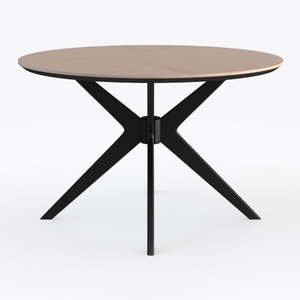
Modern Minimalist Solid Wood Top Metal Frame Round Dining Table 3D Model
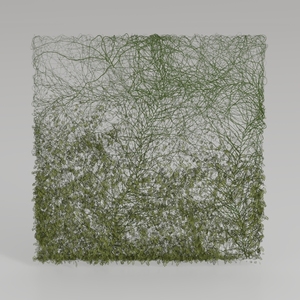
Natural Green Vine Wall Panel Decorative 3D Model
Homestyler is your go-to online home design platform. With its user-friendly design tool, stunning 3D renderings, and a wealth of design projects, it empowers you to create beautiful spaces effortlessly. Plus, the DIY video tutorials make it easy to learn and transform your home today!
立即免费设计
































