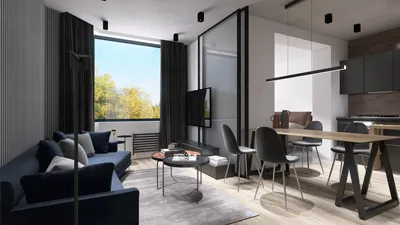


I recall a situation with a client who believed their new single-story, three-bedroom home required a dressing room as sizable as a closet, along with a kitchen island large enough for landing a drone — I could have sketched out a runway! This experience highlighted how minor decisions in single-story designs can compound, and often, clever modifications can outshine brute space expansion. Compact residences ignite considerable creativity, and I am excited to share five practical ideas that I frequently implement.
1. Open Living Core with Designated Privacy
I typically advocate for a cohesive open-plan layout that combines the living, dining, and kitchen areas while placing bedrooms along a short hallway. This arrangement fosters a sense of togetherness for families, while still maintaining private, restful spaces. The benefit lies in flexible entertaining zones and an abundance of natural light; however, noise can be a concern, so I suggest using acoustic doors or incorporating a linen closet as a buffer.
save pin
2. Split-Bedroom Configuration
Positioning the master bedroom at one end of the home and the two additional bedrooms at the opposite end proves immensely effective in a three-bedroom single-story layout. I applied this approach in a recent renovation to ensure that parents could enjoy separation from the sounds of children at play — achieving privacy without needing extra square footage. This design is also advantageous for resale, although careful planning is required to prevent reduced circulation in open areas.
save pin
3. Courtyard or Lightwell for Enhanced Natural Ventilation
Whenever the site permits, creating a small internal courtyard or lightwell greatly illuminates central areas while promoting airflow. In a recent compact design, I introduced one, and instantly, every room felt larger and more invigorating. While this does require more exterior wall space and maintenance, the increased daylight often justifies the effort. Utilizing tools like Homestyler can assist in planning internal spaces and visual connections to ensure optimal window placements.
save pin
4. Versatile Room that Functions as Office or Guest Space
In today’s hybrid work environment, I recommend dedicating a flexible room near the entrance that can transform into a quiet office during the day and a guest room at night. I incorporated a wall bed and smart storage solutions — both practical and adaptable. The downside is it may not serve as a perfect bedroom or office, but this increased flexibility allows the home to evolve over time.
save pin
5. Mudroom and Laundry Hub Adjacent to the Garage
A compact mudroom situated between the garage and kitchen effectively addresses clutter issues and keeps laundry appliances concealed. I implemented this in a recent design, leading to immediate improvements in household routines. This space typically goes unused, but it is important to account for cabinetry and ventilation to prevent unpleasant odors.
save pin
FAQ
What is the ideal size for a one-story 3-bedroom house?
The usual sizes range from 900 to 1,500 square feet, depending on your preferences for room dimensions and storage. Early considerations of circulation and storage can help avoid wasted space.
What layout works best for families with children?
To balance supervision with privacy, separate the master bedroom from the children’s rooms, placing the living areas in between; also consider visible lines from the kitchen to play spaces.
What strategies can I use to maintain an energy-efficient single-story home?
Orient living spaces to maximize winter sun exposure, ensure proper insulation, and utilize cross-ventilation opportunities like lightwells. High-performance windows and shading solutions significantly diminish HVAC loads.
Can a one-story 3-bedroom house support aging in place?
Absolutely — incorporating features such as zero-step entries, wider doorways, a ground-floor master suite with an accessible bathroom, and lever handles enhances long-term value.
Are open layouts suitable for compact one-story homes?
Open layouts enhance the perception of space and natural light, yet it’s essential to add sound-absorbing treatments and zoned lighting for different activities.
Where can I visually experiment with different floor plans?
I often validate my design ideas with a dependable room planning tool to ensure furniture fits and sightlines are correct; this approach avoids costly alterations later on. (For instance, utilizing Homestyler can streamline this process.)
How much should I budget for construction per square foot?
Costs fluctuate significantly based on your area and level of finishes; it’s wise to establish a realistic per-square-foot projection and allocate an additional 10-15% contingency for unexpected expenses during the build.
Are there authoritative resources on housing design standards?
Certainly — organizations like the American Institute of Architects offer guidelines, and the International Residential Code (IRC) sets forth technical standards for safe housing construction (consult the IRC for detailed information).
save pin
Homestyler is your go-to online home design platform, perfect for anyone looking to elevate their space. With its user-friendly design tool, stunning 3D renderings, and a wealth of DIY video tutorials, transforming your home has never been easier. Start your design journey today!
지금 무료로 디자인하세요
































