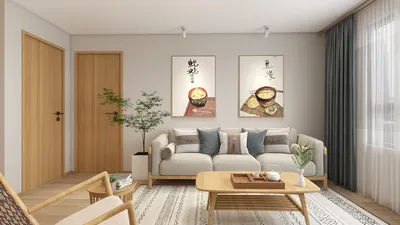


As I navigate the evolving landscape of home design, my clients often face challenges like limited storage, disrupted flow, and unwanted noise in their compact living spaces. Analyzing second-floor plans of 800 sq ft, I interpret them as blueprints for a more serene and intelligent lifestyle. Current findings from the AIA indicate that homeowners are increasingly valuing flexible layouts and sound control, reinforcing my belief that even small 800 sq ft house plans must be as adaptable as contemporary software solutions—introducing Homestyler as an optimal tool for effective design. The future is within reach as I envision how minimalist designs can evoke a sense of spaciousness through thoughtful spatial organization.
toolkit for spatial reasoning
Integrated Core Loop + Sound Barrier
Design Principle: Create a compact circulation loop by situating bedrooms on the quieter periphery, allowing sleep patterns to flourish as daily routines change.
Flow: Begin at the entry point leading to a communal hub, moving in a clockwise direction to reach the bathroom, laundry area, primary suite, and versatile room with no need to retrace steps, ensuring minimal disruptions.
Sightlines: The central hub provides short line-of-sight views; diagonal paths connect to windows while maintaining privacy, prioritizing personal space over illumination.
Storage Solutions: Perimeter wall systems serve as compact storage units, measuring 16-20 inches deep and equipped with seasonal dividers and a designated linen nook near the bathroom.
Furniture Arrangement: Ideal bed dimensions include a queen size at 60x80 with 30-inch pathways; a 72-inch sofa; and a versatile drop-leaf table suitable for both work and dining needs.
Conclusion: This sound-barrier design adapts well to the future of remote work and family growth cycles while remaining coherent as life incorporates new elements.
save pin
Linear Design with Modular Capabilities
Design Principle: A linear circulation pathway reduces travel time between spaces, with modular rooms connecting seamlessly, presenting a forward-thinking approach.
Flow: Stairs land centrally, leading left to a living area plus micro-office, and right to the bathroom, laundry, and bedroom—each space just one gesture away.
Sightlines: The design allows for extended perspectives while doors are strategically placed to maintain depth perception without exposing intimate spaces.
Storage Solutions: Tall units along the spine serve as organized storage, complete with labeled sections, pull-out features, and a 24-inch utility space for additional gear.
Furniture Arrangement: Wall-mounted desks measuring 24 inches deep; an 84-inch limited sectional; wardrobes neatly fitting to avoid disrupting pathways.
Conclusion: As lifestyles evolve and new interests emerge, these modules can be reconfigured without overhauling the entire design, minimizing spatial complexities.
save pin
Triangular Daylight Connection
Design Principle: Utilizing three well-lit corners as key functional zones—sleep, social interaction, and focused work—supports both circadian rhythms and cognitive demands.
Flow: Beginning at the stairs leading to a central router, paths branch into the triad: south-facing living area, east-facing bedroom, and north-oriented study—presenting a logical layout.
Sightlines: The triangular layout maintains layered interfaces: expansive views in living spaces, compact study environments, and bedrooms partially screened for privacy.
Storage Solutions: Incorporate corner seating with deep storage, overhead shelving, and an attic hatch for seasonal items, establishing a tiered storage hierarchy.
Furniture Arrangement: A round table measuring 40 inches helps soften spaces; bedroom furnishings are proportioned with 18-inch nightstands, and task chairs maintain a 30-inch flow around them.
Conclusion: This design concept stabilizes mood and productivity over a five-year span, allowing an 800 sq ft home to function as a high-definition living space.
save pin
Final Insights
In the context of limited space, 800 sq ft second-floor house designs should function coherently, where effective flow and strategic storage create a perception of larger areas. Design variations like small two-bedroom layouts and micro-loft conversions embody this principle: clear pathways, safeguarded boundaries, and well-calibrated sightlines. The homes of tomorrow will not expand in size but will instead enhance interaction through smarter interfaces, demonstrating how subtle spatial adjustments can transform everyday living. Homestyler plays a crucial role in achieving these sophisticated designs that redefine client experiences.


Homestyler is your go-to online home design platform, perfect for all skill levels! Utilize its intuitive design tool, stunning 3D renderings, and a wealth of DIY video tutorials to transform your space effortlessly. Let your creativity shine with Homestyler!
지금 무료로 디자인하세요
































