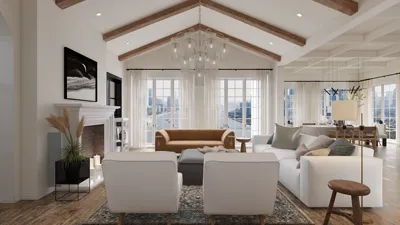


Once, a client suggested hiding the television behind a sliding art panel—a brilliant idea at first glance until their cat figured out how to open it during video calls. While it’s amusing in hindsight, this little incident taught me an essential lesson: compact TV rooms necessitate a balance between functionality and character. With a well-thought-out plan, even the smallest areas can trigger immense creativity. Take a look at some of my favorite room layouts that inspire rapid testing of innovative ideas.
1. Arrange seating to enhance sight lines
I frequently position a loveseat or a compact sofa a few inches off the wall and angle it toward the television. This arrangement fosters a warm conversational setting and allows space for a slim console behind the seating for decorative items or lamps.
Benefits: creates a less cramped atmosphere and encourages flow. Considerations: some clearance—6 to 12 inches—is necessary. Money-saving tip: utilize a narrow bench or elegant console that doubles as storage.
save pin
2. Optimize with wall mounts and low profiles
Mounting the TV on the wall eliminates furniture clutter and visually enlarges the area. I always suggest pairing it with a streamlined floating shelf for the remotes and a soundbar, keeping the floor tidy.
Benefits: frees up floor space and provides a clean aesthetic. Minor drawback: wiring can be tricky—plan for in-wall cabling or neat raceways to conceal visible cords.
save pin
3. Incorporate multifunctional furniture and visual strategies
In one of my studio projects, I utilized a media cabinet that also serves as a storage bench and display area, resulting in a neat, versatile, and welcoming space. Multifunctional furnishings are invaluable in limited TV rooms.
I particularly enjoy experimenting with 3D modeling before making purchases. These 3D visualizations allow me to assess scale, lighting, and material options, helping clients avoid expensive errors. A potential challenge is that multifunctional pieces can be pricier, but I often discover budget-friendly alternatives that replicate the desired look.
save pin
4. Layer lighting for atmosphere and utility
The recipe I rely on includes ambient light, task lamps, and adjustable accents. A dimmable ceiling fixture or wall sconces, combined with an adjustable floor lamp near seating, minimizes glare on the screen while creating a cozy ambiance for movie nights.
Advantage: managing glare and fostering a warm atmosphere. Be mindful of direct reflections—opt for matte finishes on shelves and blackout curtains. Quick tip: plug-in wall sconces can be added without rewiring and still maintain a refined look.
save pin
5. Maintain appropriate scale with rugs and slim storage
A small rug that fits under the front legs of the seating area can anchor the space without making it feel confined. Low-profile media consoles, open shelving, and vertical storage options encourage the eye to focus upward, enhancing the perception of space. I often sketch layout possibilities using simple grids to validate my decisions.
For those who enjoy experimenting, try planning furniture arrangements with a 3D layout tool; these help visualize proportions effectively, making it easier to confirm before purchase. Trade-off: having too many small items can create a cluttered vibe, so it’s best to select a few meaningful pieces.
save pin
FAQ
Q1: What size TV is ideal for a small space?
I suggest measuring the viewing distance and selecting a screen size that equals about half to a third of that distance in inches. This ensures an immersive experience without overwhelming the room.
Q2: How can I diminish glare on the TV in a compact area?
Implement dimmable lighting, position lamps beside seating areas, utilize curtains or blinds, and choose matte finishes on nearby surfaces to reduce reflections.
Q3: Is it preferable to mount the TV or use a stand?
Mounting frees up floor space and results in a sleeker appearance, while a stand offers storage and flexibility. Your choice should depend on storage needs and wall structure.
Q4: How can I integrate storage without overcrowding the TV region?
Consider vertical shelving units, floating cabinets, and versatile furniture like benches with concealed storage to keep the footprint small while maximizing organization.
Q5: Which colors can make a small TV room appear larger?
Generally, soft and light hues complemented by a few darker accents can enhance the perception of space. Keep larger surfaces neutral and infuse personality through textiles and art.
Q6: Are soundbars beneficial in small spaces?
Absolutely—soundbars provide a substantial audio upgrade without needing bulky speakers, fitting neatly under the TV and enhancing dialogue clarity for films and shows.
Q7: What is the ideal distance for sitting from the TV for comfort?
According to the American Optometric Association (AOA), a comfortable distance depends on the screen size, but generally, positioning yourself about 1.5 to 2.5 times the diagonal screen size can help reduce eye fatigue (refer to AOA guidance for more specifics).
Q8: Is it possible to DIY a media wall economically?
Definitely—use paint to highlight a focus wall, incorporate floating shelves, and repurpose second-hand furniture to achieve a cohesive look. Careful planning and accurate measurements will save you money and time.
save pin
Homestyler is your go-to online home design platform! With its user-friendly design tool, stunning 3D renderings, and a wealth of design projects and DIY tutorials, you can effortlessly create and visualize your dream spaces. Transform your home design journey today!
Concevez maintenant gratuitement
































