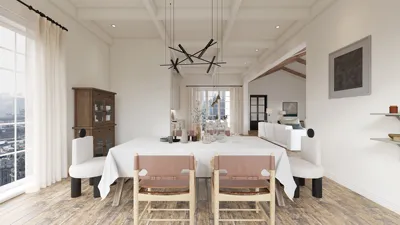


Having designed countless small living rooms, I've discovered that selecting the right rug can significantly enhance scale, comfort, and visual harmony. In these compact spaces, a rug does more than just serve as decoration; it establishes a boundary, provides acoustic insulation, and influences how the room is utilized. The key is to create a visual flow that allows the area to feel more expansive, tranquil, and unified.
The importance of scale cannot be overstated. Research from Steelcase indicates that visual coherence can lower cognitive stress and elevate comfort levels, which is precisely what a well-sized rug achieves in a small living room. Additionally, WELL v2 highlights acoustic comfort as crucial for wellbeing, suggesting that soft materials can mitigate noise levels. A dense, low-pile rug can absorb sound reverberations on hard floors, ensuring conversations remain clear without an echo.
Color psychology also plays a delicate yet important role. According to Verywell Mind, cool colors like blue and green promote a calm ambiance, making spaces appear larger, while warm neutrals create a welcoming atmosphere without constricting it. For small rooms, I prefer lighter mid-tones such as mineral gray, flax, or soft sage—stark white can feel too sterile, and high-contrast black-and-white patterns can create visual clutter.
Effective Rug Size Guidelines
When it comes to small living rooms, opting for a larger rug is wise. A rug that barely fits under the coffee table can fragment the space. Aim for at least the front legs of sofas and chairs to be on the rug; if space allows, all seating should be fully on the rug. As a quick reference, a 5'×8' rug works well for a loveseat and chair, whereas a 6'×9' or 8'×10' rug better harmonizes a small sectional. Maintain a consistent reveal of flooring around the rug—2 to 8 inches can create the illusion of a built-in area.
Choosing the Right Material: Comfort, Longevity, and Acoustics
The choice of material affects acoustics, maintenance, and tactile comfort. My top pick for small living rooms is wool: it’s durable, naturally resistant to stains, and absorbs sound effectively. For budget-friendly options or allergy concerns, solution-dyed polyester or polypropylene can mimic wool's feel while resisting dirt. Flatweave rugs made from cotton, wool, or PET remain low-profile and easy to manage, while hand-tufted wool offers plush comfort as it absorbs daily wear.
If you have pets or young children, I recommend low to medium pile rugs paired with a non-slip felt-and-rubber pad. The pad is essential as it protects the floor, enhances sound absorption, and ensures the rug lies flat. In compact layouts, curling edges can disrupt the entire design.
Patterns and Color Strategy for Smaller Rooms
The size of patterns can influence the overall visual peace of a space. In small living rooms, aim for mid-scale designs or subtly blended tonal fields. Micro-patterns can create visual distractions, while oversized patterns can be overwhelming. If incorporating stripes, position them along the room's longest sightline to enhance the sense of length. A border may help delineate the seating area, but keep it subtle so it frames rather than dominates.
Neutral does not equate to boring. Introduce texture through heathered yarns or variations in loops and cut-pile to enrich the look without adding clutter. If color is desired, maintain a controlled saturation and anchor it with a cohesive palette across cushions and throws to create a harmonious visual composition.
Rug Shape: Beyond Just Rectangles
Rectangular rugs are often the go-to choice, but round rugs can enhance flow in small living rooms with tight configurations or bay windows. Placing a round rug beneath a floating coffee table contributes to a more fluid space, particularly with curved sofas or accent chairs. Runners can also connect two micro-areas—such as a reading chair and media console—without overwhelming the room with a single large rug.
Considering Pile Height and Comfort
Small spaces do best with medium or low pile rugs that maintain door clearance and stabilize furniture placement. High-pile shag rugs can overpower smaller rooms and disrupt furniture stability. Target a pile height of 0.35 to 0.5 inches for a plush touch without excessive bulk. Textured flatweaves combined with a quality pad can provide surprising luxury while maintaining clean edges.
Integrating Layout: Making the Rug the Heart of the Room
The edges of a rug should resonate with the furniture layout: centered on the coffee table, parallel to the main walls, and aligned with paths of movement. In asymmetrical spaces, use the rug to denote the primary conversation area while allowing secondary furnishings to sit just off the rug. If experimenting with layouts, utilizing a room layout tool like Homestyler can streamline the process and help confirm proportions and pathways.
Light and Reflective Surfaces
Glare isn't only an issue with technology. High-gloss floors paired with light rugs can lead to visual discomfort, especially near windows. Strive for balance: a matte-finish rug works well with semi-gloss floors, or opt for a rug with varied colors that diffuses sunlight. If the living room doubles as a workspace, ensure the color temperature remains consistent—warm white light paired with warm-toned rugs creates harmony; mixed lighting can feel jarring.
Practicality and Care in Limited Spaces
Smaller spaces tend to experience higher foot traffic. It's crucial to choose fibers that disguise lint and foot marks—options like heathered wool, mottled PET, or loop-and-cut blends work well. Avoid nap directions that highlight every vacuum stroke. The edges play a significant role: micro-serged or slim binding keeps the profile sleek. If using a robot vacuum, ensure the rug and pad lie flat; a 3/8-inch felt-rubber pad generally achieves a desirable balance of grip and comfort.
Budget, Sustainability, and Health Considerations
Whenever possible, seek third-party certifications and avoid overly treated backings that may release harmful gases in enclosed spaces. Recycled PET flatweave rugs can be smart eco-friendly choices, while wool is renowned for its durability and low upkeep. If funds are limited, prioritize investment in the pad and a clean, mid-tone field rug; patterns can always be updated later through smaller accent textiles.
Top Rug Selections for Small Living Rooms
- A mineral gray wool flatweave with soft striations: keeps the space visually airy, conceals daily wear, and enhances acoustic properties.
- A low-pile hand-tufted wool rug at approximately 0.4 inches in a warm flax tone: plush enough for comfort and stable for furniture support.
- A round rug (6'–8') in subtle sage for asymmetrical layouts: enhances movement and pairs beautifully with curved seating arrangements.
- A tweed blend made of PET in taupe: ideal for families and pets, easy to spot-clean, and features a sturdy texture without being overly busy.
- Subtle stripes running parallel to the long wall: elongates the room visually without introducing a nautical feel.
My Process for Placing a Rug in a Small Living Room
1) Begin by mapping the seating arrangement. 2) Align the rug with the main wall or window line. 3) Ensure at least the front legs of the furniture are on the rug; full anchoring is preferable if space permits. 4) Maintain a narrow, consistent reveal of the floor around the rug to create a defined area. 5) Double-check door swings and paths for robot vacuums. If the geometric layout presents challenges, consider using a layout simulation tool like Homestyler for more options without physical rearranging.
Expert Insights
Research from Steelcase indicates that visual coherence can enhance perceived comfort; textile-based acoustic absorption contributes to overall wellbeing as per WELL v2 standards. To navigate color selection that promotes calmness, the color psychology insights from Verywell Mind can offer valuable guidance. For a broader understanding of design principles that cater to human experiences, the IIDA provides essential perspectives. Read more about these insights through Steelcase Research and WELL v2 documentation.
Frequently Asked Questions
Q1: What rug size helps small living rooms seem larger?
A: Choose a slightly larger rug than anticipated—typically, a 6'×9' carpet often enhances the space more effectively than a 5'×8' for a loveseat-and-chairs setup. Larger rugs unify the furniture arrangement and minimize visual disconnection, helping the room feel like one cohesive unit.
Q2: Should all furniture legs be placed on the rug?
A: In smaller areas, at least the front legs should be on the rug; full coverage is optimal if traffic flow permits. The main principle is to create consistency for a connected and stable seating experience.
Q3: What types of patterns work best in small living rooms?
A: Look for mid-scale designs and subtle textural patterns. Steer clear of overly busy small prints or large dominant motifs. Stripes that run along the longest visual lines can help elongate the room.
Q4: Are round rugs a viable option?
A: Absolutely! Especially in irregular rooms or those with rounded furniture, round rugs can soften corners and improve movement while maintaining visual lightness.
Q5: Which materials are the most practical?
A: Wool stands out for its durability and acoustic benefits; PET blends are effective for stain resistance and affordability; low-pile hand-tufted options balance plushness without adding bulk. Always pair rugs with a good quality pad.
Q6: How can I manage acoustics in a small living room?
A: Opt for denser rugs along with a felt-rubber pad to absorb sound and minimize echoes. Adding soft textiles throughout the room—curtains, throws—reinforces the acoustic benefits.
Q7: What rug colors create a sense of spaciousness?
A: Light to mid-tone neutrals like mineral gray, flax, or muted sage work best. Ensure that contrasts are gentle and align with other fabrics to maintain a serene visual atmosphere.
Q8: What is the recommended thickness for a rug?
A: Ideally, the pile height should be between 0.35 and 0.5 inches for comfort, eliminating risk of tripping. In extremely tight spaces, a flatweave combined with a quality pad offers comfort while retaining crisp edges.
Q9: Can I layer rugs in a small living room?
A: Yes, layering is possible, but keep the base rug subtle and choose a smaller tonal top rug. Ensure edges are secure and circulation is clear—layering should enhance texture without overcrowding the space.
Q10: What maintenance tips do you have?
A: For low-pile rugs, use a vacuum with adjustable suction, rotate the rug periodically to balance wear, and spot-clean stains promptly. A quality pad can prevent wear and extend the life of your rug.


Homestyler is an exceptional platform for anyone looking to design their home effortlessly. With its user-friendly online design tool, stunning 3D renderings, and a wealth of design projects along with helpful video tutorials, you can easily transform your visions into reality!
Progetta ora GRATIS
































