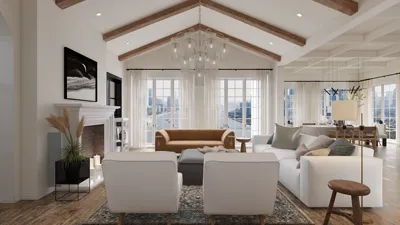


I once made the decision to fit a six-person dining table into a 9-foot-wide condo, driven by the owner's insistence that, "Guests must feel important." This experience taught me that scale is more crucial than ego—now, I prioritize realistic layout considerations. A compact living space can inspire big ideas, and in this article, I will introduce five decor inspirations that I frequently employ in real projects to bring tiny dining rooms to life. For further insights into practical space planning, be sure to check out an example while you read.
1. Wall-mounted foldaway table
I have a fondness for foldaway tables as they provide an eating surface without the burden of permanent furniture. They are perfect for occasional entertaining—simply pull them down for guests and store them away for everyday use. However, proper wall support and chair clearance are essential, but this budget-friendly option is one I've installed numerous times.
save pin
2. Built-in banquette seating
Custom banquettes are excellent for maximizing seating while maintaining a compact flow; I once managed to fit extra guests into a small 10-square-foot nook using one. They offer hidden storage beneath the bench and foster a warm dining atmosphere. The drawback is their permanence—banquettes aren’t easily relocated—but they are ideal when seeking a tailored, space-efficient solution.
save pin
3. Mirror and lighting combinations
Mirrors can visually expand space; when combined with layered lighting, they can transform confined areas into welcoming spots. I often incorporate a slender vertical mirror along with a pendant light at table height—this approach is simple yet striking and cost-effective. If you're looking for ways to balance lighting in kitchen-dining areas, consider practical ideas, especially in spaces adjoining a kitchenette.
save pin
4. Mix small-scale furniture and slim silhouettes
Opting for smaller chairs, narrow tables, and slim-profile sideboards helps maintain open sightlines. I once replaced bulky chairs with armless alternatives, and it instantly made a cramped room feel more spacious—this was achieved simply by reducing visual weight. The challenge lies in balancing comfort and compactness; I recommend testing seating options before you decide on a particular style.
save pin
5. Create zones with rugs and open shelving
Area rugs can delineate a dining area within an open-plan studio, while open shelving can provide separation without closing off space. I prefer floating shelves to display plants and dishes—functional decor that ensures everything remains airy. To add the finishing touch, using a quick 3D layout demonstration can help you visualize the scale and materials before making purchases.
save pin
FAQ
Q1: What color schemes are most effective in small dining rooms?
A1: Light, tonal palettes can visually open up space, while a single darker accent wall contributes depth. It's advisable to limit your palette to two or three colors to prevent visual clutter.
Q2: Are round tables superior to rectangular ones for compact areas?
A2: Definitely—round tables usually enhance flow and fit into tighter spaces by eliminating sharp edges and allowing for smoother movement.
Q3: How much clearance is necessary around a dining table?
A3: Aim for a clearance of at least 30–36 inches from the table's edge to the wall or furniture to facilitate comfortable movement. Less space can feel cramped.
Q4: Is multi-functional furniture suitable for a dining room?
A4: Absolutely—expandable tables, storage benches, and foldable chairs are all practical options. The key is to find a balance between versatility and durability for daily use.
Q5: What type of lighting is best for a small dining area?
A5: Combine ambient lighting with a standout pendant or chandelier situated above the table; utilizing dimmers can help create the right atmosphere while accommodating scale. Avoid oversized fixtures that may overwhelm the space.
Q6: How do I select the right rug size for a small dining room?
A6: Choose a rug that extends at least 24 inches beyond the table on all sides, ensuring chairs remain on the rug even when pulled out. This creates a cohesive dining area.
Q7: Are built-ins a worthwhile investment for compact dining spaces?
A7: If you plan to stay in your home for the long haul, built-ins can add valuable storage and style, often enhancing the room's functionality and overall value. While they may require a higher upfront cost, they can elegantly address multiple space challenges.
Q8: Where can I find trustworthy layout guidance?
A8: For expert-backed advice, the National Kitchen & Bath Association (NKBA) provides clear guidelines on clearances and ergonomics (visit https://nkba.org/). Their insights are beneficial when designing small dining layouts, especially in conjunction with tools like Homestyler.
save pin
Discover your creative potential with Homestyler! This user-friendly online home design platform offers an intuitive design tool, stunning 3D renderings, and a plethora of inspiring design projects. Plus, you'll find helpful DIY video tutorials to guide your journey. Transform your space effortlessly!
Progetta ora GRATIS
































