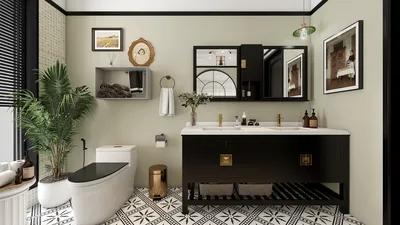


Once, I positioned a towel warmer too close to the window in my cabin's bathroom, leading to a frozen towel during winter—a true cautionary tale. That experience underscored the importance of considering scale and airflow in compact spaces. In small bathrooms, decisions must be made, and those constraints often ignite creative solutions; it becomes essential to focus on aspects like texture, storage, and lighting. If you’re eager to explore designs and try space-efficient configurations, using digital layouts can prevent you from repeating my earlier oversights.
1. Rustic Wood Paneling with Bright Accents
A warm, knotty pine wall brings a cozy touch, but achieving balance is crucial: combine vertical shiplap with vivid, washable paint on the ceiling to enhance the room's height. While wood adds character reminiscent of a cabin and conceals flaws, it can be costly or require sealing in moisture-prone areas. To manage your budget, consider using reclaimed or engineered panels just on a focal wall.
save pin
2. Compact Corner Shower with Natural Stone Tiles
Corner showers optimize floor space and can feel opulent when adorned with large-format tiles that mimic stone; the secret is opting for lighter grout and a linear drain, creating a seamless appearance. Be mindful of ventilation—install a reliable exhaust fan and choose a frameless glass door to reduce visual clutter and simplify cleaning.
save pin
3. Floating Vanity, Open Shelving, and Clever Mirrors
I've implemented floating vanities in numerous cabins to create an illusion of spaciousness while keeping the floor visible for easier cleaning. If you're looking to design your shower nook and vanity layout ahead of time, utilize a bathroom planning preview; open shelves are usually more affordable than closed cabinets but require organization. Incorporate baskets for an orderly appearance.
save pin
4. Nature-Inspired Color Palette and Textures
Earthy greens, soft blues, and warm neutrals can enhance the feel of a cabin bathroom, making it feel like a continuation of the outdoors. Introduce tactile elements with woven mats, stone soap dishes, and matte fixtures to add dimension. However, be cautious—too many textures in a tiny area can feel overwhelming. Select one primary texture and complement it sparingly, yielding a significant style impact on a modest budget.
save pin
5. Mixed Metals, Warm Lighting, and Finishing Touches
I recommend a blend of metals—using aged brass for faucets alongside black accents on hardware gives a deliberate look rather than appearing mismatched. Layer your lighting effectively: combining a warm vanity light with a dimmable overhead fixture can transform a small cabin bathroom into an inviting sanctuary. To visualize how the finishes will appear under soft light, I often create realistic renderings. Just remember, adding more layers may lead to additional fixtures needing wiring, so early electrical planning is essential.
save pin
FAQ
Q1: What materials are advisable for a cabin bathroom?
I suggest moisture-resistant engineered wood, porcelain or tiles resembling stone, and matte-finish metals that don't show fingerprints. Avoid using raw softwoods in wet areas unless they are adequately sealed.
Q2: What can I do to make a small cabin bathroom appear larger?
Opt for lighter hues, floating fixtures, expansive mirrors, and transparent glass for the shower enclosure to minimize visual interruptions. Employing a consistent flooring style that extends beneath the vanity can also help the space feel more expansive.
Q3: Is wood a suitable choice for a bathroom?
Yes, though with some caveats: use treated or engineered wood and ensure good ventilation to avoid warping. Keep wood away from direct splash zones or consider tile wainscoting where necessary.
Q4: How critical is ventilation?
Extremely important—adequate ventilation prevents mold buildup and protects surfaces. According to the US EPA, managing excess moisture is vital for maintaining indoor air quality and preventing mold growth.
Q5: What kind of lighting is best for a small rustic bathroom?
Utilize layered warm, dimmable lighting: include task lighting around the mirror as well as a gentle ambient source. Steer clear of harsh overhead lighting alone, as it flattens textures and can render small spaces clinical.
Q6: How can I economize on a cabin bathroom renovation?
Prioritize spending on durable, visible elements like vanities and lighting, while refreshing hardware and textiles for a quick style uplift. Incorporating reclaimed materials and focusing on one statement wall can provide considerable impact with lower costs.
Q7: Is patterned tile advisable in a small cabin bathroom?
Yes, but apply patterns carefully—consider a single accent wall or a patterned flooring strip for focused style; too much pattern can become overwhelming. Pair it with neutral, calming surfaces to maintain harmony.
Q8: Is it feasible to DIY a cabin bathroom renovation?
Minor cosmetic updates—like painting, changing hardware, and putting up new mirrors—are very feasible for DIY enthusiasts. However, for plumbing, electrical, or waterproofing tasks, it’s wise to hire licensed professionals to avoid expensive errors.
Discover the ease of home design with Homestyler! This user-friendly platform offers an intuitive online design tool, stunning 3D renderings, inspiring design projects, and helpful video tutorials. Transform your ideas into reality and create your dream space effortlessly!
Zaprojektuj teraz za darmo
































