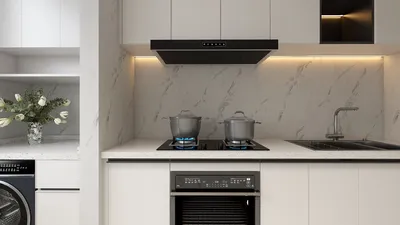


I once worked with a client who wanted their compact, 6-foot galley kitchen to be both dramatic and bright—a request that was amusing yet challenged me to elevate my design approach. Designing for small spaces requires thoughtful decisions, and it's often in this challenging tension that innovative ideas are born. If you're contemplating a small kitchen design in black and white, the foremost consideration should be layout: employing intelligent kitchen designs ensures every inch serves a purpose. Using tools like Homestyler can greatly aid in visualizing these designs effectively.
1. Divide the Color Scheme: White Above, Black Below
I frequently suggest having white upper cabinets paired with black lower ones to enhance visibility while grounding the space. This approach not only creates an illusion of height but also maintains a fresh look; however, be mindful that white surfaces may show stains more readily, while black surfaces can accumulate dust, so selecting easy-to-clean materials is crucial.
save pin
2. Use Reflective Surfaces and Thoughtful Lighting
Incorporating glossy white backsplashes, mirrored elements, and LED lights below cabinets can cast light effectively, making a smaller kitchen feel more spacious. To explore ideas before finalizing your choices, I recommend utilizing 3D visualization tools like Homestyler; clients can observe how different finishes react to light—but do remember that shiny materials can attract fingerprints, so consider their placement carefully.
save pin
3. Concealed Storage for a Neat Contrast
A black and white palette can appear minimalistic only when clutter is well-managed. I design deep drawers, tall pull-outs, and toe-kick compartments to ensure every item has its proper place. One challenge is the cost—custom storage inserts can increase the budget, but they enhance both functionality and ease of use.
save pin
4. Mix Different Textures: Matte Black, Glossy White, and Natural Wood
Matte black cabinetry offers a modern feel and conceals fingerprints more effectively, while glossy white contributes brightness. Adding a narrow wooden shelf or a butcher-block countertop can introduce warmth and soften the stark contrast; this is a minimal investment that yields significant aesthetic and practical returns.
save pin
5. Compact Appliances with Integrated Designs
Opting for slim appliances and integrating them into cabinetry helps maintain an uninterrupted black-and-white aesthetic. For optimal efficiency, consider using panel-ready refrigerators and compact dishwashers—I have employed AI-driven design techniques to optimize appliance positioning in tight spaces, although this may involve trade-offs in terms of capacity versus size.
save pin
FAQ
Q1: What ratio of black to white is ideal for a small kitchen?
Aim for approximately 60–70% white to retain brightness, while utilizing black for lower cabinets or an accent area. I generally recommend white upper cabinets and black bases to keep the room feeling open.
Q2: Are matte or glossy finishes superior for small black-and-white kitchens?
Matte black surfaces are better at concealing fingerprints, while glossy white enhances light reflection, making the space feel larger. A combination of both usually provides the most effective balance between functionality and visual appeal.
Q3: How can I warm up a small black-and-white kitchen?
Incorporate warm wooden countertops, open shelving, or brass hardware as subtle accents—they can break up the starkness without deviating from the monochromatic theme.
Q4: What type of lighting should I install?
Constructing a layered lighting approach is essential: incorporate ambient ceiling lights, task lights under cabinets, and a spotlight above preparation areas. LED lights are energy-efficient and allow you to adjust the color temperature to enhance both black and white surfaces effectively.
Q5: Is black cabinetry hard to maintain?
Black surfaces tend to show dust and minor scratches more than lighter shades, so selecting durable finishes and planning for regular gentle cleaning is advisable; matte finishes can better mask minor imperfections compared to glossy surfaces.
Q6: How do I maximize storage in a narrow kitchen space?
Focus on full-extension drawers, vertical pull-out shelving, and organized spaces for frequently used items; I also advocate for the use of toe-kick drawers to store seldom-used baking supplies, making the most of cabinet space.
Q7: Any budgeting strategies for a monochrome kitchen?
Prioritize investments in high-quality cabinet structures and hardware where functionality is critical, then select more affordable laminate or veneer for visible areas. Small alterations, such as changing handles or adding a new backsplash, can refresh the kitchen’s appearance without excessive cost.
Q8: Where can I find trustworthy design guidelines?
The National Kitchen & Bath Association (NKBA) provides detailed planning standards and ergonomic guidelines for kitchens (see nkba.org), which I reference during the design process to ensure effective space utilization.
save pin
Homestyler is your go-to online home design platform! With its user-friendly design tool, stunning 3D renderings, and a wealth of inspiring design projects and video tutorials, transforming your space has never been easier. Unleash your creativity and start designing today!
تصميم الآن مجانا
































