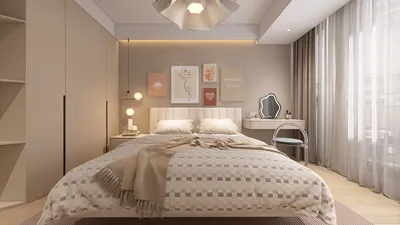


I once persuaded a client to rotate their bed by 90 degrees, which completely transformed the entire room — until the closet wouldn't close. This minor adjustment highlighted how small alterations can reveal significant possibilities, emphasizing the creativity that small spaces can inspire. For those looking to envision various layouts swiftly during planning, I often turn to a layout visualization tool like Homestyler to check proportions before making any purchases.
1. Zoned Sleeping Nook with a Sliding Divider
Creating a designated sleep area with a slim sliding panel or curtain has become one of my favorite methods. It provides privacy in a studio without extensive renovations and establishes a luxurious separation between wake and sleep.
The advantage includes a cozy bedroom atmosphere coupled with the flexibility of daylight openness; however, the downside is that it offers less permanent sound insulation. A budget-friendly tip: using a DIY rail and fabric can be significantly cheaper than constructing a built partition.
save pin
2. Elevated Platform Bed with Built-In Storage
Lifting the mattress a few inches to incorporate hidden drawers dramatically increases storage without altering the footprint. I utilized this solution in a 28m² apartment where the client required space for clothing and bikes — it was essential.
This method effectively maximizes space and conceals clutter, although it may involve a higher initial cost and slightly reduced airflow under the bed. Opt for modular drawers for future relocations to be easier.
save pin
3. Multifunctional Wall Unit That Doubles as a Headboard
Introducing a wall unit that merges open shelves, a compact desk, and hidden cabinets can transform one wall into the heart of the room. I often begin by sketching it so that clients can freehand a floor plan and verify clearances for bedside lamps and doors using tools like Homestyler.
This design approach offers significant organizational advantages and creates a cohesive aesthetic, but it requires careful planning concerning power outlets and lighting fixtures. If you're into DIY, starting with modular cubes and adding trim can create a tailored design.
save pin
4. Corner Workspace That Disappears
In compact homes, the bed and office area often compete for space. A foldable desk or a narrow corner desk that slides behind a panel maintains visibility only when necessary. I once installed one that allowed the client's laptop to vanish behind a gallery wall — it was transformative.
This solution is excellent for maintaining focus while ensuring the sleeping area remains tranquil, though effective cable management and a convenient chair that can be easily stored are essential. A swivel stool can be a great option to conserve space.
save pin
5. Flexible Layout with Modular Pieces
One of my preferred strategies is designing a room around mobile units: a rolling wardrobe, a slim dresser, and a wheeled bench. This approach allows you to rearrange for guests, yoga sessions, or a quiet reading nook, and even experiment with kitchen layouts in adjoining areas when planning an open-concept overhaul.
Modular layouts ensure adaptability and remain budget-conscious, but investing in high-quality wheels and joints is crucial. Consider acquiring a few sturdy pieces and rotating accessories throughout the seasons for a fresh appearance.
save pin
FAQ
Q1: What is the ideal bed placement for a small bedroom?
I typically situate the bed against the longest uninterrupted wall or centered beneath a window if the height of the headboard permits. This arrangement often optimizes circulation and leaves room for storage along the sides.
Q2: How can I maximize storage without making the room feel cramped?
Think vertically: tall closets, elevated shelves, and drawers under the bed can expand volume without consuming floor space. Keeping visible items minimal helps maintain a spacious feel.
Q3: Are platform beds effective for tiny spaces?
Absolutely — platform beds with built-in storage reduce the need for additional dressers. Although they may require a higher upfront investment, they effectively save space and streamline the overall room layout.
Q4: How should I choose colors for a small bedroom?
I recommend using a light base color paired with two accent hues for depth; reflective surfaces like satin paint or glossy wardrobes can bounce light effectively. Avoid excessive competing patterns that could create a visually cluttered environment.
Q5: Can I have a workspace in the bedroom without disrupting my sleep quality?
Yes, it is possible to maintain a clear boundary: use a room divider, conceal the desk when it's not in use, and adopt a policy of no screens at least an hour before bedtime to assist your brain in distinguishing between work and rest.
Q6: What are some quick budget-friendly upgrades that can transform a room?
Consider swapping out lighting for layered options (ambient, task, accent), incorporating smart storage solutions like hooks and slim shelving, and refreshing textiles — a new duvet and rug can significantly alter the room's atmosphere without breaking the bank.
Q7: How much space should I allow around a bed?
Aim for at least 60–90 cm on one side for walking room and 45–60 cm for minimal access on the other; these distances facilitate movement and furniture usability.
Q8: Where can I find reliable guidelines for creating an optimal sleep environment?
Trustworthy advice can be found at the National Sleep Foundation; check out their website at https://www.sleepfoundation.org for excellent recommendations regarding temperature, lighting, and noise management to enhance bedroom design.
save pin
Discover Homestyler, the ultimate online home design platform! With its user-friendly design tool, stunning 3D renderings, and a treasure trove of design projects and video tutorials, you can effortlessly create your dream space. Perfect for DIY enthusiasts and design novices alike!
Design Now for FREE
































