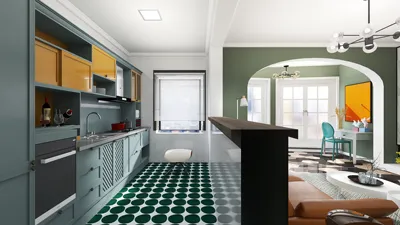


As we look ahead, the challenge of student housing persists, grappling with issues such as noise, limited storage options, and disjointed routines. My designs consider the necessity for living spaces that adapt seamlessly for upcoming semesters. A report by Zillow indicates that younger renters lean towards convenience and proximity rather than just size, signaling a shift in student apartment layouts towards optimizing time and concentration. I am attentive to how elements like laundry, lighting, and sleep interconnect to create lifestyle challenges—and I utilize spatial reasoning tools to create layouts that address these issues effectively with solutions like Homestyler.
Micro-Cluster Studio: Study Core with Sleep Area
Design Philosophy: Position the desk and shelving as the central hub, while placing the bed as a quiet auxiliary; future semesters require cognitive clarity, not visual distractions.
Flow: Entryway → utility wall → study area → snack preparation nook → sleeping space; a streamlined pathway that minimizes overlapping tasks.
Sightlines: The primary focus directs towards the workspace, while secondary views are towards a window; the bed is positioned off to the side to prevent distractions.
Storage: Incorporate vertical shelving and under-bed drawers for approximately 1.2 to 1.5 m³ of usable space to accommodate books, equipment, and seasonal items.
Furniture Dimensions: Desk size ranging from 48 to 60 inches; twin XL bed; narrow pantry cart; each piece is carefully selected to maintain clear pathways of 800 to 900 mm.
Conclusion: The design resembles a streamlined codebase—study efficiency is maximized, and sleep is peaceful, even during exam periods.
save pinOpen in 3D Planner Processing...
Roommate Duplex: Split-Level Focus, Shared Spaces
Design Philosophy: Functions are stacked; the lower level is dedicated to social activities and sustenance, while the upper level is geared towards private and focused work—this design is adaptable for varying class schedules.
Flow: Front entrance → communal kitchen-living area → staircase junction → individual rooms; promotes concurrent usage without interference.
Sightlines: Common areas provide expansive views, while private spaces focus on task-related visuals; windows serve as indicators for mood and natural light availability.
Storage: Lockers near the stairs provide quick access; additional storage under treads; a kitchen wall grid system organizes shared items effectively with labeling for version control.
Furniture Dimensions: Sofa size between 72 to 78 inches; table measuring 30"×60"; twin or full beds; bookshelves with a 12-inch depth—exact measurements keep pathways clear and organized.
Conclusion: Co-living remains harmonious, with shared resources flowing freely below while personal spaces thrive above; the design adapts as academic paths and sleep schedules vary.
save pinOpen in 3D Planner Processing...
1-Bed Flex Unit: Daytime Work Space, Nighttime Retreat
Design Philosophy: Movable partitions convert the living area into a seminar space during the day and a comforting retreat at night; this flexible approach works well for future semesters that value multi-use spaces without clutter.
Flow: Entrance threshold → kitchen corridor → adaptable living area → sliding partition → bedroom; activities can transition smoothly with minimal need to switch contexts.
Sightlines: The long axis aligns a window with the workspace; the frosted partition creates a sense of depth; the TV wall is strategically positioned to maintain a clear visual hierarchy.
Storage: A rail system with overhead storage options and closet rollouts; 1.8 to 2.2 m³ storage for tools, bags, and laboratory supplies.
Furniture Dimensions: Compact table size of 30"×48"; a sofa-chaise under 84"; and a queen bed when space permits; all furnishings accommodate door swings and provide 36" pathways.
Conclusion: This unit functions like well-designed firmware—by day it facilitates collaboration, by night it fosters restful sleep; designed for agility even after five years of use.
save pinOpen in 3D Planner Processing...
Final Insights
Student apartment designs should act like dynamic interfaces rather than static plans, acknowledging that semesters bring cyclical routines and finite attention spans. Variants—from compact studios to flexible one-bedroom units—facilitate smooth routine navigation, with storage serving as a temporary holding place and furniture acting as the functional framework. Continuous needs such as roommate privacy and exam preparation must be integral to the design and not stationed as secondary considerations. Based on my observations, the most advanced student apartments of the future will focus on intentional functionality rather than mere space expansion, exemplified beautifully through the use of tools like Homestyler.
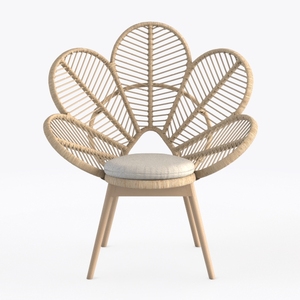
Bohemian Rattan Flower Shaped Accent Chair with Linen Cushion 3D Model

Solid Wood Hand Shaped Novelty Accent Chair 3D Model

Minimalist Solid Oak Platform Bed Frame 3D Model
Homestyler is your go-to online platform for bringing your home design dreams to life. With a user-friendly design tool, stunning 3D renderings, and a wealth of design projects and DIY video tutorials, creating your perfect space has never been easier or more enjoyable!
立即免费设计
































