

The evolution of global trade is leading to a decrease in time spent while increasing efficiency through enhanced bandwidth. The current challenge lies in how crowds navigate large expos without losing their sense of direction or energy. Industry insights remind us of the importance of scale, as evident from AIA reports indicating a sustained demand for adaptable layouts that ensure clarity in circulation. Viewed through this perspective, I examine a revised floor plan from the Canton fair phase 2, akin to firmware—updated to accommodate new traffic flows. The future is approaching rapidly, and I can already see its contours as exhibitors and visitors synchronize their movements.
space optimization tools
Radial Spine with Modular Bays
Design Concept: A central spine stabilizes the hall, branching out into modular bays that function like scalable nodes—future trade requirements will call for flexible segmentation for product clusters and swift reconfiguration.
Flow: Starting from entry → spine → sector loops → returning to amenities; this looping algorithm minimizes backtracking and enhances flow during peak hours.
Sightlines: Long views along the spine complemented by brief cross-views into bays; creating a visual hierarchy acts as an interface, revealing primary information first followed by details.
Storage: Back-of-bay buffer rooms function as caches, designed for easy pallet access and daily restocking; organized labeling keeps retrieval delays minimal.
Furniture Configuration: Booth modules adhere to 3x3m API limits; aisle widths are adjusted for diverse traffic—strollers, carts, and AR wayfinding kiosks—ensuring smooth movement.
Conclusion: This structure is adaptable to varying demands, and I foresee that in five years, it will be viewed as a resilient backbone capable of evolving with new exhibition types.
save pinOpen in 3D Planning Tool Processing...
Perimeter Ring with Cross-Shunts
Design Concept: A perimeter ring enhances circulation stability while cross-shunts connect sectors; future fairs will require well-defined boundaries and agile shortcuts for tailored routes.
Flow: Orientation begins on the ring before shunting to targeted aisles; akin to switching topics, visitors reduce context-switching time.
Sightlines: The perimeter offers broad visual cues—anchors and information towers—while shunts unveil detailed insights; the user interface remains layered without becoming overwhelming.
Storage: Distributed micro-depots at shunt intersections operate as quick caches for samples and demo equipment, balancing accessibility with security.
Furniture Configuration: Seating pods and charging stations seamlessly fit into ring nodes; booth facades are designed to maintain sightline continuity across shunts.
Conclusion: This ring design effectively mitigates congestion spikes; in five years, visitor behaviors will appear smoother and more deliberate.
save pinOpen in 3D Planning Tool Processing...
Sector Grid with Amenity Core
Design Concept: An organized grid categorizes sectors while a central amenity core functions as a metabolic hub—future events will represent ecosystems rather than mere stalls.
Flow: Scanning the grid → stopping at amenities → moving through secondary aisles; the motion flows like a clean function with predictable outcomes.
Sightlines: Clear, defined axis lines showcase sector titles; the amenity core serves as a strong visual landmark, acting like a physical home button in the design.
Storage: Core-level logistics rooms contain bulk caches while grid-adjacent lockers ensure quick retrieval; hierarchical systems promote efficiency.
Furniture Configuration: Modular counters, demo platforms, and sound-insulating barriers fit seamlessly within grid specifications, maintaining clarity over confusion.
Conclusion: The grid and core elements function like a finely tuned interface, and I anticipate they will support mixed media exhibits and guided AR experiences in the upcoming cycle.
save pinOpen in 3D Planning Tool Processing...
Final Insights
Interpreting the Canton fair phase 2 floor plan as an interface illustrates how movement, visibility, and logistics are shaping the future of trade in spatial terms. Variants such as radial spines, perimeter rings, and sector grids are akin to semantic cousins, aligning program flow with human capacity. From my perspective, the most effective exhibition layouts will not be louder, just more purposeful, and I continually observe how small routing choices can significantly impact the overall experience. Utilizing tools like Homestyler can enhance these intricate designs further.
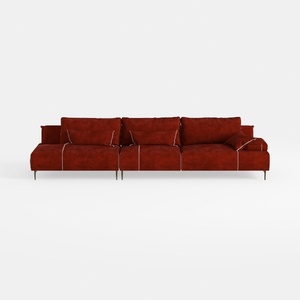

Modern Burgundy Velvet L Shaped Sectional Sofa 3D Model


Modern Marble Top Solid Wood Console Table With Decorative Accents 3D Model
Looking to transform your home? Homestyler offers an exceptional online home design tool that allows you to visualize your ideas in stunning 3D. With a rich library of design projects and helpful video tutorials, it's perfect for anyone ready to embark on their DIY journey!
立即免费设计
































