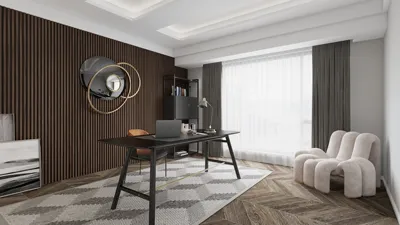


As we look ahead, our living spaces are evolving to meet modern-day challenges such as disjointed routines, storage dilemmas, and distracting overlaps. Families are increasingly leaning towards adaptable, multifunctional rooms rather than merely focusing on spaciousness. This trend makes a 5 BHK flat floor plan resemble a living operating system where spatial organization acts like coding, facilitating the integration of future lifestyles into today's environments, particularly with tools like Homestyler to visualize these transformations.
Dual-Spine Corridor with Suite Clusters
Design Logic: The layout features two parallel spines that effectively separate private suites from communal areas, ensuring long-term suitability for multigenerational living and diverse work styles.
Flow: The pathway starts at the entry leading through a shared lounge to a service corridor, which connects to child or guest suites. A mirrored spine then guides to the primary suite, a study, and a tranquil terrace, creating a system where movement is smooth and efficient.
Sightlines: Strategic long axial views aid in spatial orientation, while tiered room arrangements minimize visual distractions and enable quick status assessments.
Storage: The integrated wall bays within the spine function like cache storage—deep compartments for seasonal items and shallower ones for daily essentials, all clearly labeled and customizable.
Furniture Fit: Drawing on API-like constraints, the layout ensures 900–1000mm of space around dining areas and 600mm beside beds, along with modular sofas that can align seamlessly against walls without obstructing flow.
Verdict: This design offers a serene and efficient structural framework that adapts as family dynamics shift, remaining coherent over the next five years amid changing schedules.
save pin
Central Commons with Peripheral Suites
Design Logic: The commons acts as the central hub—housing the kitchen, dining, and media areas—while five autonomous suites provide independence without isolation.
Flow: The journey begins at the arrival point leading to a drop zone, encompassing a kitchen island, dining area, and media space; peripheral corridors connect to the suites, functioning like demand-driven subroutines.
Sightlines: Layered transparency from the island to the dining area and balcony enriches the space, with carefully offset private entrances to maintain visual hierarchy.
Storage: Kitchen island drawers are designed for frequently used tools, alongside perimeter pantries for bulk storage. Each suite is equipped with a wardrobe wall serving as consistent storage.
Furniture Fit: Featuring a 3m island with 900mm clearance, dining for up to eight with flexible end pieces, and sectional sofas aligned acoustically, the arrangement fosters an inviting environment.
Verdict: The design maintains high social interaction while ensuring privacy, preparing the space for remote work, study areas, and social gatherings.
save pin
Split-Level Zoning with Quiet Work Nodes
Design Logic: Subtle elevation changes create distinct areas that segment noise, essential for large households balancing relaxation, work, and play.
Flow: The layout progresses from the foyer through a raised lounge to a sunken media area and then down a corridor to the suites, with tucked-away study spaces that stagger the energy flow effectively.
Sightlines: Elevation changes provide deliberate reveals; the gaze transitions smoothly from distant views to focused tasks, which helps reduce mental clutter.
Storage: Cleverly designed under-stair drawers, bench base units, and headboard niches serve as accessible storage solutions, with quick access designed for immediate tasks.
Furniture Fit: Platform sofas with built-in power outlets, clearances of 1200mm around study spaces, and beds positioned to align with windows create a harmonious layout.
Verdict: This layered approach to activity creates a sense of calm, akin to multiple efficient applications running simultaneously, preparing the space for the future design phases.
save pin
Final Takeaway
Ultimately, a 5 BHK flat floor plan emphasizes clarity and functionality over mere size—designs that allow five bedrooms to harmonize work, relaxation, and community living without interference. With variants like multi-suite apartments and larger family units, the layout operates like software: adjusting flows, managing resources, and facilitating interactions within daily life. The pressing needs for multigenerational living and adaptable workspaces are already evident, and the most effective layouts function as dynamic systems. Based on my insights, the homes of tomorrow won't necessarily need to be larger—just more focused and intentional, much like those created using Homestyler.
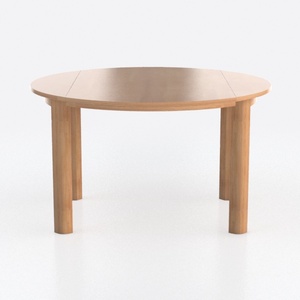
Jeffrey Brown Wood Dining Table
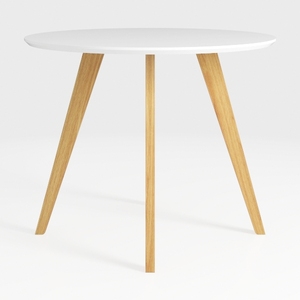
Oslo 32 in. Glossy White Round Wood Top Coffee Tab
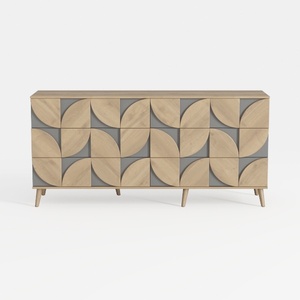
Modern Geometric Pattern Solid Wood Sideboard Cabinet 3D Model
Homestyler is your go-to online home design platform, perfect for anyone ready to transform their space. With an intuitive design tool, stunning 3D renderings, and inspiring video tutorials, bringing your interior design visions to life has never been more accessible or enjoyable!
立即免费设计
































