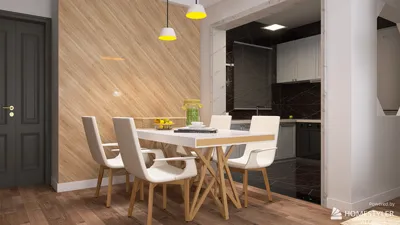


As lifestyles evolve towards more streamlined living, many current homes remain burdened by chaotic layouts and outdated storage solutions. While designing floor plans for 1000 sq ft spaces, I've noticed how bandwidth-heavy routines—such as remote work, wellness practices, and micro-social activities—are looking for clearer pathways. Market research consistently highlights this trend; organizations like NAHB report a growing need for multifunctional spaces that my clients are also requesting. The future seems tangible, and I can already envision its shape through innovative design tools like Homestyler.
Rail-Core One-Bed: Linear Framework, Modular Components
Design Framework: A constant service wall comprising kitchen, laundry, and storage acts as the rail, allowing the opposite side to be utilized for living or sleeping areas—future daily activities can integrate smoothly without interference.
Pathway: Entry → drop zone → galley kitchen → living area → sliding partition → bedroom; designed as a straightforward flow with minimal interruptions.
Sightlines: Upon entering, the view moves from the kitchen edge to a window wall; retractable partitions ensure the living space remains the focal point, reducing cognitive strain.
Storage Solutions: A cabinet wall, 30–36 inches deep, functions as a cache, organized by usage frequency: daily, weekly, and archival; all items are indexed along the structural rail.
Furniture Specifications: Sofa dimensions of 78–84 inches, a table size of 60×30 inches, and a queen bed with 30 inches of clearance; integration restrictions allow for seamless docking of robots, air purifiers, and foldable desks.
Conclusion: Looking ahead five years, this rail system will be adaptable: incorporate a murphy desk, interchange modules, and preserve the framework; updates in lifestyle will resemble software upgrades rather than major renovations.
Courtyard Loop: Central Space, Surrounding Functions
Design Framework: A square loop encircles a versatile central space (8×10 ft) that can transform into a studio, dining area, or movement zone—this design ensures future adaptability by preserving room for growth.
Pathway: The loop's circulation avoids dead ends: entry → kitchen → living area → bedroom → bath → back to entry; ensuring fluid navigation without bottlenecks, creating a reliable route.
Sightlines: Glazing surrounds the center like a dashboard; adjacent rooms appear as panels, offering layered transparency to maintain privacy.
Storage Solutions: Built-in perimeter units (18–24 inches deep) function as ring buffers; integrated corner units accommodate oversized items, keeping the center area free from clutter.
Furniture Specifications: A mobile island measuring 48×24 inches, a round table with a diameter of 42 inches for clearance around the loop, modular shelves with depths of 12/15 inches; elements align seamlessly along the perimeter.
Conclusion: In my projections, the central void will evolve into a daily ritual space—yoga at sunrise, a workshop during the day, and a dining hub at night—one core, a multitude of uses.
Split Horizon: Diagonal Flow with Two Suites
Design Framework: A diagonal sight and movement axis connects two compact suites, making a 1000 sq ft layout feel like a dual environment sharing a common power system.
Pathway: An entry leads into a pivot hall → living space at the peak → primary suite in one corner, guest/office in the other; facilitating intentional task-switching.
Sightlines: The diagonal axis extends from the entrance to the balcony; private areas branch off to maintain a bright and accessible communal space.
Storage Solutions: Diagonal wedge closets and headboard-integrated slots optimize irregular spaces, while linen and tech hubs are strategically placed for easy access.
Furniture Specifications: Sectional limited to 95 inches, desk of 48×24 inches in the guest/office area, and a primary suite featuring integrated 24-inch wardrobes; all sizes ensure optimal movement pathways.
Conclusion: With remote work becoming the norm, balanced dual suites allow hosting and working activities to coexist without overlap—creating two micro-ecosystems within one harmonious space.
Final Insights
The concept of 1000 sq ft floor plans transcends limitations; they emphasize precise arrangements that transform square footage into functional signals. Variations such as compact apartments, smaller condo layouts, and dual-suite designs exemplify how optimizing flow and storage can redefine everyday experiences. When the design intentions are clear, even specialized needs—like remote work areas or wellness corners—organically find their place without disruption. Based on my observations, the most intelligent homes of the future won’t necessarily be larger; rather, they will be expertly curated, a feat that tools like Homestyler can greatly assist with.
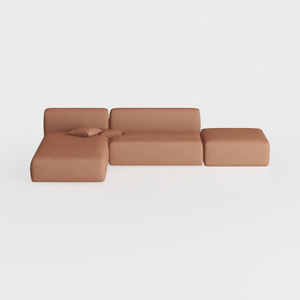
Minimalist Brown Fabric Modular Sectional Sofa 3D Model
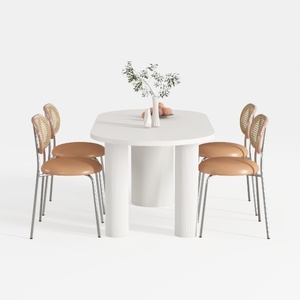
DUOMAY Modern Boucle Dining Chairs Set of 2,


Modern Rattan Solid Wood Linen Upholstered Chaise Lounge 3D Model
Homestyler is an exceptional online platform for home design enthusiasts. Its user-friendly design tool allows you to create stunning spaces with lifelike 3D renderings. Explore a wealth of design projects and DIY tutorials to ignite your creativity—bringing your dream home to reality has never been easier!
立即免费设计
































